Introduction
Servia, located in western Macedonia near the modern city of Kozani, occupies a strategic position overlooking routes through the Haliacmon River valley.
Its fortified settlement and castle preserve evidence of medieval occupation and regional defense.
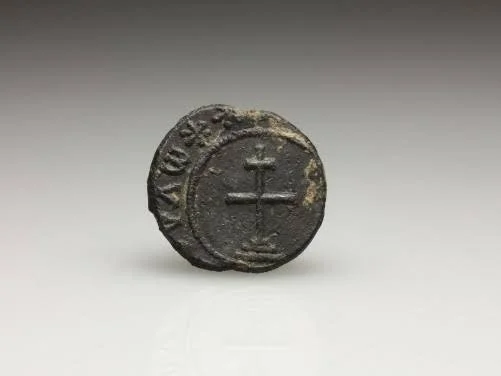
The title Byzantine Lead Amulets in Servia Fort explores the possibility of identifying small protective objects within the archaeological remains of the fortress.
Lead objects were used in different contexts throughout Byzantine history, including seals, religious objects, and items associated with personal protection. However, a specific collection of lead amulets from Servia Fort should not be treated as an established discovery without supporting archaeological records.
Servia in the Byzantine Period
Servia developed as an important fortified location in western Macedonia.
Its position made it strategically valuable because it overlooked routes connecting inland settlements and surrounding regions.
Fortifications helped protect communities and control movement through the landscape.
The site's history reflects the political and military changes that affected Macedonia during the Byzantine period.
What Were Byzantine Amulets?
Amulets are objects believed to provide protection or assistance through supernatural or religious power.
In Byzantine society, people used different kinds of protective objects.
These could include pendants, engraved stones, metal objects, crosses, and inscribed materials.
Some objects contained Christian symbols or references to saints and biblical passages.
Others incorporated words or signs associated with protective traditions.
Why Lead Was Used
Lead was relatively easy to shape and engrave compared with harder metals.
It could be cast into small objects or formed into thin sheets.
Its properties made it suitable for certain inexpensive items.
However, lead was also widely used for administrative seals, so an archaeological lead object should not automatically be identified as an amulet.
Its shape, inscriptions, iconography, and context must be examined.
Distinguishing Amulets from Seals
Byzantine lead seals are particularly important historical artifacts.
They were used to authenticate official correspondence and identify individuals or institutions.
Many contain inscriptions naming officials, religious figures, or administrative titles.
Amulets had a different purpose.
They were intended to provide protection or express religious devotion.
Some objects can be difficult to classify, especially when they carry religious imagery.
Researchers must consider how an object was manufactured, worn, attached, or deposited.
Religious Imagery and Inscriptions
Byzantine protective objects could feature crosses, saints, angels, inscriptions, and short prayers.
Some inscriptions invoked divine protection against illness, danger, or misfortune.
Others referenced specific religious figures believed to offer assistance.
The language and iconography can provide clues about the object's date and cultural setting.
However, not every Christian symbol on a small metal object indicates that it was an amulet.
Everyday Beliefs in Byzantine Communities
Protective objects reveal aspects of religious practice that may not appear in official theological texts.
People often combined formal religious devotion with popular beliefs about protection and spiritual danger.
Amulets could be worn on the body, placed in homes, or carried during travel.
Their use reflects the practical concerns of people living in a world affected by disease, warfare, economic uncertainty, and limited medical knowledge.
Archaeological Context at Servia
If lead amulets were found within Servia's fortified settlement, their context would be important.
An object discovered in a residential building might suggest personal use.
An item recovered near a church could have a religious association.
Objects found in destruction layers could help establish when they entered the archaeological record.
The presence of an artifact inside a fortress does not necessarily mean it belonged to a soldier or military official.
Scientific Examination
Lead objects can be studied through photography, microscopy, imaging, and elemental analysis.
Researchers may examine casting marks, inscriptions, corrosion patterns, and traces of attachment.
Three-dimensional scanning can help preserve the shape of fragile objects.
Lead also presents conservation challenges because it can deteriorate under certain environmental conditions.
Proper storage and handling are therefore important.
The Value of Small Objects
Small artifacts can reveal aspects of daily life that monumental architecture cannot.
A protective pendant may provide evidence about personal religious practices, family concerns, and cultural beliefs.
When studied alongside coins, pottery, inscriptions, and architectural remains, such objects help reconstruct the social environment of a Byzantine settlement.
Conclusion
Byzantine Lead Amulets in Servia Fort offer a compelling subject for exploring personal religion and material culture in medieval Macedonia.
The use of protective objects and lead seals in the Byzantine world is historically established.
The specific discovery of lead amulets at Servia Fort, however, requires archaeological confirmation and careful identification.
If such objects were securely documented, they could provide valuable insight into how people living within or around the fortress expressed faith, sought protection, and navigated the uncertainties of medieval life.