Introduction
The former Lake Kopais, located in Boeotia in central Greece, was once one of the largest wetlands and freshwater lake systems in the region.
Its surrounding landscape supported human communities for thousands of years, making it an important area for studying prehistoric settlement and environmental change.
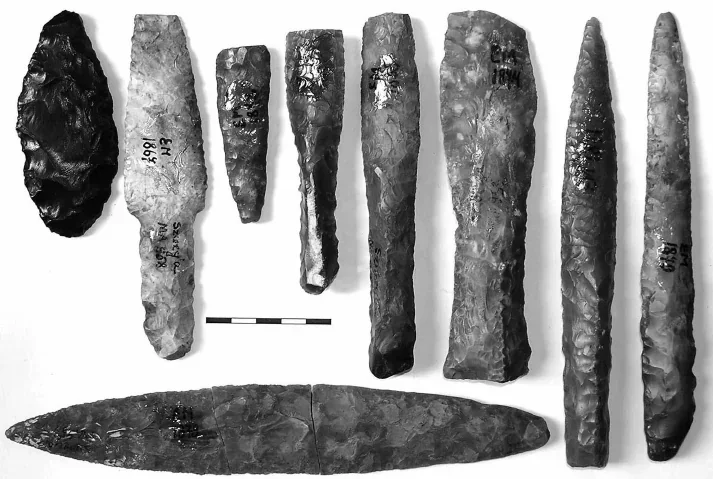
The title Neolithic Flint Tools from Kopais Lake Bed suggests the possibility of discovering stone tools beneath sediments associated with the ancient lake.
The broader archaeological question is significant: how did Neolithic communities use the wetlands, shorelines, and surrounding agricultural landscapes of prehistoric Boeotia?
Specific flint-tool discoveries from particular submerged or buried lake-bed locations, however, require archaeological confirmation.
The Landscape of Ancient Kopais
Kopais occupied a broad basin surrounded by mountains and limestone formations.
Water levels changed over time due to natural drainage, sediment accumulation, and human intervention.
The lake's changing boundaries influenced where people could settle, cultivate land, fish, and move between communities.
Its eventual drainage transformed the landscape into agricultural land.
The Neolithic Period in Greece
The Neolithic period in Greece began during the seventh millennium BCE and continued into the later prehistoric periods.
Communities increasingly relied on farming and animal domestication.
People cultivated crops, raised livestock, produced pottery, and established more permanent settlements.
Stone tools remained essential for cutting, scraping, harvesting, and processing materials.
Why Flint Was Important
Flint is a fine-grained sedimentary rock that can produce sharp edges when fractured.
Prehistoric toolmakers used controlled techniques to remove flakes from larger stone cores.
These flakes could become cutting tools, scrapers, points, or other implements.
Flint was especially valuable because it could produce sharp working edges without the need for metal technology.
Toolmaking Techniques
Neolithic craftspeople developed considerable skill in stoneworking.
They selected suitable raw materials and shaped them through percussion and, in some cases, pressure flaking.
The resulting tools varied in size and function.
Archaeologists study their shapes, manufacturing marks, raw materials, and wear patterns to understand how tools were produced and used.
Microscopic use-wear analysis can sometimes reveal whether an edge was used for cutting plants, processing animal materials, or working other substances.
How Tools Could Become Buried Beneath a Lake
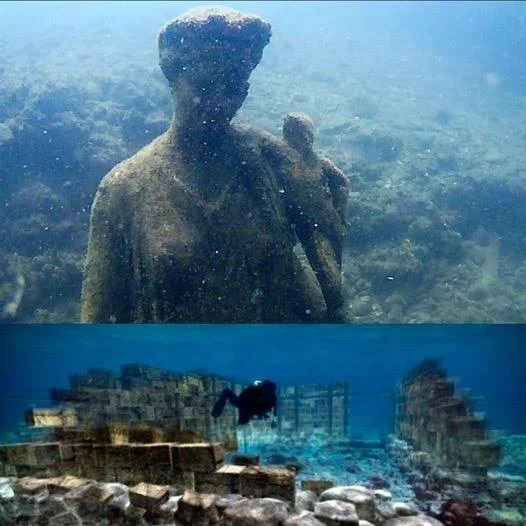
Objects from prehistoric settlements can become covered by sediment through flooding, shoreline movement, erosion, and changes in water levels.
A settlement once located near the lake margin might eventually become submerged or buried.
Later environmental changes could leave its remains beneath accumulated deposits.
However, an object recovered from lake sediment does not automatically indicate that people lived directly at that location.
It could have been transported by water from another settlement.
Archaeological Survey Methods
Researchers investigating a former lake basin can use several methods.
Sediment cores help reconstruct environmental history and identify changes in vegetation, water levels, and sedimentation.
Geophysical surveys can locate buried structures and landscape features.
Archaeological excavation can then investigate selected locations where evidence suggests prehistoric activity.
If objects are recovered from underwater or waterlogged deposits, their exact position and sedimentary context are especially important.
Reconstructing Neolithic Life
Flint tools can provide information about daily activities.
Harvesting tools may indicate plant processing.
Scrapers may have been used in preparing animal hides or working organic materials.
Cutting implements could have served a variety of domestic and craft purposes.
When combined with pottery, animal remains, seeds, and settlement structures, stone tools help reconstruct the economic life of prehistoric communities.
The Importance of Environmental Research
Kopais is particularly interesting because its landscape changed substantially over time.
Palaeoenvironmental research can reveal how prehistoric communities responded to shifting water levels and ecological conditions.
Sediment analysis, pollen studies, and radiocarbon dating can help reconstruct environmental changes.
These findings may explain why settlements developed in particular locations and how people adapted to wetland environments.
Conservation and Archaeological Responsibility
Stone tools can survive for thousands of years, but their scientific value depends heavily on context.
Objects collected without accurate location records lose much of their archaeological usefulness.
Investigations should therefore be conducted by qualified researchers under the appropriate permits.
The protection of archaeological deposits is especially important in landscapes that have undergone drainage, agriculture, and modern development.
Conclusion
Neolithic Flint Tools from Kopais Lake Bed present an opportunity to investigate prehistoric life around one of central Greece's most distinctive ancient wetlands.
The use of flint tools by Neolithic communities is well established, and Kopais provides a compelling landscape for studying settlement and environmental change.
However, specific finds from the former lake bed require secure archaeological documentation.
Through sediment analysis, careful excavation, and technological study of stone tools, researchers could develop a clearer understanding of how prehistoric communities adapted to the changing waters and resources of ancient Boeotia.