Introduction
Dodona, located in the region of Epirus in northwestern Greece, was one of the most important religious centers of the ancient Greek world. Its sanctuary of Zeus was famous for its oracle, where visitors sought divine guidance through the interpretation of natural signs and ritual practices.
The concept of Hellenistic Inscriptions in Dodona Peripheral Shrines explores the possibility of discovering written dedications and religious records in smaller sanctuaries surrounding the main archaeological complex.
Dodona has produced substantial epigraphic evidence, including inscriptions associated with religious offerings, political relationships, and visitors to the sanctuary. However, specific undiscovered inscriptions in peripheral shrines should not be presented as confirmed discoveries without archaeological documentation.
Dodona's Religious Importance
Dodona was especially associated with Zeus Naios and the worship of Dione.
The sanctuary was famous for its sacred oak, traditionally connected with the interpretation of divine messages.
Ancient visitors consulted the oracle through questions submitted to priests and interpreted through ritual practices.
The sanctuary attracted individuals and communities from different parts of the Greek world.
Its religious importance extended beyond the immediate region of Epirus.
The Hellenistic Period
The Hellenistic period began after the death of Alexander the Great in 323 BCE and continued until the Roman expansion transformed the eastern Mediterranean.
During this era, Greek political and cultural institutions spread across a much wider geographical area.
Regional sanctuaries continued to attract worshippers, while rulers and wealthy individuals used religious dedications to demonstrate status and political relationships.
Dodona remained an important religious destination during this period.
What Are Peripheral Shrines?
A peripheral shrine is a smaller religious space located outside a sanctuary's central monumental area.
Such spaces might include roadside altars, local cult sites, small temples, sacred enclosures, or structures associated with particular deities.
They could serve travelers, nearby communities, or groups participating in religious festivals.
Their archaeological remains may be less substantial than those of major sanctuaries.
Inscriptions as Historical Evidence
Ancient inscriptions provide information that is often unavailable through architecture alone.
They may record the names of worshippers, religious dedications, official decisions, priestly appointments, treaties, or commemorative events.
Inscriptions can also reveal changes in language, religious terminology, and political administration.
A short inscription might therefore offer valuable evidence about a community's relationship with a major sanctuary.
Stone and Bronze Dedications
Inscriptions could be carved into stone monuments, architectural blocks, altars, or statues.
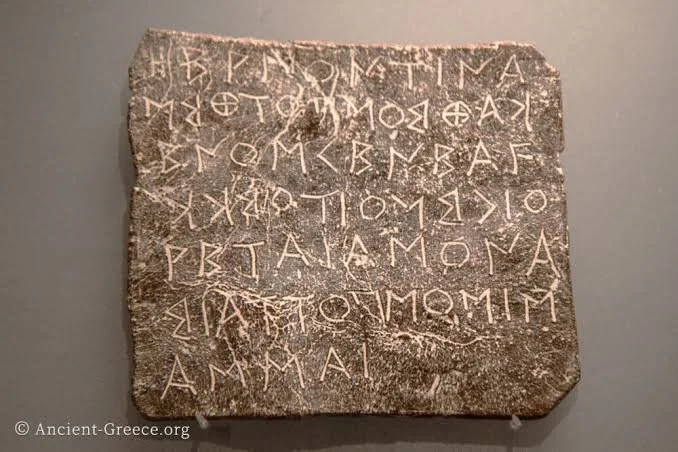
Other texts were engraved on bronze objects or inscribed on lead tablets.
At Dodona, lead tablets are particularly significant because many contain questions addressed to the oracle.
Although these tablets are not all formal Hellenistic shrine inscriptions, they demonstrate the importance of written communication in the sanctuary's religious activities.
Locating Smaller Religious Structures
Archaeologists investigate peripheral sanctuaries through landscape survey, excavation, architectural analysis, and the study of ancient routes.
Small religious structures may be identified through altars, votive objects, pottery, inscriptions, or unusual concentrations of ritual material.
Geophysical techniques can also help identify buried walls and other subsurface features.
However, an isolated inscription does not automatically prove the existence of a separate shrine.
Its original location and archaeological context must be established.
Language and Political Identity
The inscriptions of the Hellenistic world can reveal changing patterns of political and cultural identity.
Greek dialects and forms of the Greek language developed within different regional environments.
Inscriptions may also mention rulers, cities, leagues, and religious officials.
Such evidence helps historians understand how local religious institutions interacted with broader political systems.
Preservation and Digital Documentation
Ancient inscriptions are vulnerable to weathering, erosion, biological growth, and physical damage.
High-resolution photography, three-dimensional scanning, and digital epigraphy can help preserve their appearance.
Researchers can create searchable databases containing transcriptions, translations, photographs, and information about archaeological context.
These resources make inscriptions accessible to scholars who cannot visit the original site.
Conclusion
Hellenistic Inscriptions in Dodona Peripheral Shrines offer a valuable theme for investigating the relationship between local worship and major religious institutions in ancient Epirus.
Dodona's importance as an oracle sanctuary is well established, as is the significance of its surviving inscriptions and lead tablets.
The existence of specific additional inscriptions in peripheral shrines requires direct archaeological verification.
If such material were documented, it could help reconstruct the religious geography surrounding Dodona and reveal how smaller communities participated in one of ancient Greece's most influential sacred landscapes.