Epicureanism vs. Stoicism: The Great Battle for the Ancient Soul
As the golden age of the Greek city-state crumbled under the weight of Macedonian and Roman empires, the fundamental question of philosophy shifted. It was no longer just about "What is the nature of the universe?" but "How can I survive it?" From this existential anxiety, two massive philosophical contenders emerged: Epicureanism and Stoicism. These weren't just academic theories; they were survival guides for a chaotic world.
The Epicurean Garden: Retreat and Tranquility
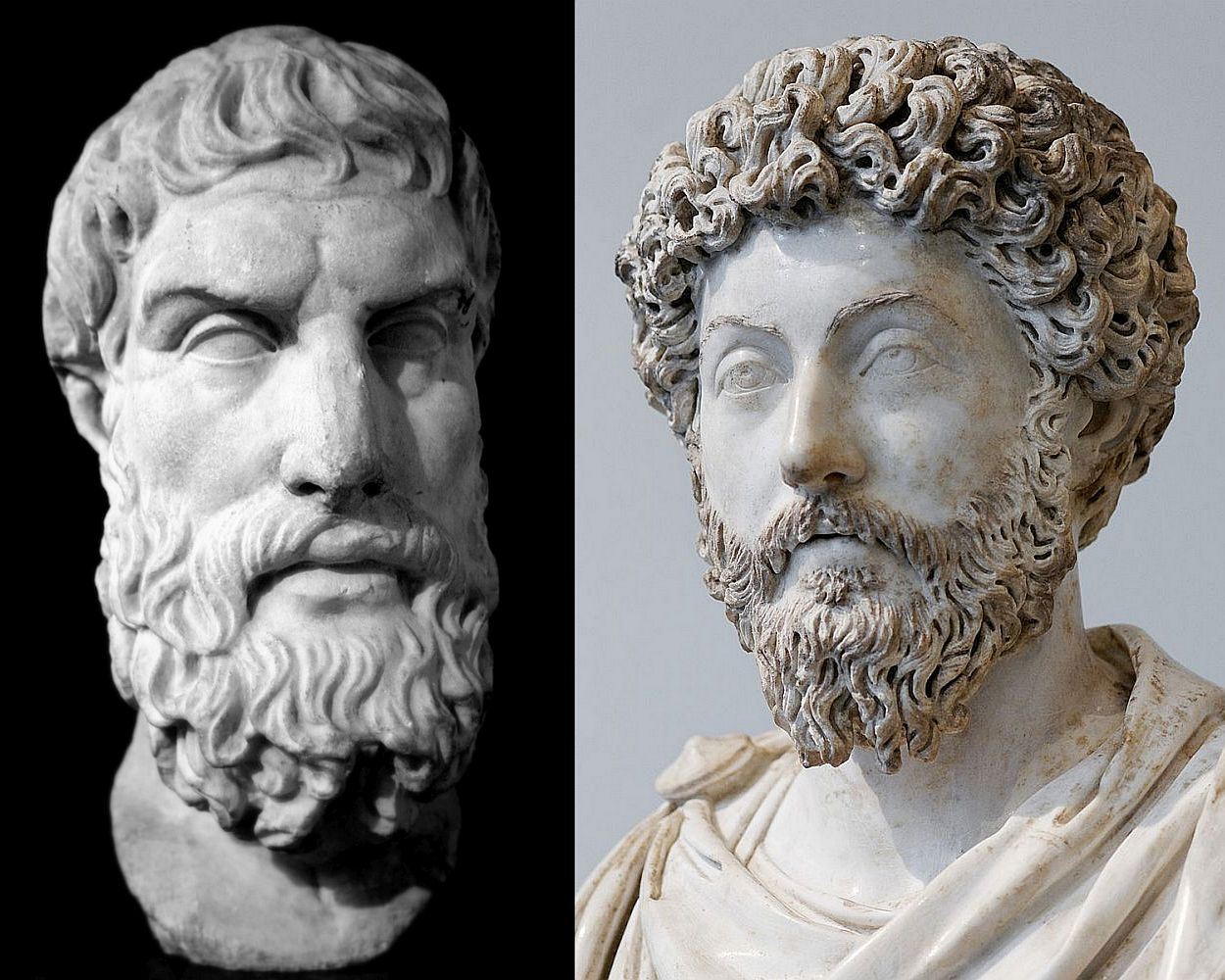
Founded by Epicurus (341–270 BCE), this school was famously based in "The Garden," a community on the outskirts of Athens where men, women, and even slaves were invited to live in philosophical harmony.
The Anatomy of Pleasure
To an Epicurean, the "Good Life" is defined by Ataraxia—a state of being untroubled by fear or mental distress. Contrary to popular belief, Epicurus didn't advocate for wild, wine-soaked orgies. He argued that intense physical pleasures often lead to intense pain later (like a hangover or social scandal).
Instead, he preached a negative definition of pleasure: the absence of pain. By satisfying only "natural and necessary" desires—simple food, a safe home, and deep friendship—one could achieve a state of permanent contentment. He taught that "the man who is not satisfied with a little, is satisfied with nothing."
The Death of Fear
Epicurus believed that humanity’s two greatest psychological burdens were the fear of the gods and the fear of death. He utilized Atomism (the belief that everything is made of physical particles) to dismantle these fears:
The Gods: If gods exist, they are perfect. A perfect being wouldn't bother themselves with the messy, trivial affairs of humans. Therefore, they are not watching or judging you.
Death: Since the soul is made of atoms that scatter at death, there is no "self" left to suffer in an afterlife. As Epicurus famously put it: "Death is nothing to us. When we are, death is not; when death is, we are not."
The Stoic Porch: Duty, Logic, and the Fortress
While Epicurus retreated to a garden, Zeno of Citium (c. 334–262 BCE) began teaching at the Stoa Poikile (the Painted Porch) in the heart of Athens. Stoicism became the philosophy of the soldier, the statesman, and the emperor, emphasizing endurance and social duty.
The Dichotomy of Control
The "Stoic Secret" is deceptively simple: some things are up to us, and some are not.
Up to us: Our thoughts, our intentions, and our reactions to events.
Not up to us: The weather, the economy, the actions of others, our health, and our reputation.
A Stoic achieves Apatheia (freedom from suffering) by focusing 100% of their energy on the first category. If you lose your job, the event is "indifferent." What matters is the virtue you display in response to losing it.
Living in Accordance with the Logos
Stoics believed the universe was a rational, living organism governed by Logos (Universal Reason). Everything that happens is part of a grand, divine plan. Therefore, a Stoic practices Amor Fati—the "Love of Fate." They don't just tolerate the difficulties of life; they embrace them as necessary for their own growth and the harmony of the universe.
The Four Cardinal Virtues
For the Stoic, pleasure is irrelevant. The only thing that truly matters is Virtue (Arete). They measured a successful life by the mastery of four traits:
Wisdom (Phronesis): Seeing the world as it truly is.
Justice (Dikaiosyne): Fulfilling duties to the community.
Courage (Andreia): Standing firm in the face of adversity.
Temperance (Sophrosyne): Controlling one's impulses.
Epicureanism vs. Stoicism: The Great Battle for the Ancient Soul
As the golden age of the Greek city-state crumbled under the weight of Macedonian and Roman empires, the fundamental question of philosophy shifted. It was no longer just about "What is the nature of the universe?" but "How can I survive it?" From this existential anxiety, two massive philosophical contenders emerged: Epicureanism and Stoicism. These weren't just academic theories; they were survival guides for a chaotic world.
The Epicurean Garden: Retreat and Tranquility
Founded by Epicurus (341–270 BCE), this school was famously based in "The Garden," a community on the outskirts of Athens where men, women, and even slaves were invited to live in philosophical harmony.
The Anatomy of Pleasure
To an Epicurean, the "Good Life" is defined by Ataraxia—a state of being untroubled by fear or mental distress. Contrary to popular belief, Epicurus didn't advocate for wild, wine-soaked orgies. He argued that intense physical pleasures often lead to intense pain later (like a hangover or social scandal).
Instead, he preached a negative definition of pleasure: the absence of pain. By satisfying only "natural and necessary" desires—simple food, a safe home, and deep friendship—one could achieve a state of permanent contentment. He taught that "the man who is not satisfied with a little, is satisfied with nothing."
The Death of Fear
Epicurus believed that humanity’s two greatest psychological burdens were the fear of the gods and the fear of death. He utilized Atomism (the belief that everything is made of physical particles) to dismantle these fears:
The Gods: If gods exist, they are perfect. A perfect being wouldn't bother themselves with the messy, trivial affairs of humans. Therefore, they are not watching or judging you.
Death: Since the soul is made of atoms that scatter at death, there is no "self" left to suffer in an afterlife. As Epicurus famously put it: "Death is nothing to us. When we are, death is not; when death is, we are not."
The Stoic Porch: Duty, Logic, and the Fortress
While Epicurus retreated to a garden, Zeno of Citium (c. 334–262 BCE) began teaching at the Stoa Poikile (the Painted Porch) in the heart of Athens. Stoicism became the philosophy of the soldier, the statesman, and the emperor, emphasizing endurance and social duty.
The Dichotomy of Control
The "Stoic Secret" is deceptively simple: some things are up to us, and some are not.
Up to us: Our thoughts, our intentions, and our reactions to events.
Not up to us: The weather, the economy, the actions of others, our health, and our reputation.
A Stoic achieves Apatheia (freedom from suffering) by focusing 100% of their energy on the first category. If you lose your job, the event is "indifferent." What matters is the virtue you display in response to losing it.
Living in Accordance with the Logos
Stoics believed the universe was a rational, living organism governed by Logos (Universal Reason). Everything that happens is part of a grand, divine plan. Therefore, a Stoic practices Amor Fati—the "Love of Fate." They don't just tolerate the difficulties of life; they embrace them as necessary for their own growth and the harmony of the universe.
The Four Cardinal Virtues
For the Stoic, pleasure is irrelevant. The only thing that truly matters is Virtue (Arete). They measured a successful life by the mastery of four traits:
Wisdom (Phronesis): Seeing the world as it truly is.
Justice (Dikaiosyne): Fulfilling duties to the community.
Courage (Andreia): Standing firm in the face of adversity.
Temperance (Sophrosyne): Controlling one's impulses.
The Showdown: Key Divergences
Philosophical PointEpicureanismStoicismView of the UniverseRandom atoms; no purpose.Rational order; divine providence.Social StanceWithdraw from politics (Private life).Engage in politics (Civic duty).Emotional GoalMinimize pain/distress.Eliminate reactive emotions entirely.Virtue's RoleA means to reach pleasure.The only good, regardless of pain.
The Ultimate Choice
The choice between these two schools is a choice between the Shield and the Fortress.
The Epicurean builds a shield of friendship and simplicity to keep the world’s pain out. They seek the "quiet life," prioritizing personal peace above all.
The Stoic builds a fortress within their own mind, allowing the world’s pain to crash against them without breaking their character. They seek the "meaningful life," prioritizing duty and integrity over comfort.
Even today, we find ourselves oscillating between these two poles: do we delete our social media and retreat to a quiet hobby (Epicurean), or do we dive into the fray, accepting the stress as the price of our duty (Stoic)? The ancient battle continues.