Hecate (or Hekate) is perhaps the most complex and misunderstood figure in the Greek pantheon. While modern pop culture often reduces her to a "wicked witch" archetype, to the ancient Greeks, she was a cosmic powerhouse—a "Great Goddess" who held dominion over the earth, sky, and sea.
She is the guardian of the "in-between" places, the mistress of the night, and the bridge between the world of the living and the dead.
1. The Titan Legacy
Unlike the twelve Olympians, Hecate was a Titan, the daughter of Perses and Asteria. When Zeus overthrew the Titans, he respected Hecate so deeply that he allowed her to retain her ancient powers.
Universal Power: Hecate is one of the few deities who can move freely between Olympus, the Earth, and Tartarus.
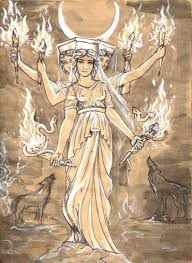
The Torch-Bearer: She is often depicted holding two torches (phosphoros), which she used to lead Demeter through the dark underworld in the search for Persephone.
2. The Triple Goddess: Hecate Triformis
Hecate is famously known for her triple form. This wasn't just a visual quirk; it represented her ability to look in all directions at once.
The Crossroads (Trivia): In antiquity, statues of Hecate (Hekataia) were placed at three-way intersections. These statues featured three bodies back-to-back, allowing her to guard every path.
The Maiden, Mother, Crone: While the "triple goddess" often refers to life stages in modern Neopaganism, to the ancients, it symbolized her mastery over the past, present, and future, or the three realms she governed.
3. Queen of Magic and Necromancy
Hecate is the patron of pharmakeia (the use of herbs, potions, and spells).
The Restless Dead: She was believed to roam the earth on moonless nights, accompanied by a retinue of ghosts and howling black dogs. If you heard a dog bark at night for no reason, it was said that Hecate was passing by.
Hecate’s Supper: On the night of the new moon (the Deipnon), Athenians would leave offerings of leeks, fish, and eggs at crossroads to appease her and ensure the restless spirits stayed away from their homes.
4. Symbols and Sacred Animals
Hecate’s presence is always signaled by specific, often chilling, imagery:
The Key: As the "Mistress of the Threshold," she carries the keys to the gates of death and the secrets of the universe.
The Dagger: Used to cut through illusions or to harvest magical herbs.
The Polecat and the Dog: Legend says the polecat was once a midwife named Galinthias who was transformed by Hera and taken in by a sympathetic Hecate. The black dog is associated with her role as a protector of the marginalized and the dead.
5. The "Soteira" (Savior)
It is a mistake to view Hecate as purely dark. In the Chaldean Oracles, she is described as Soteira (Savior) and the "Soul of the World."
The Cosmic Life Force: In this philosophical tradition, she is the medium through which divine ideas are transmitted to the material world. She is the "virtue" that keeps the universe in motion.
Protector of the Household: Small shrines called Hekataion were placed at the entrances of homes to ward off evil spirits and bad luck.
6. Archaeology: The Sanctuary at Lagina
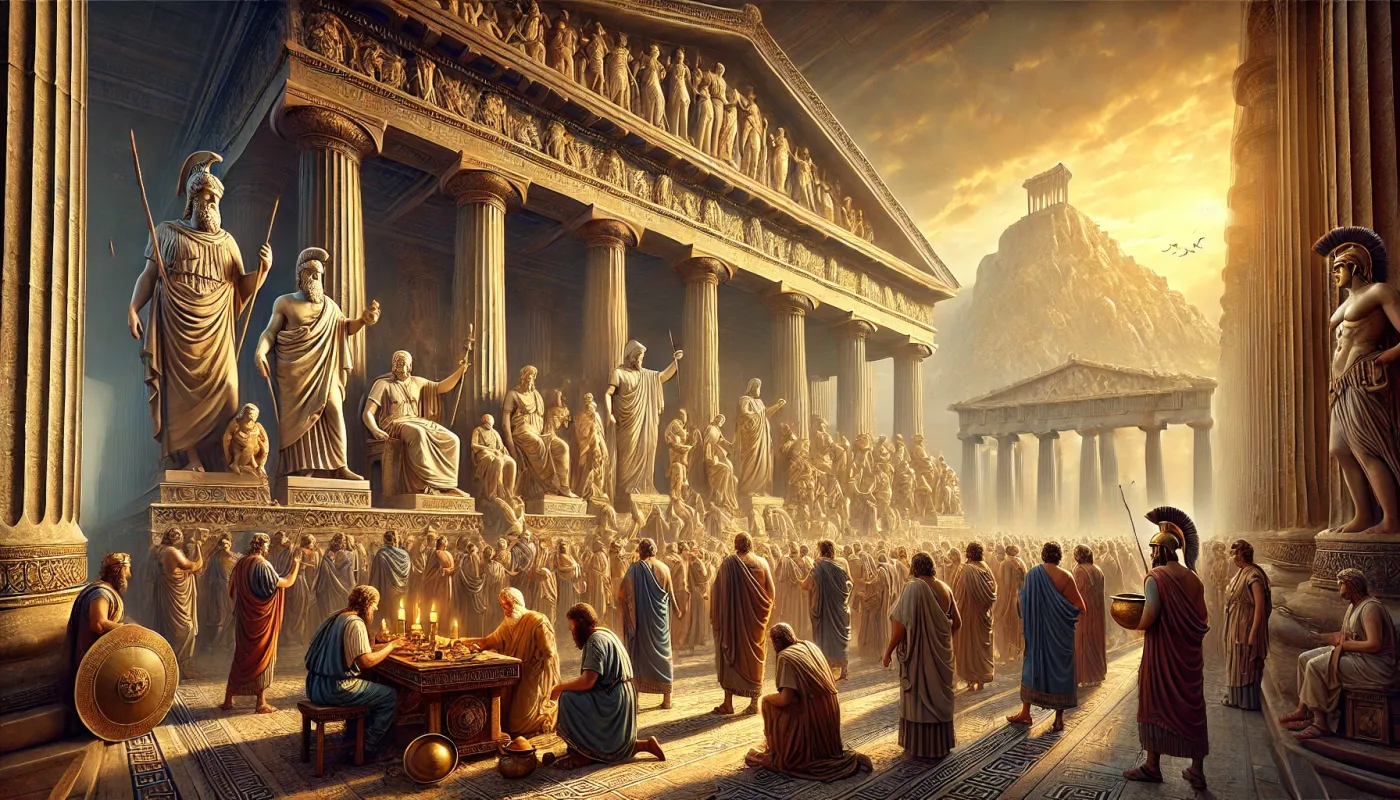
The most important cult center for Hecate was at Lagina in modern-day Turkey. Excavations here have revealed a massive temple complex where "Key-bearing" ceremonies were held. Unlike many other Greek temples that face East toward the rising sun, Hecate’s temple at Lagina has unique architectural features that emphasize her role as a lunar and chthonic (underworld) deity.
Hecate is the goddess of the "liminal"—the space where one thing ends and another begins. Whether she is guarding a doorway, a crossroads, or the passage between life and death, she represents the power found in the shadows and the wisdom found in the dark.