1. The Greek House: The Private Fortress
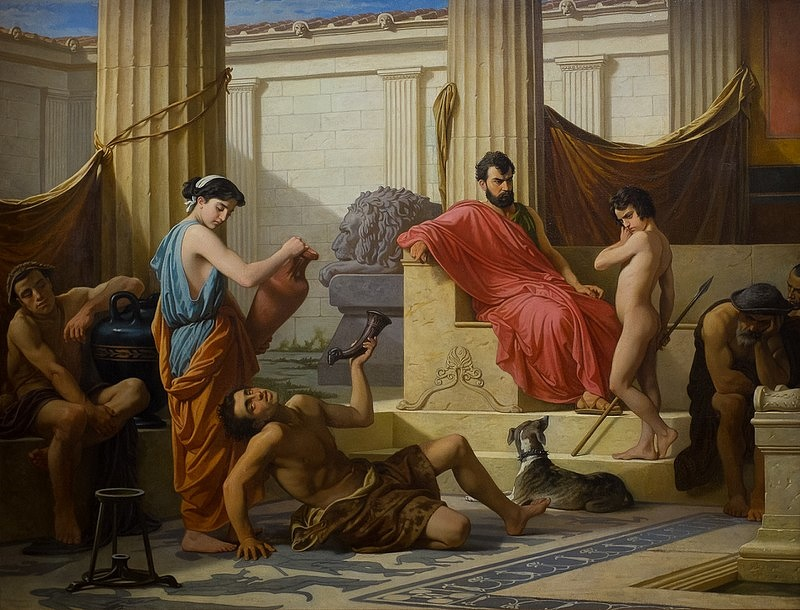
The layout of a Greek home was designed for privacy and protection. Houses were inward-facing, centered around an open-air peristyle courtyard that provided light and air while shielding the family from the noise and dust of the street. This central space served as the heart of domestic life, where children played and religious altars to Zeus Herkeios (Zeus of the Courtyard) were maintained.
2. The Art of the Loom
While men dominated the marketplace, women dominated the textile economy. Every household was a mini-factory where the Oikos produced its own clothing and bedding. Weaving was considered the highest domestic skill, and the rhythmic sound of the vertical warp-weighted loom was a constant feature of Greek daily life. The quality of a family’s clothing was a direct reflection of the skill and industry of the women within.
3. Religious Festivals and Civic Unity
Daily life was strictly timed by the religious calendar. Festivals like the Panathenaia were massive state-sponsored events that brought the entire city together. These celebrations weren't just for prayer; they were social "release valves" involving athletic competitions, musical contests, and massive communal barbecues where the meat of sacrificed oxen was distributed to the citizens, often their only significant intake of protein.
4. Clothing and Identity
Greek fashion was defined by its simplicity and lack of tailoring. Men and women primarily wore the chiton (a tunic) and the himation (a heavy cloak). The "art" of Greek clothing lay in the draping and the quality of the wool or linen. In a society where everyone wore similar styles, the way a person draped their cloak or the specific dye colors they used (like the expensive Tyrian purple) signaled their social rank and wealth.
5. Death and the Prothesis
When a Greek citizen died, the household underwent a strictly regulated mourning ritual. The first stage was the prothesis, where the body was washed, anointed with oil, and laid out on a high bed for family and friends to pay their respects. Professional mourners were often hired to lead the lamentations, ensuring the deceased received the "proper honors" required to safely cross the River Styx into the underworld.
6. The Economy of the Agora
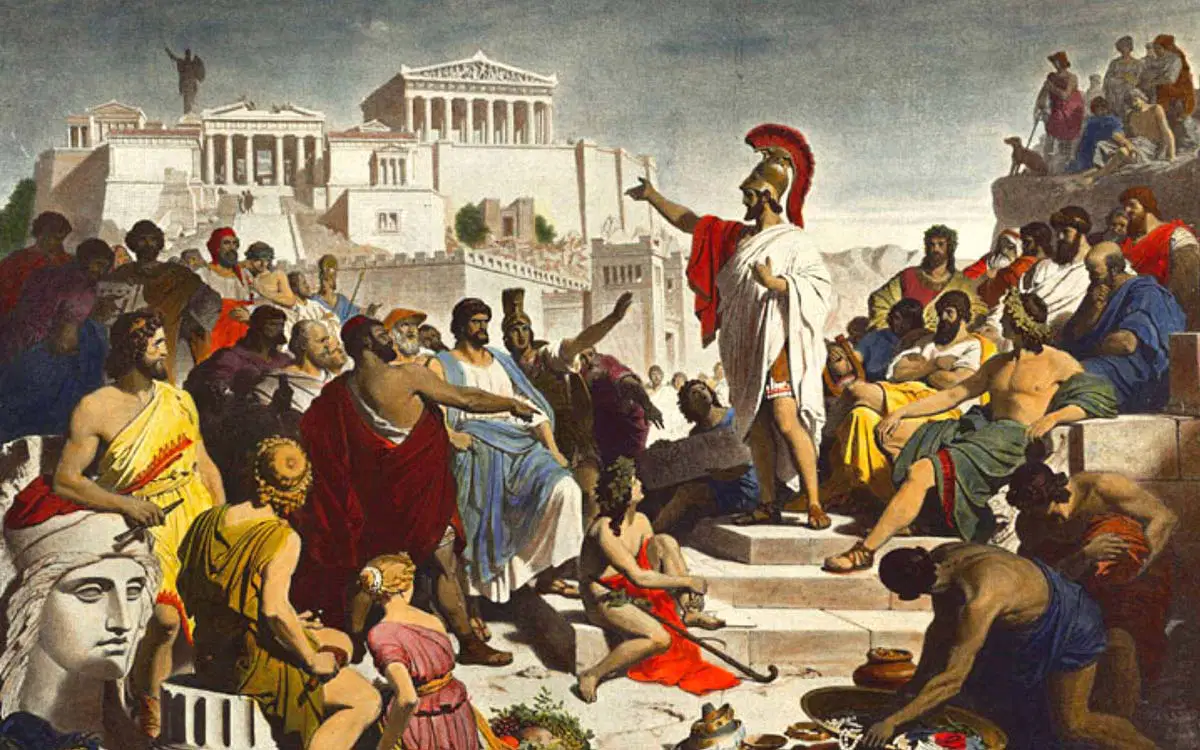
The Agora was not just for politics; it was a sensory explosion of trade. Stalls were arranged in "circles" based on the product being sold—fish, vegetables, perfumes, and even specialized money-changers. Most transactions were carried out in cash using the silver drachma, and state officials known as Agoranomoi patrolled the market to ensure weights and measures were honest and that no one was price-gouging on essential grains.