Iambe is one of the most intriguing figures in Greek mythology—a goddess of wit, ribald humor, and the poetic rhythm that bears her name. Unlike the grand, dramatic Olympians, Iambe represents the transformative power of laughter, particularly its ability to heal profound grief and restore the natural order.
I. The Catalyst for Laughter
Iambe is best known for her role in the Homeric Hymn to Demeter. When the goddess Demeter was wandering the earth in inconsolable grief after her daughter, Persephone, had been abducted by Hades, she arrived at the court of King Celeus in Eleusis.
The State of Despair: Demeter sat in silence, refusing to eat, drink, or speak, her mourning causing the earth to wither and the harvest to fail.
The Intervention: According to the myth, Iambe—a servant or local woman—sensed that solemnity and pity were not the cure for the goddess’s deep depression. Instead, she employed banter (the literal meaning of her name). Through a series of jokes, satirical jests, and bawdy humor, she shocked the grieving goddess.
The Transformation: Demeter finally smiled and then laughed. This release of tension broke the goddess's paralysis, allowing her to accept the kykeon (a sacred drink) and eventually rejoin the community. By "lightening" the goddess's heart, Iambe effectively saved the world from permanent barrenness.
II. The Root of "Iambic" Poetry
Her name is the etymological root of iambic verse (iambos). In ancient Greek literature, "iambic" poetry was a specific style of verse characterized by a sharp, rhythmic, and often satirical or mocking tone.
The Connection: Tradition holds that the rhythm of this poetry mimicked the cadence of Iambe’s witty, biting jokes.
Satirical Power: Because Iambe was associated with humor that could break social taboos, the iambic meter became the primary vehicle for Greek satire. Poets like Archilochus later used this "iambic" style to attack their enemies with such ferocity that it was said to drive them to suicide—a dark reflection of Iambe’s sharp-tongued wit.
III. Identity and Associations
The identity of Iambe is often fluid and intertwined with other chthonic (earth-born) figures:
Parentage: Some accounts describe her as the daughter of the god Pan and the nymph Echo, which aligns her with the wild, spontaneous, and echoing nature of laughter.
The Figure of Baubo: In many versions of the Eleusinian myth, Iambe is conflated with Baubo. While Iambe is the master of the "witty joke," Baubo is the master of the "grotesque gesture." In some versions of the story, Baubo is said to have lifted her skirts to show her belly or genitals to Demeter, a shocking act of apotropaic magic (magic used to ward off evil or despair) that finally forced the goddess to laugh.
Priestly Role: Following her successful attempt to cheer Demeter, Iambe (or Baubo) was often honored in the Eleusinian Mysteries as a figure who represented the "joking" or lighter side of the sacred rituals, ensuring that even in the context of death and rebirth, there was room for joy.
IV. The Significance of the "Iambic"
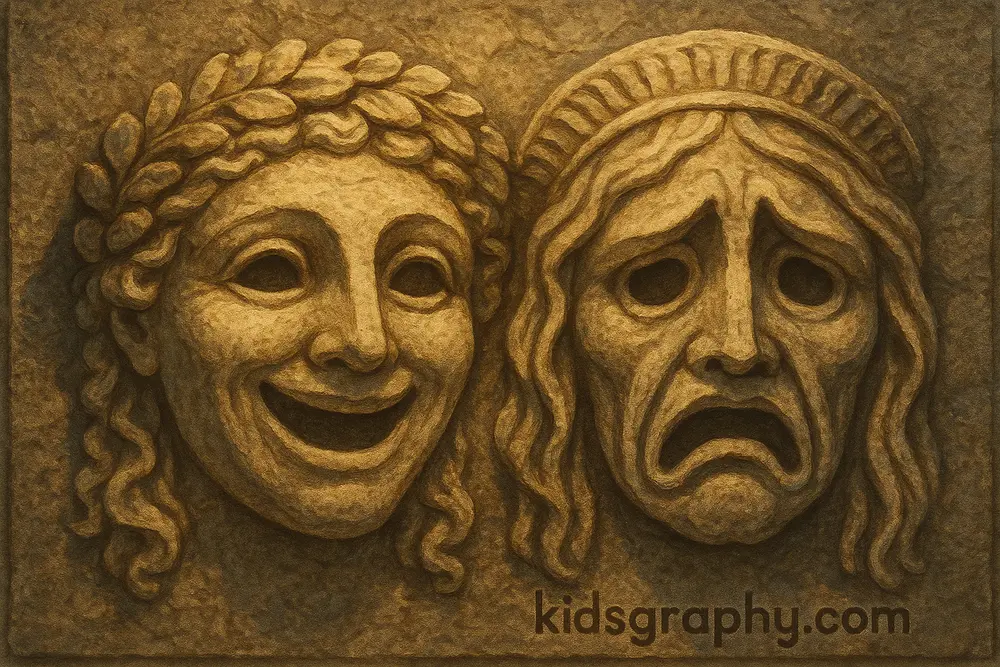
Iambe stands as a testament to the ancient Greek belief in catharsis. The Greeks understood that grief was a powerful, destructive force, but they also understood that "low" or "common" laughter had the divine power to disrupt, challenge, and ultimately reset the human spirit. She represents the idea that the most sacred and the most profane—the grieving goddess and the bawdy servant—are fundamentally linked.
Iambe reminds us that the ability to laugh in the face of tragedy is not a trivial act; it is a primal, divine necessity that keeps the world moving and the cycle of life turning.