The story of Iphigenia is one of the most haunting episodes in Greek mythology, representing the ultimate collision between the demands of state-led military duty and the sanctity of family. It serves as the grim prelude to the Trojan War, highlighting the moral compromise required by the leaders of the Greek coalition.
I. The Offense at Aulis
The Greek fleet, commanded by King Agamemnon, gathered at the port of Aulis, ready to sail for Troy to retrieve Helen. However, they were becalmed; the winds stopped completely, trapping the massive fleet in the harbor.
The prophet Calchas revealed the reason: Agamemnon had offended the goddess Artemis—either by killing a sacred stag in her grove or by boasting that he was a better hunter than she. To appease the goddess and secure the winds necessary to sail, Artemis demanded a terrible price: the sacrifice of Agamemnon’s eldest daughter, Iphigenia.
II. The Deception and the Sacrifice
Agamemnon faced an impossible dilemma: sacrifice his own child or abandon the quest for Troy, risking the wrath of his fellow kings and the collapse of his political power. He chose the former, but he did so through a cruel deception.
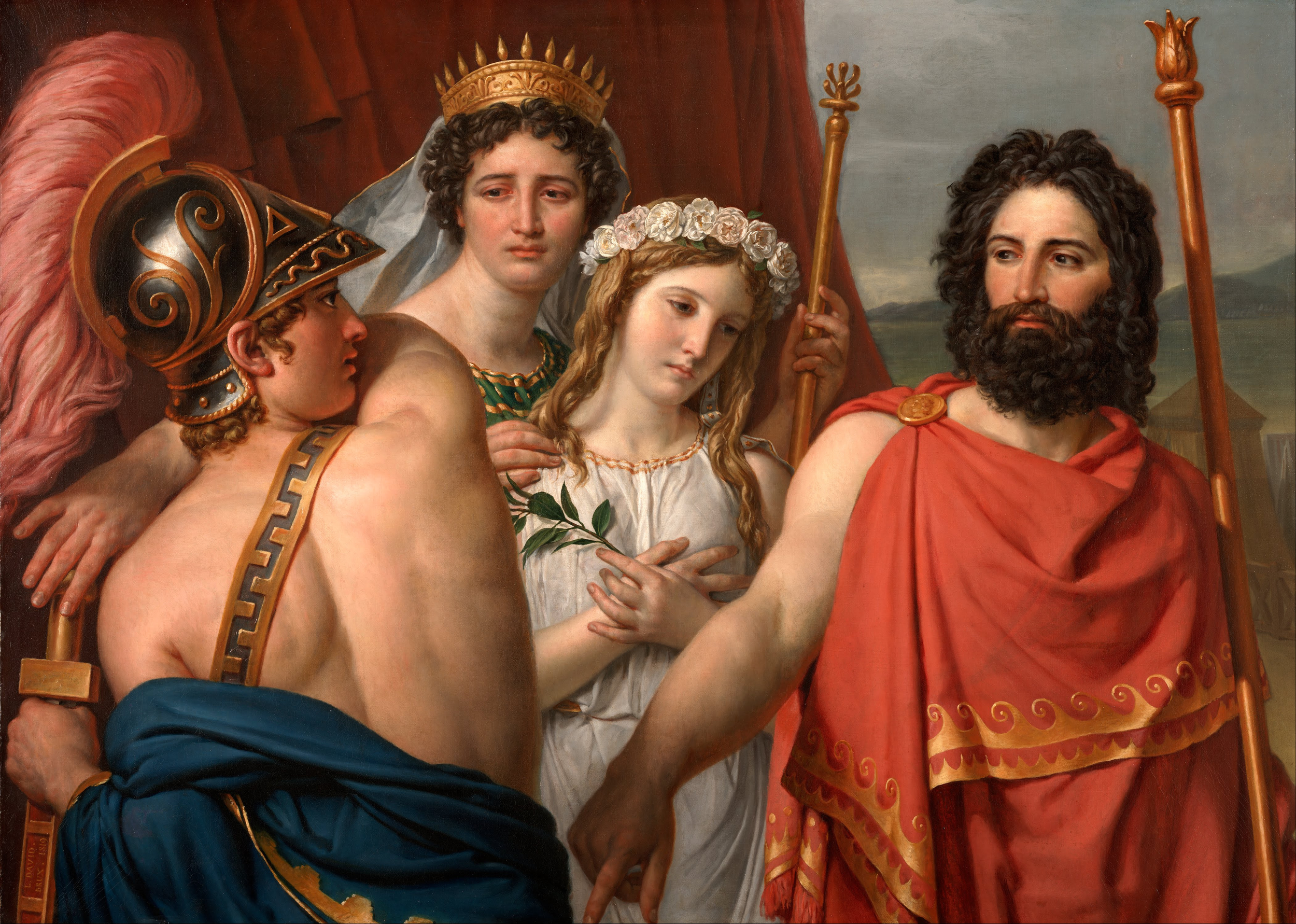
The Lure: Agamemnon sent a message to his wife, Clytemnestra, claiming that he had arranged for Iphigenia to be married to the greatest of the Greek heroes, Achilles, before the army departed.
The Arrival: Iphigenia arrived at Aulis, full of joy and anticipation for her wedding. Instead, she found an altar prepared for her death. When the truth was revealed, she was brought forward to be sacrificed at the altar of Artemis.
III. The Divine Intervention
The climax of the myth varies significantly depending on the literary source:
The Traditional Version: In many accounts, the sacrifice is completed. The gods, moved by the tragedy, provide the favorable winds, and the fleet sails for Troy, leaving a broken Agamemnon and a mother whose heart is hardened by vengeance.
The Euripidean Version: In Euripides’s play Iphigenia at Aulis, the ending is shifted. At the final moment, Artemis intervenes. Just as the knife is poised to strike, the goddess spirits Iphigenia away to the land of the Taurians, leaving a hind (a deer) on the altar in her place. Iphigenia then becomes a priestess of Artemis, living a life of isolation far from her home.
IV. The Lasting Shadow
Regardless of whether she survives or dies, the event shatters the life of the House of Atreus.
The Mother’s Vengeance: The sacrifice (or the attempt) is the primary motivation for Clytemnestra to turn against her husband. When Agamemnon returns from Troy ten years later, he is murdered in his own home by Clytemnestra and her lover, Aegisthus, in an act of retribution for their daughter.
A Symbol of Hubris: In Western literature and art, Iphigenia is often used as the ultimate symbol of the "innocent victim"—the person who pays the price for the ambitions, arrogance, and political calculations of the powerful.
The story of Iphigenia serves as a chilling reminder of the costs of war and the perceived ruthlessness of the gods (and men) in the Homeric tradition.