The Myrmidons (Myrmidones) occupy a legendary place in Greek mythology as the elite, fierce, and fiercely loyal soldiers of Achilles. Their story is unique because it connects the lineage of these warriors directly to the natural world, specifically to the industrious nature of ants.
I. The Mythical Origin: From Ants to Men
The most famous account of their origin, recorded by Ovid in his Metamorphoses, centers on the island of Aegina, which was ruled by King Aeacus (the father of Peleus and grandfather of Achilles).
The Plague: The goddess Hera, jealous that the island was named after her rival, the nymph Aegina, sent a devastating plague to destroy the population. The island was decimated, leaving Aeacus alone.
The Prayer: Desperate for subjects to repopulate his kingdom, Aeacus prayed to his father, Zeus, asking him to fill his empty city with as many people as there were ants he saw marching in a nearby oak tree.
The Metamorphosis: That night, Aeacus dreamt the tree was shaken and the ants fell to the ground, transforming into humans as they hit the earth. When he awoke, he found his kingdom populated by a new, hardy race of people—the Myrmidons—derived from the Greek word myrmex (ant).
II. Characteristics of the Myrmidons
The myth emphasizes that these men retained the essential traits of the ants from which they were created:
Industry and Discipline: Like ants, they were characterized by their tireless work ethic, their capacity for organized group action, and their absolute dedication to their community and their leader.
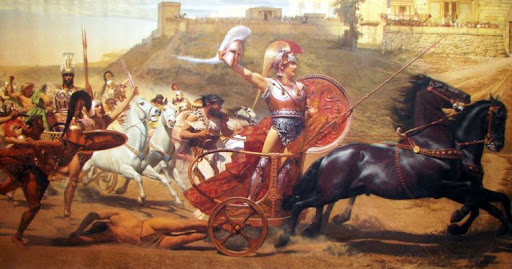
The Warriors of Achilles: When Peleus (the son of Aeacus) fled Aegina and eventually married the sea-goddess Thetis, the Myrmidons migrated with him to Phthia. When Achilles sailed for Troy, he brought these men with him as his personal guard. In the Iliad, they are the most formidable force on the battlefield—a highly cohesive, disciplined unit that acts as a singular extension of Achilles’s own will.
III. The Psychological Presence in the Iliad
The Myrmidons are defined by their intense, almost singular loyalty to Achilles.
Withdrawal and Absence: When Achilles refuses to fight due to his dispute with Agamemnon, the Myrmidons remain inactive. This period of inactivity is crucial to the narrative—it illustrates that without Achilles, the Myrmidons are "decapitated" as a military force, highlighting the symbiotic relationship between the leader and his soldiers.
The Return to Battle: The most dramatic moment for the Myrmidons occurs when Patroclus dons the armor of Achilles. The Myrmidons follow Patroclus into battle, believing it is their true leader. Their tactical ferocity and the terror they inspire in the Trojan lines—who mistake Patroclus for the returned Achilles—is the turning point of the war.
IV. Interpretations
While the "ant" origin is the most famous, some ancient historians suggested more grounded origins:
Geography: Some scholars proposed that the name simply referred to the harsh, rugged landscape of their homeland, which forced the inhabitants to be as industrious and survival-oriented as the creatures they were named for.
Cultural Identity: The myth serves as a metaphor for the ideal Bronze Age warrior: a soldier who, like the ant, places the needs of the collective (the phalanx or the army) above the individual, moving with a singular, terrifying purpose.
The Myrmidons remain the archetypal "special forces" of Greek mythology—a group whose very identity is tied to the concept of unwavering, collective strength.