In ancient Greece, storytelling was not a passive leisure activity; it was the primary vehicle for cultural transmission, moral socialization, and historical preservation. Long before the widespread availability of books or formal schooling, the domestic home (oikos) functioned as an oral academy where the values of the polis were stamped onto the minds of the next generation.
The Fireside Didactic: Aesop and Pragmatic Morals
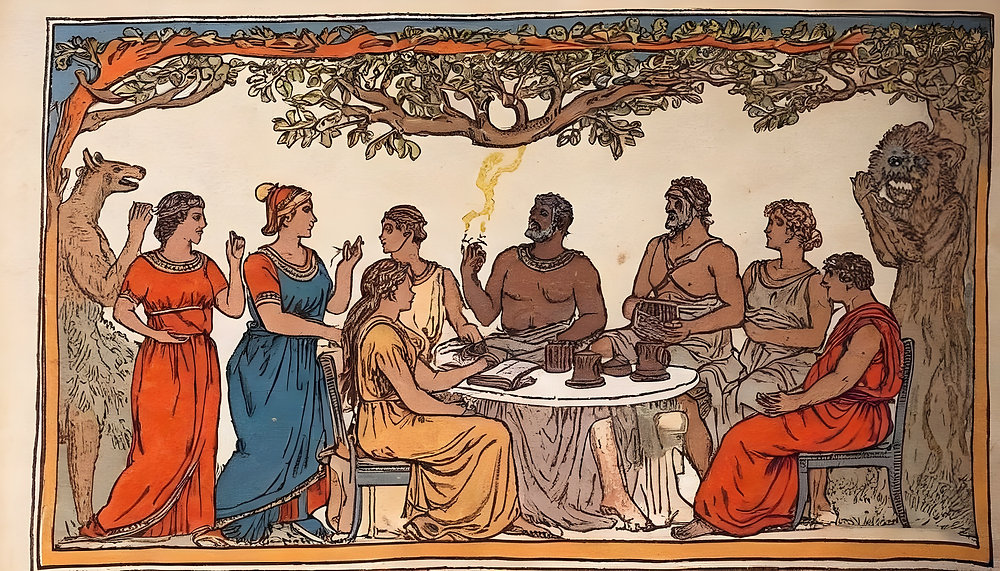
The most common daily storytelling occurred around the central hearth (hestia). Here, mothers, grandmothers, and family slaves recited the fables of Aesop. These short, punchy narratives utilized anthropomorphized animal characters to deliver sharp, pragmatic lessons in survival, social hierarchy, and human nature.
Children did not listen to these stories for simple amusement. A fable about a clever fox outwitting a proud crow taught an Athenian child the dangers of vanity and flattery, while tales of the patient ant surviving winter while the grasshopper starved reinforced the fundamental civic virtues of labor, thrift, and foresight.
The Nurse’s Monstrous Tales: Socializing via Terror
To enforce obedience and discipline within the dark, unlit corridors of the ancient home, Greek caregivers deployed a vivid pantheon of domestic monsters and bogeymen. Nurses regularly related stories of Lamia (a child-devouring queen transformed into a monster), Mormo (a terrifying phantom companion), and the Empusa (a shape-shifting demon with one leg of bronze and one of a donkey).
These stories served a critical social function: they channeled parental authority through supernatural terror. A child who refused to sleep, wandered too close to deep household cisterns, or misbehaved in public was warned that Mormo would snatch them away in the night, using ancient folklore to structurally enforce behavioral boundaries within the family.
The Homeric Ideal: Cultivating Arete
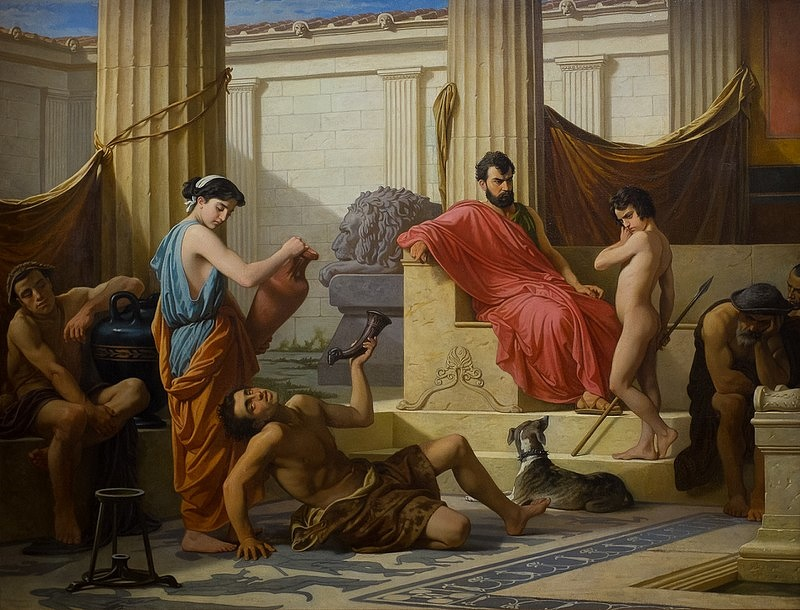
As children transitioned into adolescence, the domestic narrative shifted from fables to the epic poetry of Homer’s Iliad and Odyssey. During family dinners or small domestic gatherings, the patriarch or a traveling storyteller (rhapsode) would chant these verses from memory.
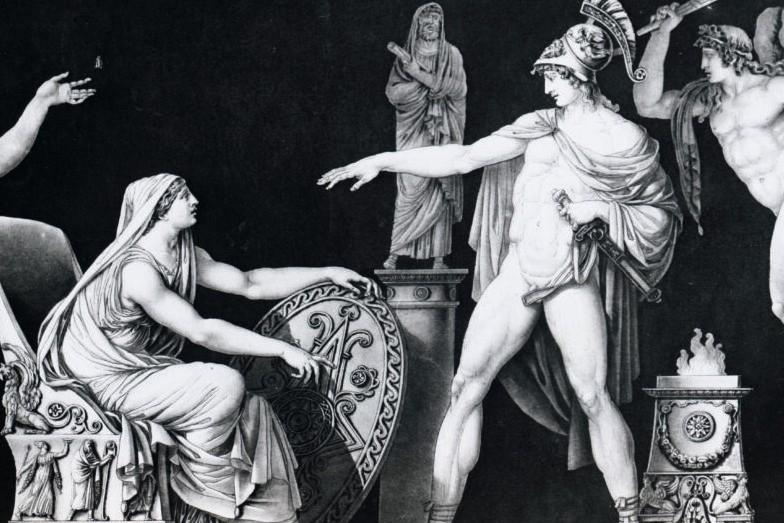
These epics provided the absolute moral blueprint for the Greek elite. By hearing the exploits of Achilles, Hector, and Odysseus, young Greeks absorbed the foundational concepts of arete (excellence/virtue) and kleos (immortal glory).
They learned how a noble citizen should face death on the battlefield, how to extend sacred hospitality (xenia) to strangers, and how to maintain emotional moderation (sophrosyne) in the face of absolute crisis, transforming family storytelling into an intense incubator for civic leadership.