The rapid urbanization, maritime colonization, and architectural scaling of the ancient Greek world required an exceptionally precise, standardized system for measuring land and geographic distance. Lacking modern laser rangefinders or satellite imagery, Greek surveyors, known as geometres (literally "earth-measurers"), relied on an ingenious combination of applied geometry, mechanical instruments, and highly trained human pacers to map their world.
For localized land division and urban grid planning—such as the revolutionary orthogonal city plans designed by Hippodamus of Miletus—surveyors utilized the groma and the dioptra. The groma, an instrument adapted from older Near Eastern models, consisted of a vertical staff supporting an equilateral wooden cross. Plumb-lines suspended from the four ends of the cross allowed surveyors to sight perfectly straight lines and map out precise 90-degree right angles across open fields. For more complex vertical and horizontal angle measurements, engineers used the dioptra, a sophisticated sighting tube mounted on a calibrated tripod that utilized level water balances to calculate topographic elevations, ensuring that aqueducts, drainage channels, and temple foundations were perfectly aligned.
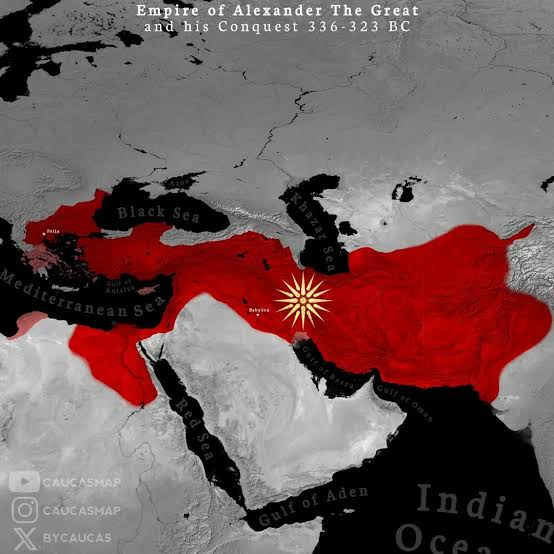
When it came to mapping vast geographic distances across the Mediterranean landscape, the Greeks relied on highly specialized long-distance pacers known as bematists. These individuals were trained from youth to walk with a perfectly uniform, unvarying stride length, counting their steps over hundreds of miles across rugged terrain. The accuracy of these human measuring tapes was astonishing; during Alexander the Great's campaigns through Asia, his personal bematists recorded geographic distances that varied from modern satellite measurements by less than three percent. These compiled step measurements were converted into standard Greek units of distance, primarily the stadion (roughly 600 feet, based on the length of an athletic stadium track), which served as the baseline data for the world's first accurate geographical maps and the calculation of the Earth's circumference by Eratosthenes.