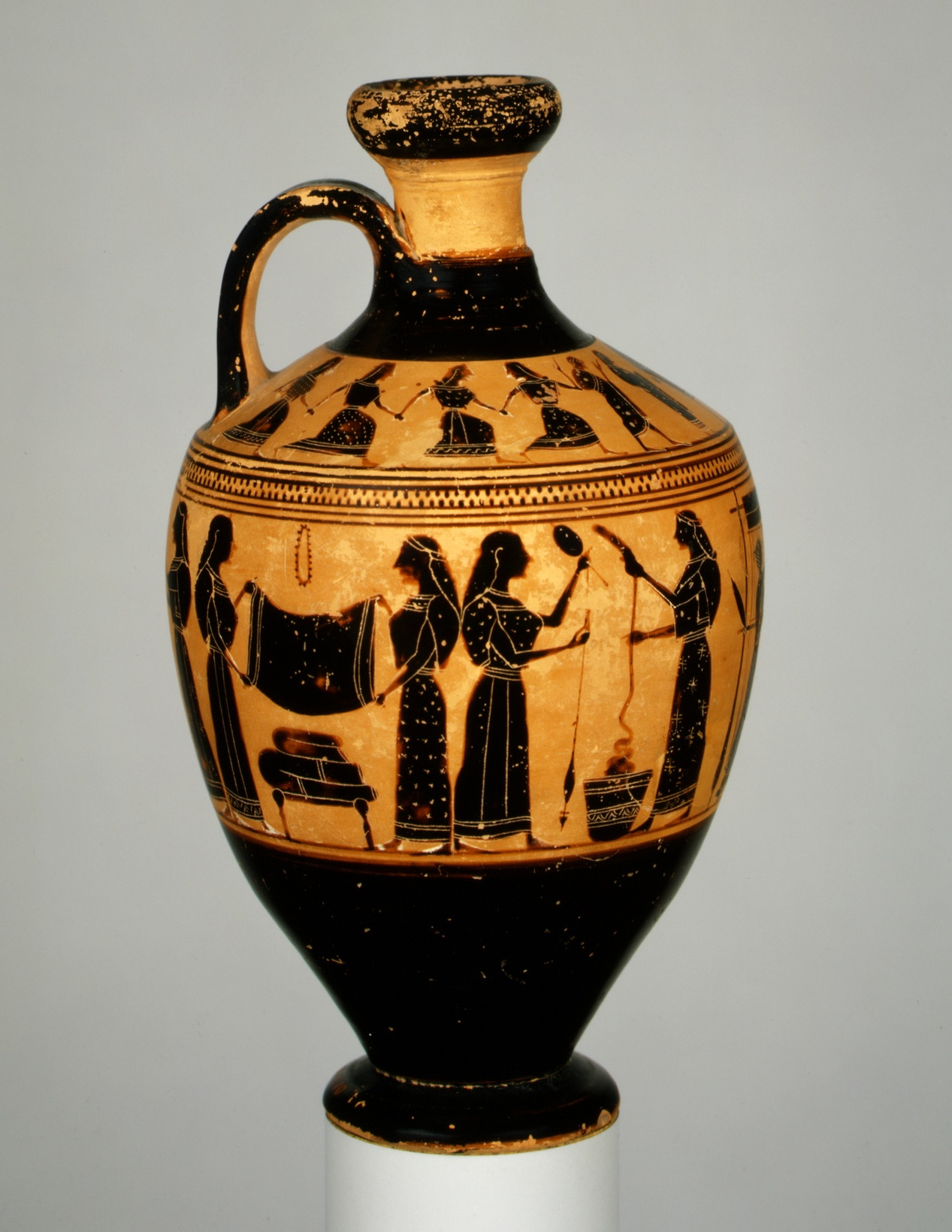
In the ancient Mediterranean, clothing was a primary visual marker of an individual's gender, social class, and economic power. While the vast majority of working-class citizens wore un-dyed, off-white wool or linen garments, the elite demanded vibrant, intensely colored textiles. To fulfill this demand, Greek dyers operated highly sophisticated, chemically complex industrial workshops that harnessed the biological properties of plants, insects, and marine organisms.
The absolute undisputed crown jewel of the ancient dyeing industry was Tyrian purple, known to the Greeks as porphura. This exceptionally vibrant, light-fast dye was harvested through a grueling, labor-intensive extraction process from the hypobranchial glands of marine predatory snails, specifically Murex brandaris. Dyers harvested thousands of these snails, cracked open their shells, extracted the tiny glands, and boiled them in heavy lead vats filled with a highly alkaline brine solution for up to ten days. As the liquid slowly reduced under a low fire, the intense heat triggered a complex chemical oxidation process, converting the pale glandular fluid into a rich, deep purple-red dye that chemically bonded with wool or silk fibers, creating a luxury textile that was literally worth its weight in solid silver.
For non-royal colors, Greek workshops utilized a diverse botanical and insect pharmacopeia. Red shades were extracted from the roots of the madder plant (Rubia tinctorum) or from the crushed, dried bodies of the kermes scale insect, which infested oak trees. Vibrant yellows were achieved by steeping textiles in baths of wild saffron stigmas or weld leaves, while deep blues were created through the painstaking fermentation of woad plants (Isatis tinctoria) inside oxygen-deprived reduction vats. Because raw organic pigments naturally wash out of animal and plant fibers, Greek dyers mastered the use of mineral fixing agents known as mordants. Before introducing the textiles to the dye vats, the wool was boiled in concentrated solutions of alum (aluminum sulfate) or iron salts harvested from volcanic springs, which acted as a chemical bridge, permanently anchoring the dye molecules to the fabric and ensuring the colors survived centuries of washing.