While the classical literature written by the aristocratic elite frequently condemns public drinking establishments as dirty, disreputable dens of vice and criminality, the historical reality is that taverns (kapeleia) and inns (pandokeia) were indispensable social, economic, and logistical hubs for the vast majority of ordinary Greek citizens, sailors, and foreign traders.
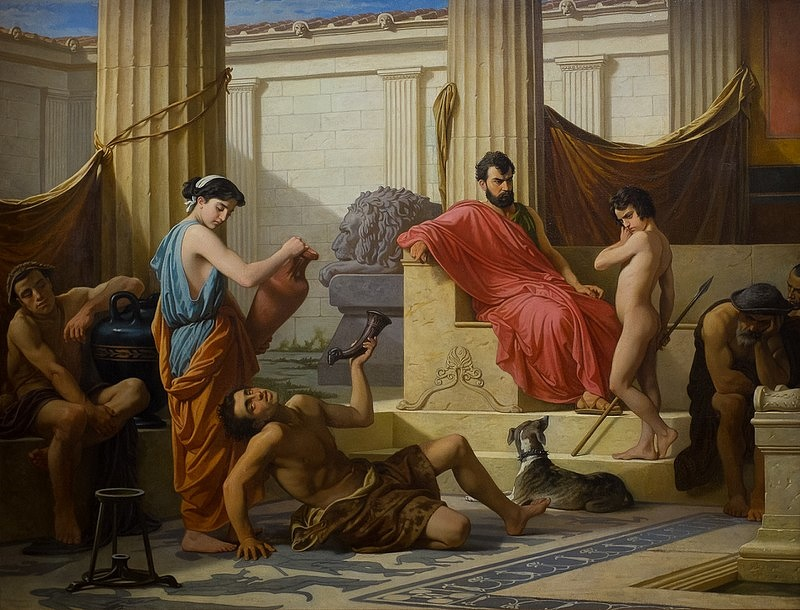
A kapeleion was essentially a local neighborhood tavern and retail shop combined into one. Located along busy commercial thoroughfares and near harbor docks, these establishments were operated by a kapelos (tavern keeper), who sold wine by the ladle from massive ceramic jars called pithoi. Because wine was rarely consumed pure in the Greek world, the tavern keeper's primary skill lay in carefully blending the vintage with specific ratios of water inside large mixing bowls (kraters). Taverns served as democratic, un-segregated melting pots where poor laborers, sailors, traveling merchants, and domestic slaves commingled. These spaces hummed with a lively, informal counter-culture characterized by intense political gossip, the playing of dice games, and impromptu musical performances, providing an important social relief valve outside the rigid, formal boundaries of the civic polis.
For long-distance travelers navigating the dangerous highways of the Mediterranean, the pandokeion (literally "all-welcoming house") provided essential roadside infrastructure. Unlike the high-end, sacred hospitality (xenia) extended between wealthy aristocratic families, an inn was a purely commercial enterprise where anyone could purchase a basic meal, a straw mattress, and a stable for their pack mules for a few copper coins. These inns were strategically positioned near Panhellenic sanctuary sites like Olympia and Delphi, or at major crossroads along the trade routes. Despite their frequent reputation for bedbugs, watered-down wine, and dishonest proprietors, the pandokeia played a critical role in facilitating the rapid physical movement of people, commercial goods, and written news across the vast distances of the ancient Greek world.