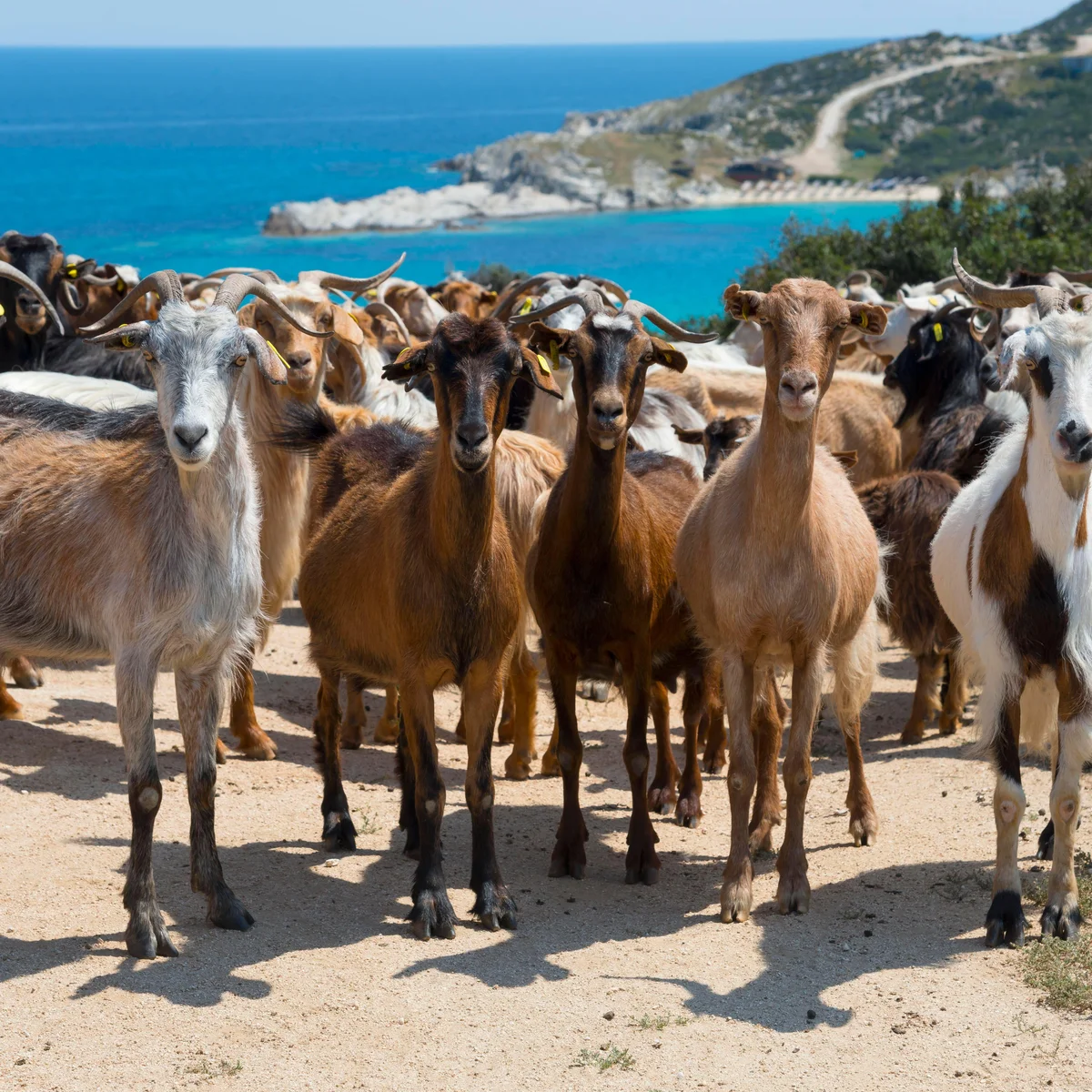
While popular modern imagination associates ancient Mediterranean agriculture primarily with rolling fields of wheat, olive groves, and sprawling vineyards, the rugged, mountainous topography of Greece made large-scale cattle ranching physically impossible across most of the peninsula. Consequently, the true, daily economic and agricultural engines of the Greek landscape were sheep (probata) and goats (aiges), resilient animals capable of transforming sparse, rocky scrubland into essential survival resources.
Sheep and goats were perfectly adapted to the thin soils and hyper-arid summers of the Greek terrain, operating within a highly organized pastoral system known as transhumance. During the scorching summer months when the lowland valleys dried up entirely, shepherds moved their flocks high into the alpine meadows of the Parnassus or Taygetos mountain ranges, where fresh grass and water remained available.
In the winter, they migrated back down to the coastal plains to graze on the stubble left behind in harvested grain fields, naturally fertilizing the agricultural soil with their manure ahead of the next spring planting cycle.
The economic outputs of these flocks were highly diversified, driving both domestic survival and international trade. Sheep were bred primarily for their thick wool, which was hand-spun and woven by women into every piece of clothing worn in the ancient world, from the coarse cloaks of poor farmers to the fine tunics of elite politicians. Goats provided a dense, coarse hair used to manufacture heavy-duty ropes, sails, and weather-proof tents.
Because cow's milk was exceptionally rare and highly susceptible to rapid spoilage, goat and sheep milk was the primary source of dairy, immediately processed into hard, salted cheeses that could be stored for months inside ceramic jars.
The meat of these animals was rarely consumed casually; it was strictly reserved for religious sacrificial festivals, ensuring that every part of the animal was systematically utilized to sustain human life across a challenging landscape.