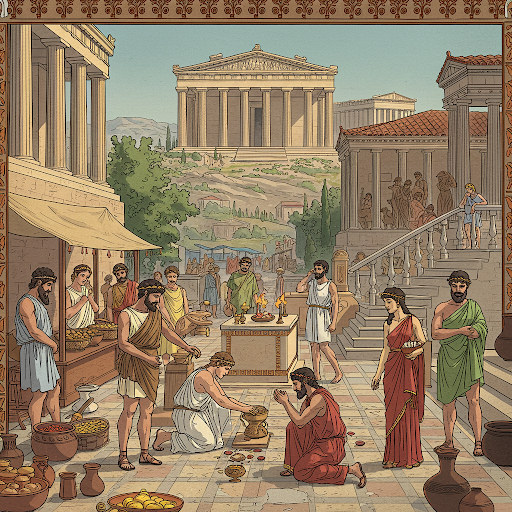
Unlike the highly centralized, dogmatic religious hierarchies of the ancient Near East, ancient Greek religion was radically decentralized and deeply embedded within the civic structure of the polis. Greek priests (hiereis) and priestesses (hiereiai) did not form a separate, isolated social caste, nor did they require formal theological training or seminary education. Instead, they acted as public civic officials, appointed by the state to manage the physical infrastructure of the gods and maintain the vital peace between humanity and the divine (pax deorum).
In many major cults, the position of priesthood was determined through democratic lotteries or temporary annual appointments, meaning an ordinary citizen could serve as a priest for a single year before returning to standard civilian life. However, certain elite priesthoods were hereditary, passed down within aristocratic clans.
Crucially, the gender of the religious official strictly mirrored the gender of the deity they served: gods like Zeus, Apollo, and Poseidon were managed exclusively by male priests, while goddesses like Hera, Athena, and Demeter were served by priestesses.
Priestesses often wielded immense real-world political power; the High Priestess of Athena Polias in Athens was considered the most socially influential woman in the city, possessing a public voice and political weight that defied the standard domestic seclusion of regular Greek women.
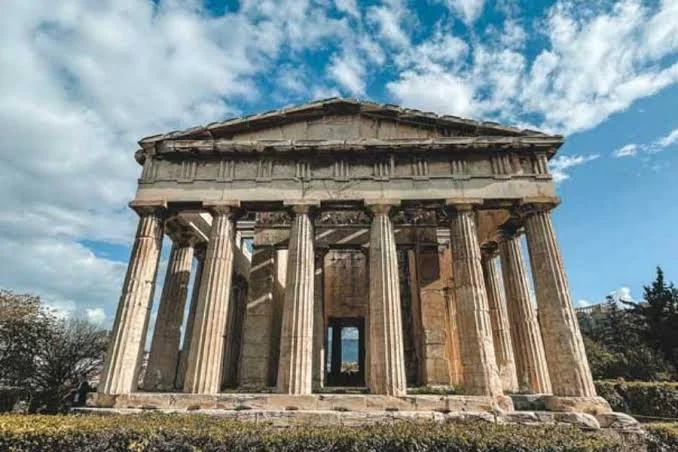
The daily responsibilities of these religious officials were primarily administrative and ritualistic. They were the legal guardians of the temple properties, managing the vast treasuries of gold, silver, and land endowments donated by wealthy citizens.
Their ultimate spiritual duty took place outside the temple doors at the open-air stone altar, where they performed the precise mechanics of animal sacrifice. The priest or priestess sliced the throat of the sacrificial victim, directed the blood onto the altar, and carefully burned the fat and bones so the sweet-smelling smoke could ascend to the heavens, preserving the civic harmony of the state.