Among the four directional winds of ancient Greek mythology, Boreas was perhaps the most powerful and culturally significant.
Boreas was the personification and god of the north wind, traditionally associated with the cold, harsh, and winter-producing air that descended upon Greece from the north.
Unlike many minor mythological beings, Boreas appears frequently in classical literature, art, religion, and historical tradition. His influence extended beyond mythology into the practical life of ancient communities because winds directly affected agriculture, sailing, warfare, weather prediction, and trade.
Boreas therefore represents an important example of how Greek mythology transformed a natural force into a divine personality.
Who Was Boreas?
Boreas was one of the Anemoi, the gods or personifications of the winds.
The principal directional winds included:
Boreas — North
Notus — South
Eurus — East or southeast
Zephyrus — West
Other wind deities were sometimes recognized as well.
Boreas was traditionally associated with the cold northern wind.
His arrival could mean:
winter,
storms,
cold temperatures,
rough seas,
and dangerous travel.
He therefore had a very different character from Zephyrus, the gentle west wind often associated with spring.
Boreas in Hesiod
Hesiod's Theogony places Boreas within the genealogy of the winds.
He is identified as one of the children of Astraeus and Eos.
His siblings include the other winds, such as Zephyrus and Notus. (theoi.com)
This genealogy is significant.
The winds are not random supernatural creatures.
They belong to a divine family associated with the sky and the dawn.
Greek mythology therefore places atmospheric phenomena within a structured cosmic genealogy.
Physical Appearance
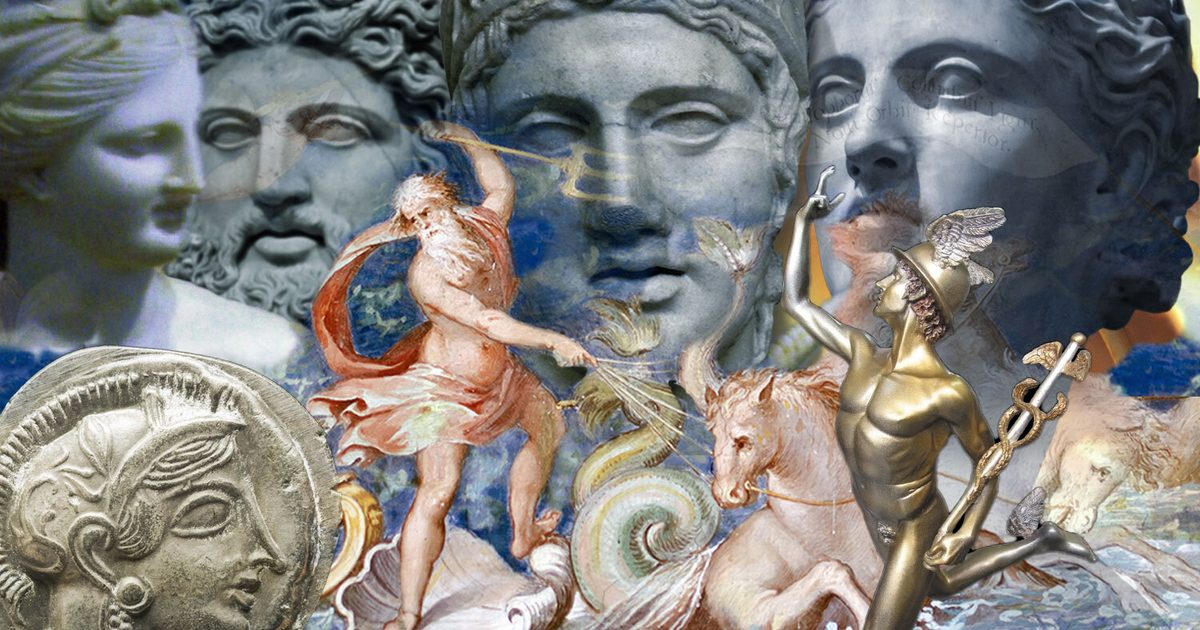
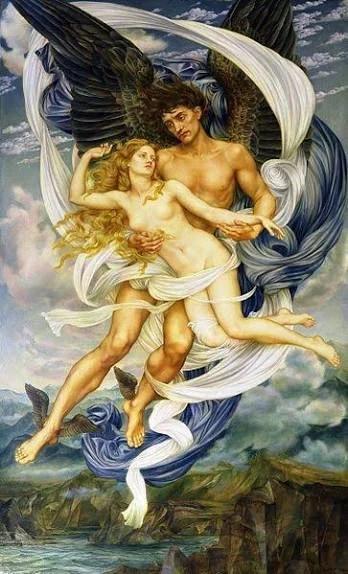
Ancient art often portrays Boreas as a powerful, bearded man.
He may possess wings, emphasizing his nature as a wind deity.
His clothing and posture can suggest movement and cold.
Later descriptions sometimes portray him with a cloak wrapped around his body, reinforcing the association with winter.
The visual contrast between Boreas and Zephyrus could therefore communicate seasonal differences.
Boreas is harsh.
Zephyrus is gentle.
The two winds represent opposing atmospheric experiences.
Boreas and Winter
The most obvious association of Boreas is winter.
The north wind brings cold air from northern regions.
For ancient Greek communities, this could have significant consequences.
Cold weather affected:
agriculture,
travel,
fishing,
shipping,
military campaigns,
and household life.
By personifying the wind, Greeks transformed an unpredictable environmental force into a divine personality.
Boreas could therefore be feared, respected, or even honored.
Boreas and the Sea
Sailors had particularly strong reasons to respect the winds.
A sudden change in wind direction could determine whether a voyage succeeded or failed.
A powerful northern wind could create dangerous conditions.
Greek mythology therefore frequently connects Boreas with maritime travel.
The wind gods were not abstract concepts.
They were practical forces capable of determining survival.
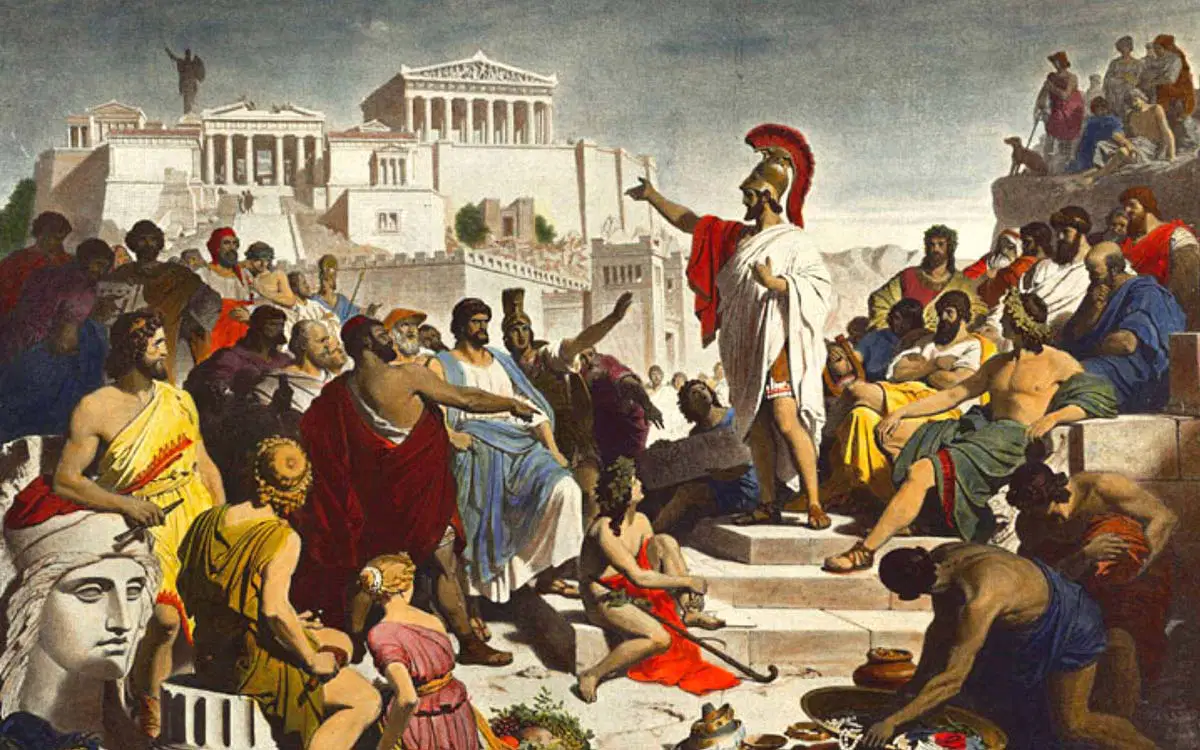
Boreas and the Athenians
One of the most famous stories involving Boreas concerns Athens.
According to Herodotus, the Athenians believed that Boreas had helped them during the Persian Wars.
The Athenians attributed the destruction of part of the Persian fleet to the intervention of the north wind.
Herodotus reports that the Athenians had previously been instructed by an oracle to call upon their "son-in-law" as an ally. They interpreted this as a reference to Boreas because of his marriage connection to the Athenian royal family. (perseus.tufts.edu)
This is an extraordinary example of mythology intersecting with history.
Boreas was not merely a literary character.
He could become part of a community's interpretation of a real historical event.
Boreas and Oreithyia
Boreas was traditionally married to Oreithyia, daughter of the Athenian king Erechtheus.
The myth tells that Boreas abducted Oreithyia while she was near the Ilissus River.
Their union produced several children, including the winged brothers Zetes and Calaïs, who later participated in the Argonaut expedition.
The daughters of Boreas and Oreithyia also included Cleopatra and Chione in some traditions.
The marriage therefore connected Boreas to Athens through mythological genealogy.
The Abduction of Oreithyia
The story of Oreithyia has been interpreted in several ways.
At the literal narrative level, Boreas carries away a mortal woman and makes her his wife.
Symbolically, the story can represent the violent force of the wind.
A strong gust can "carry away" objects just as Boreas carries away Oreithyia.
The myth transforms an atmospheric phenomenon into an interpersonal event.
However, from a modern perspective, the story also contains themes of coercion and abduction that should not be romanticized merely because ancient mythology presents them as divine marriages.
Boreas and the Argonauts
Boreas' sons Zetes and Calaïs became important figures in the story of Jason and the Argonauts.
They were winged heroes who joined the expedition aboard the Argo.
Their connection to Boreas was therefore passed into another generation of mythology.
This demonstrates how Greek myths form interconnected genealogical networks.
A story about the wind can eventually become connected to:
Athens,
the Trojan royal family,
the Argonauts,
and the wider heroic age.
Boreas and Scientific Thought
Ancient Greek thinkers increasingly attempted to understand wind through natural philosophy.
The mythological identity of Boreas did not necessarily prevent intellectual investigation.
Instead, mythology and natural philosophy could coexist.
People could understand the physical behavior of wind while simultaneously using the divine name Boreas to describe its direction and cultural significance.
This duality continued into later Greek and Roman traditions.
The name Boreas became both mythological and geographical.
Boreas in Roman Culture
The Romans adopted the Greek wind system and associated Boreas with the northern wind.
The Roman equivalent was commonly known as Aquilo.
The survival of Boreas' identity demonstrates how Greek mythology influenced Roman culture.
The winds became part of a broader Mediterranean system of directional terminology.
Boreas and Human Life
Boreas represents a fascinating intersection between mythology and everyday experience.
Unlike distant gods who rarely interact with ordinary people, winds are unavoidable.
Everyone experiences wind.
Everyone sees its effects.
People cannot command it.
They can only respond to it.
This makes Boreas an excellent example of why natural forces were personified.
Giving the wind a name made it conceptually easier to understand and culturally easier to discuss.
Symbolism of Boreas
Boreas can represent several broader themes:
Power of nature
Humans cannot control the wind.
Seasonal change
His arrival signals cold weather and winter.
Danger
Strong northern winds can make travel hazardous.
Divine intervention
Historical events could be interpreted as the actions of Boreas.
Fertility and agriculture
The wind affects weather and therefore agricultural conditions.
Movement
As a wind deity, Boreas represents constant motion and change.
The Legacy of Boreas
Boreas remains one of the best-known wind deities of Greek mythology.
His name continues to appear in literature, geography, meteorology, astronomy, and scientific terminology.
The ancient Greeks recognized something that remains true today:
Nature can be beautiful, useful, unpredictable, and dangerous at the same time.
Boreas embodies all of those qualities.
He is not simply "the god of the north wind."
He represents humanity's attempt to give personality and meaning to one of the most powerful forces shaping the natural world.