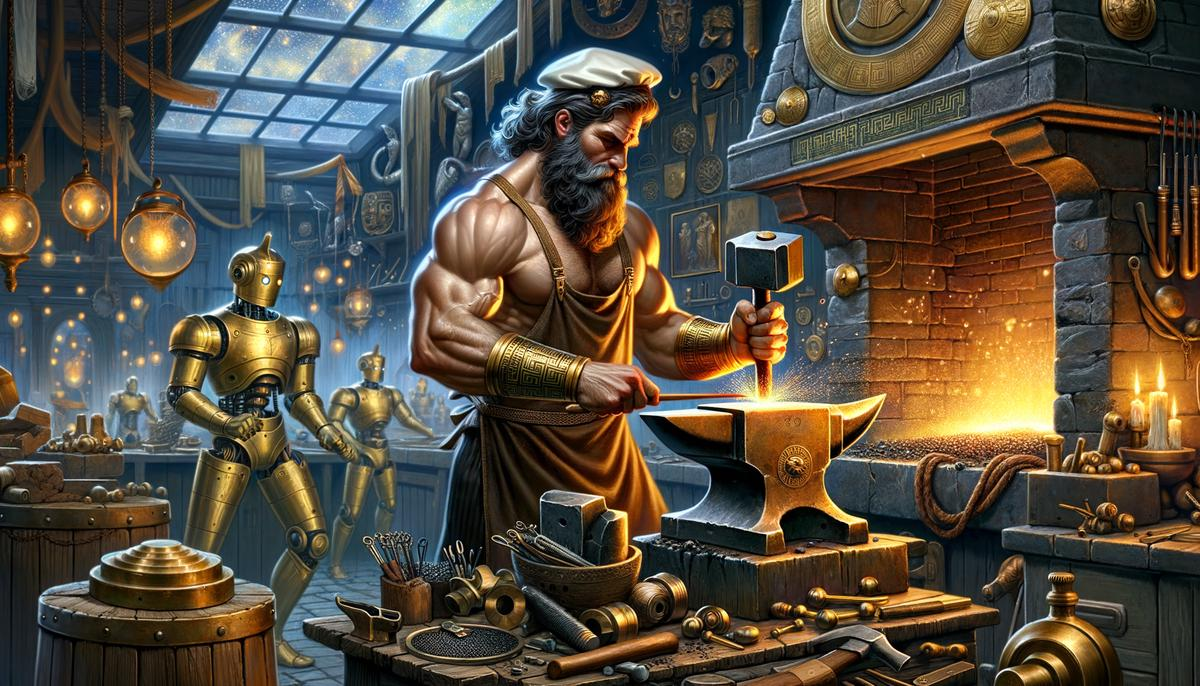
The social position of the blacksmith (chalkeus) in ancient Greek society was characterized by a profound, paradoxical duality. On one hand, the blacksmith was an absolutely indispensable economic and military asset to the polis, responsible for transforming raw ore into the iron weapons of the hoplite phalanx and the essential iron tools of agriculture. On the other hand, aristocratic Greek culture harbored a deep aristocratic disdain for manual, physical labor, frequently relegating the smith to a lower, marginalized social caste.
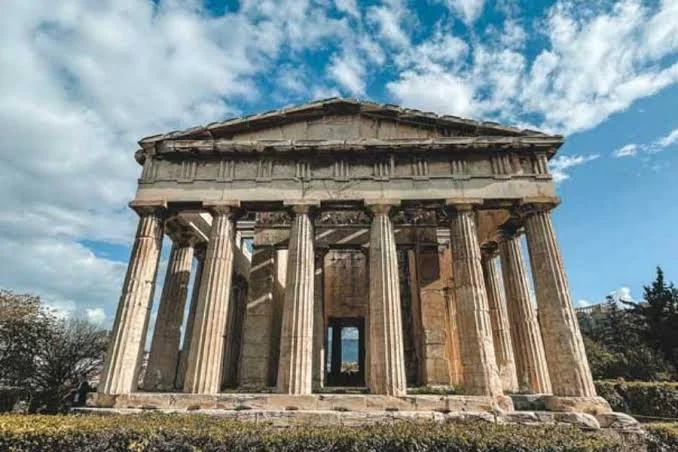
This societal split is brilliantly mirrored in Greek mythology through the figure of Hephaestus, the god of the forge and metalworking. Unlike the pristine, physically perfect deities of Mount Olympus, Hephaestus was depicted as congenitally lame, soot-stained, and physically deformed by his grueling labor over the anvil. Yet, he was simultaneously celebrated as the ultimate craftsman, capable of creating objects of breathtaking beauty and cosmic power.
Mortal blacksmiths lived a very similar reality; they were viewed with a mix of awe for their quasi-magical ability to manipulate fire and metal, and social aversion due to their soot-darkened skin, calloused hands, and the pungent, smoky neighborhoods where their workshops were clustered.
"The artisan's body is bent and warped by the heat of the furnace; his eyes are strained by the glare of the coals, and his status in the eyes of the leisure class is forever lowered by the necessity of his toil." — Xenophon, Oeconomicus
Despite this cultural snobbery, the physical workshop of the chalkeus was a vital, buzzing center of local community life. Because the forge furnace required a continuous fire to maintain operational temperatures, the blacksmith’s shop was consistently the warmest, brightest location in the city during the cold winter months.
Ordinary citizens, laborers, and travelers would routinely gather around the forge to warm themselves, exchange local political gossip, and watch the rhythmic, hypnotic labor of the smith.
The blacksmith operated as a critical community anchor, deeply embedded in the civic fabric, serving as the unsung metallurgical engine that physically built and defended the classical world.