• Home page/Blog
    • Ancient Greece
    • Archaeology
    • Mythology
    • Architecture
    • Artefact
    • Inventions
    • Tourism
    • News
    • Science
    • General
    • Weird
    • Recipes
    • Blog
  • About
  • Contact
Menu

GHD

  • Home page/Blog
  • History
    • Ancient Greece
    • Archaeology
    • Mythology
  • Art
    • Architecture
    • Artefact
    • Inventions
  • Travel
    • Tourism
  • Other
    • News
    • Science
    • General
    • Weird
    • Recipes
    • Blog
  • About
  • Contact
No results found

How Ancient Greeks Built Their Ships

July 9, 2026

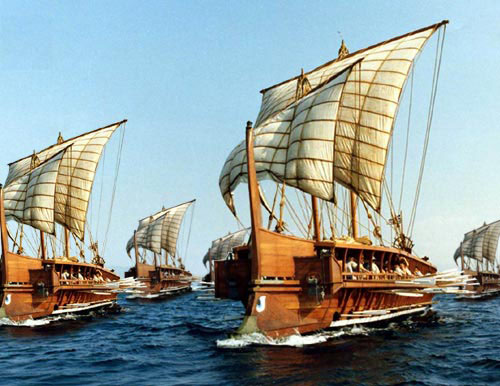
The naval supremacy of seafaring states like Classical Athens was entirely dependent on their highly advanced, standardized shipwright engineering traditions, which produced the ultimate naval weapon of antiquity: the trireme (trieres).

  • Shell-First Construction: Unlike modern wooden ships, which are built by fastening planks onto a pre-existing internal skeletal frame, ancient Greek shipwrights used a shell-first methodology. They laid down a heavy oak keel first, then built the outer hull planks upward, edge-to-edge.

  • The Mortise-and-Tenon Lock: To hold the hull planks together securely without relying on metal spikes, artisans cut thousands of precise, rectangular slots called mortises into the thin edges of the wood. A tightly fitting wooden wedge, or tenon, was inserted into the slots, pinning the adjacent planks together. The entire joint was then locked permanently in place by driving a wooden dowel through the assembly, creating a strong hull that could withstand severe ocean stresses.

  • The Ramming Weaponry: Warships were constructed primarily of lightweight silver fir or pine to maximize speed and agility. At the prow, shipwrights integrated a massive wooden timber clad in a multi-pronged bronze casting: the water-line ram (embolos). The entire purpose of the ship’s sophisticated, flexible construction was to act as a guided missile, utilizing the muscle power of 170 oarsmen to punch holes directly through the hulls of enemy vessels.

← The Role of Shepherds in Greek SocietyThe Art of Glassmaking in Ancient Greece →
Featured
image_2026-06-30_224300876.png
July 9, 2026
How Ancient Greeks Built Their Ships
July 9, 2026
July 9, 2026
image_2026-06-30_224232440.png
July 9, 2026
The Art of Glassmaking in Ancient Greece
July 9, 2026
July 9, 2026
image_2026-07-01_220444120.png
July 9, 2026
The Role of Wild Animals in Greek Folklore
July 9, 2026
July 9, 2026
image_2026-07-01_220410684.png
July 9, 2026
How Ancient Greeks Built Their Bridges and Roads
July 9, 2026
July 9, 2026
image_2026-07-01_220335525.png
July 9, 2026
The Influence of Greek Mythology on Jewelry Designs
July 9, 2026
July 9, 2026
image_2026-07-01_220256483.png
July 9, 2026
The Role of Astrology in Greek Decision-Making
July 9, 2026
July 9, 2026
image_2026-07-01_220221037.png
July 9, 2026
The Greek Concept of Social Status and Clothing
July 9, 2026
July 9, 2026
image_2026-07-01_220123080.png
July 9, 2026
How Greek Merchants Traded Across the Mediterranean
July 9, 2026
July 9, 2026
SEE MORE

Powered by ©GreeceHighDefinition / Privacy Policy