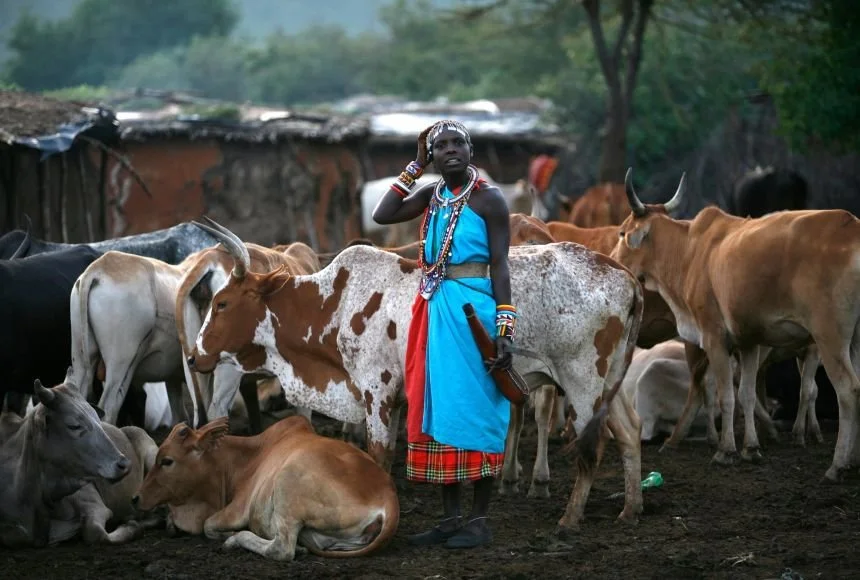
While sheep and goats dominated the rugged hillsides of ancient Greece, cattle occupied the absolute pinnacle of economic value, agricultural utility, and religious prestige. Possessing a herd of oxen or cows was the definitive marker of substantial wealth, as the high cost of feeding and housing these large animals restricted their ownership primarily to wealthy elites and state institutions. From plowing the deep soils of fertile plains to serving as the ultimate sacrificial offering to the Olympian gods, cattle were the central anchors of both material and spiritual life.
Economically, the ox (bous) was the primary source of heavy draft labor in antiquity. Without the physical strength of oxen, large-scale grain agriculture would have been virtually impossible in Greece's stubborn soils. Teams of oxen were yoked together to pull heavy wooden scratch-plows during the crucial autumn sowing season, and they were utilized to trample harvested grain on circular stone threshing floors to separate the wheat from the chaff. Furthermore, oxen were the heavy transport engines of the ancient world, hauling massive marble blocks from mountain quarries to urban construction sites to build temples, making them indispensable to public architecture.
In the realm of religious ritual, cattle were the absolute supreme currency of devotion. The grandest sacrificial ceremony a city-state could perform was the hecatomb, which literally translates to the slaughter of one hundred cattle. This massive public ritual was staged during major civic festivals, such as the Panathenaia in Athens. The animals selected had to be completely unblemished, their horns often gilded with real gold leaf and adorned with woolen ribbons before being led in a grand procession toward the altar, demonstrating the state’s wealth and piety to both the populace and the heavens.
The ritual slaughter followed a strict legal and theological protocol designed to minimize pollution and secure divine favor. After the animal was consecrated, its throat was cut over the altar, and the blood was splashed across the stone base. Crucially, the internal fat and thigh bones were wrapped together and burned on the altar fire, as the sweet-smelling smoke rising to the sky was believed to be the portion of the feast consumed by the gods. The vast remaining mass of meat was then systematically butchered, cooked, and distributed to the entire citizen body, turning the religious sacrifice into a vital public feast that reinforced civic cohesion and provided essential nutrition to the masses.