Ancient Greek beliefs about the afterlife were complex and changed across time.
There was no single Greek doctrine describing exactly what happened after death.
Instead, beliefs included several overlapping traditions involving the underworld, judgment, punishment, blessed afterlife, heroic existence, and mystery religions.
The Underworld
The Greek underworld was generally ruled by Hades and Persephone.
Hades was both the name of the god and, in many contexts, the realm of the dead.
The Journey of the Dead
After death, the deceased entered the realm of the dead.
Mythology often describes the soul traveling through the underworld.
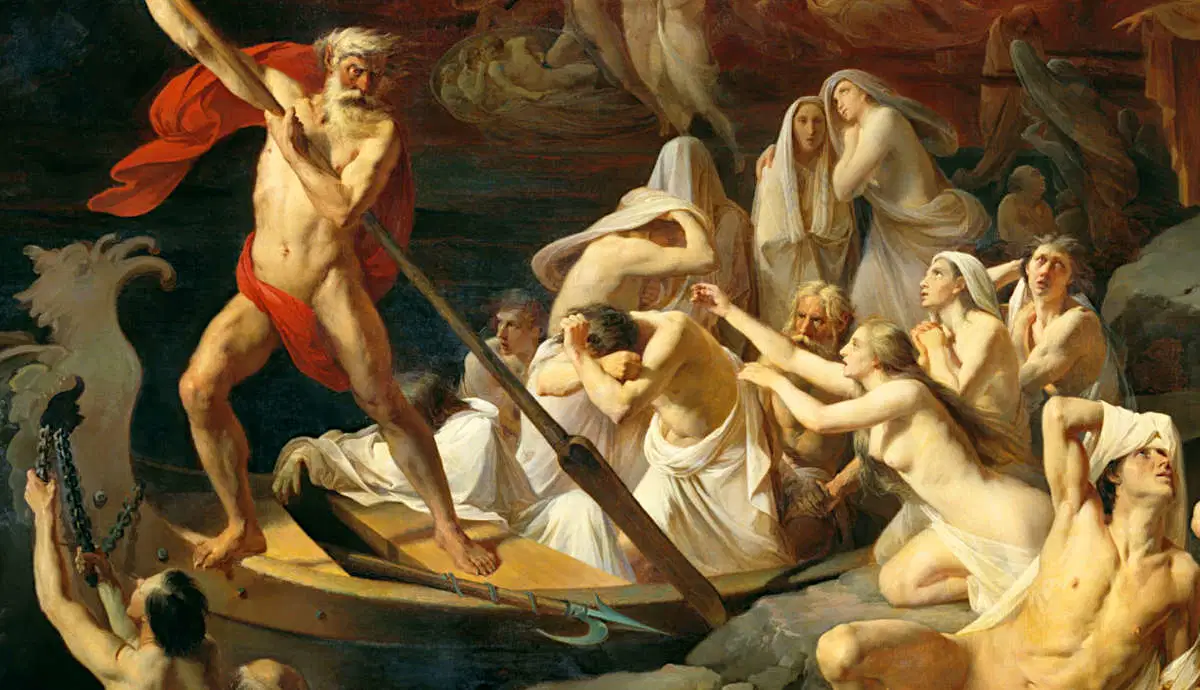
Charon
The ferryman Charon transported souls across the waters separating the living world from the realm of the dead.
In later traditions, the deceased needed payment for the journey.
This is one reason coins have sometimes been found in Greek burials.
Cerberus
The entrance to the underworld was guarded by Cerberus, the multi-headed dog.
His role was to prevent the dead from escaping and the living from entering improperly.
The Judges
Certain traditions identify Minos, Rhadamanthys, and Aeacus as judges of the dead.
They evaluated souls according to their lives and circumstances.
Elysium
The blessed could reach Elysium, a place associated with extraordinary happiness.
Not everyone automatically entered it.
The exact criteria vary across literary traditions.
Tartarus
Tartarus represented a deep region associated with imprisonment and punishment.
Figures such as:
Sisyphus;
Tantalus;
and Ixion
were punished there or in related regions of the mythological underworld.
The Asphodel Meadows
Many ordinary dead were associated with the Asphodel Meadows, a shadowy region of the underworld.
This differs from the popular modern image of either heaven or hell.
Greek mythology often imagined the afterlife as more complicated.
Heroic Afterlife
Certain exceptional heroes could receive special postmortem destinies.
Achilles, for example, occupies a special position in different traditions.
Mystery Religions
Religious traditions such as the Eleusinian Mysteries offered initiates special hopes concerning death.
The details of the rituals were deliberately kept secret.
Orphic Beliefs
Orphic traditions included ideas concerning the soul, purification, reincarnation, and liberation from cycles of existence.
These beliefs differed from mainstream heroic mythology.
Burial Practices
Greek burial customs included:
inhumation;
cremation;
grave offerings;
pottery;
jewelry;
weapons;
and personal objects.
Mourning
Families performed rituals to honor the deceased.
These included:
washing the body;
dressing it;
displaying it;
funeral processions;
burial;
and commemorative practices.
Conclusion
Ancient Greek Beliefs About the Afterlife were diverse rather than uniform.
The underworld contained different regions and possible destinies.
Some dead experienced a shadowy existence, while heroes and initiates could receive more favorable outcomes.
These beliefs reveal an important feature of Greek religion: death was not understood through one universal doctrine but through a collection of myths, rituals, philosophical ideas, and regional traditions.