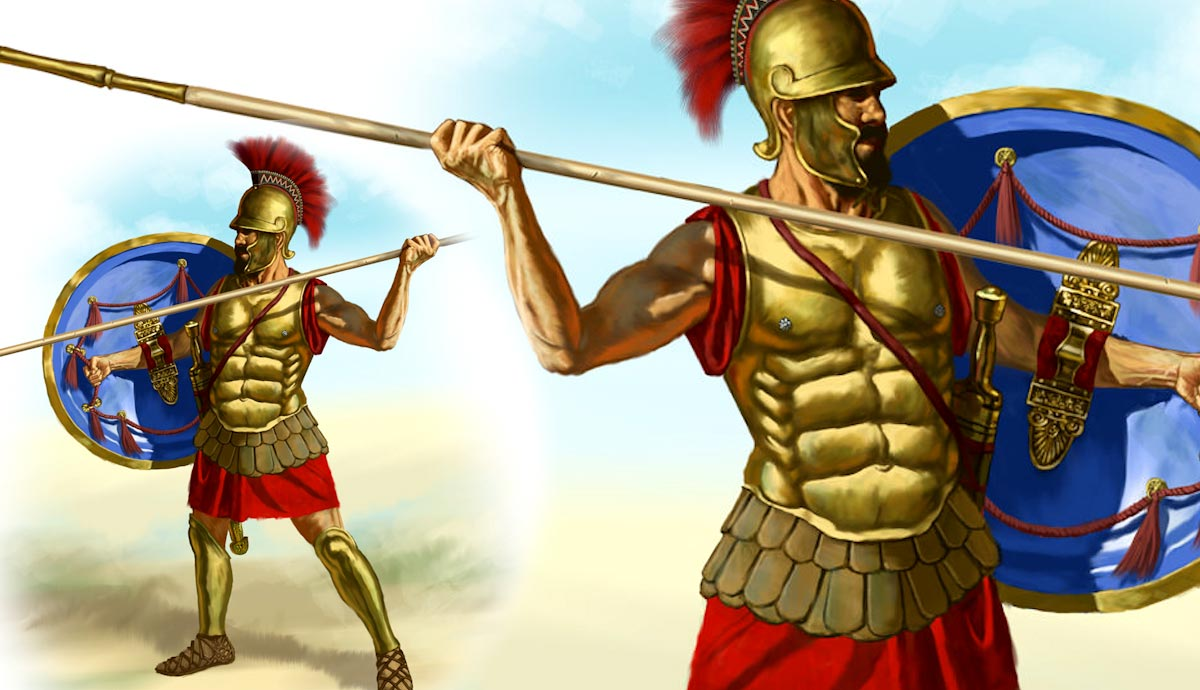
The hoplite was the heavily armed infantryman who became one of the defining military figures of classical Greek warfare.
Contrary to popular imagery, however, hoplites were not necessarily full-time professional soldiers.
Many were ordinary citizens who trained and fought when required.
Preparing for Warfare
A hoplite needed to maintain physical fitness.
Training could involve:
running;
wrestling;
spear practice;
shield exercises;
and formation drills.
The Hoplite Panoply
A typical hoplite could carry:
helmet;
cuirass;
greaves;
shield;
spear;
and sword.
The equipment was expensive.
In many communities, soldiers were expected to provide their own arms.
The Shield
The most distinctive piece was the aspis, a large round shield.
It was designed to protect the warrior while contributing to the collective defensive formation.
The Phalanx
Hoplites typically fought in a phalanx.
Soldiers stood closely together in ranks.
Each warrior's shield protected part of his own body and part of the soldier beside him.
Discipline
The phalanx required coordination.
A warrior could not simply fight as an individual.
Success depended on:
maintaining formation;
following commands;
advancing together;
and supporting neighboring soldiers.
Marching
Campaigns involved considerable physical effort.
Hoplites needed to travel with:
weapons;
food;
water;
clothing;
and other supplies.
Food
Military diets were relatively practical.
Soldiers could consume:
bread;
grain;
olives;
cheese;
dried foods;
onions;
and wine diluted with water.
Camp Life
Military camps required organization.
Soldiers needed to:
prepare food;
maintain equipment;
guard the camp;
sleep;
and prepare for possible combat.
Before Battle
Religious rituals often preceded major battles.
Armies could perform sacrifices and seek favorable signs.
This reflected the belief that divine favor could influence military success.
After Battle
The dead needed to be recovered when possible.
Victors could erect trophies.
The defeated side might seek permission to retrieve its dead.
Returning Home
A hoplite's military identity existed alongside his identity as a citizen.
He might return to:
farming;
craftsmanship;
trade;
politics;
or family responsibilities.
Conclusion
Daily Routines of a Hoplite Warrior were not necessarily the routines of a permanent professional soldier.
For many Greek citizens, military service was one part of civic life.
Training, equipment maintenance, religious ritual, marching, formation discipline, camp duties, and combat all formed part of the experience.