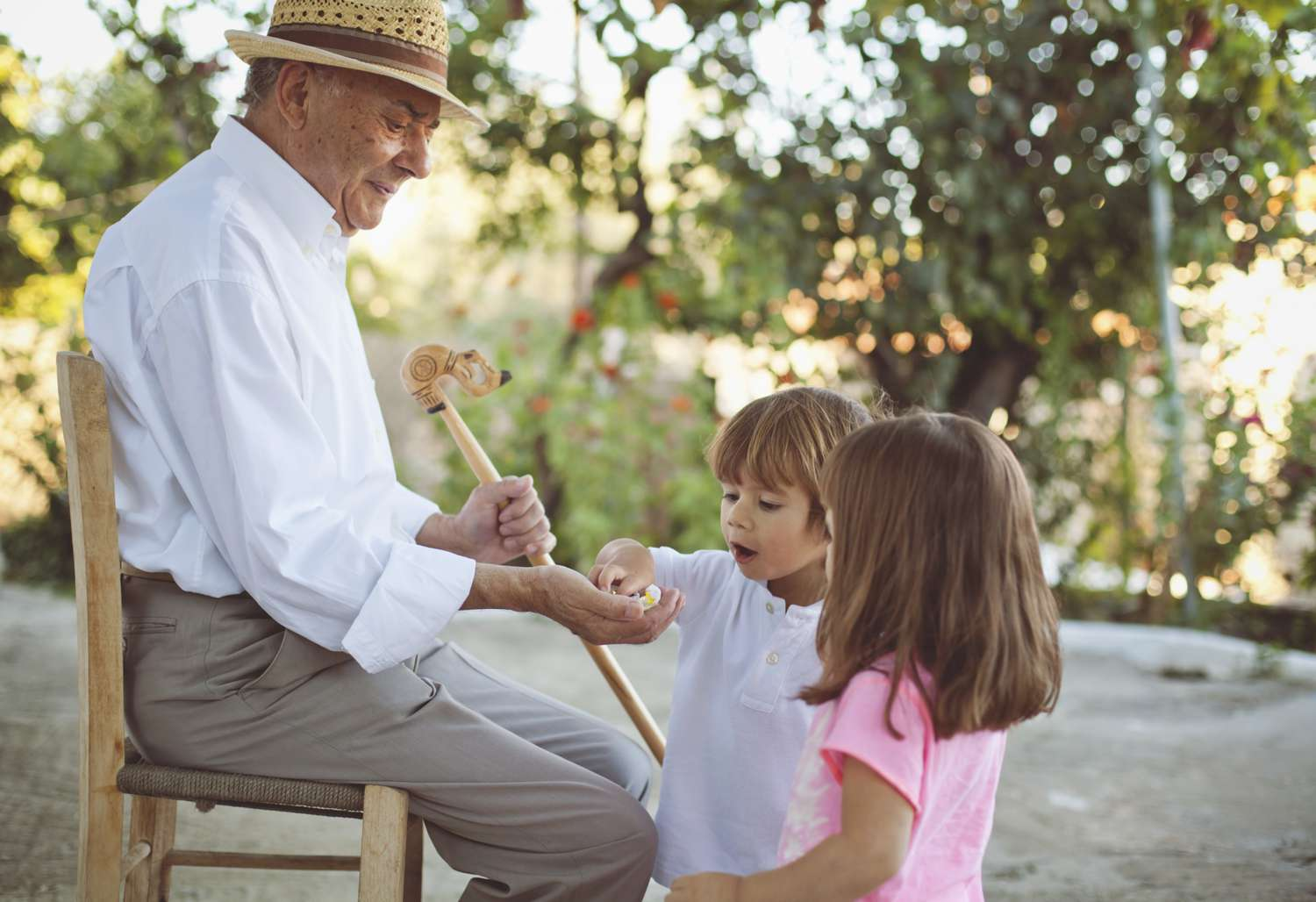
Grandparents could play important roles within ancient Greek families, although their exact responsibilities depended on household structure, inheritance, wealth, and longevity.
Ancient Greek families were generally organized around extended networks of relatives rather than the isolated nuclear household familiar in some modern societies.
The Oikos
The household, or oikos, was the fundamental social and economic unit.
It included not only parents and children but potentially:
grandparents;
other relatives;
enslaved people;
and dependents.
Grandfathers
A grandfather could possess significant authority within a family.
Older male relatives could influence:
property;
inheritance;
marriage arrangements;
and family decisions.
Grandmothers
Grandmothers could transmit practical knowledge.
They could teach girls:
spinning;
weaving;
food preparation;
childcare;
household management;
and religious customs.
Storytelling
Older relatives were important sources of family memory.
They could tell stories about:
ancestors;
family origins;
heroes;
religious traditions;
and past events.
Childcare
In households where several generations lived close together, grandparents could assist with childcare.
However, childcare also involved mothers, wet nurses, enslaved workers, and other relatives.
Inheritance
Family inheritance was a major concern.
Grandparents could be important links in the transmission of:
land;
property;
wealth;
family names;
and social connections.
Religious Traditions
Older generations could preserve household rituals.
These included practices associated with:
ancestors;
household gods;
funerals;
weddings;
and seasonal observances.
Conclusion
The Role of Grandparents in Greek Families extended beyond childcare.
Older relatives could act as teachers, storytellers, advisors, property holders, and guardians of family traditions.
Their importance illustrates the multigenerational character of many ancient Greek households.