Ancient Greek religion was deeply connected to the natural environment.
Agriculture depended on seasonal cycles, while religious festivals frequently reflected changes in weather, vegetation, fertility, harvests, and the movement of celestial bodies.
The seasons therefore influenced not only economic life but also mythology and ritual.
Agriculture and Religious Life
Most Greek communities depended heavily on agriculture.
Important crops included:
wheat;
barley;
grapes;
and olives.
Farmers needed to understand seasonal patterns to determine when to plant and harvest.
Religious rituals often accompanied these agricultural activities.
Demeter and the Agricultural Cycle
The goddess Demeter was particularly associated with agriculture and grain.
Her daughter Persephone became central to one of the most famous Greek myths concerning seasonal change.
Demeter and Persephone
According to the myth, Persephone was taken into the Underworld by Hades.
Demeter's grief caused the earth to become infertile.
When Persephone returned for part of the year, fertility was restored.
The story became an important mythological explanation for seasonal agricultural cycles.
Spring
Spring represented renewal.
Plants grew, animals reproduced, and agricultural activity intensified.
Festivals connected with fertility and renewal were particularly important during this period.
Summer
Summer was associated with agricultural productivity.
Crops developed toward harvest, while grapes and olives followed their own seasonal cycles.
Religious observances could ask the gods for favorable weather and successful harvests.
Autumn
Autumn was the season of harvesting many crops.
Grain harvesting and grape gathering were economically crucial.
Dionysian traditions were strongly connected with wine production.
Winter
Winter represented a period of reduced agricultural activity.
The symbolic association between death and dormancy could appear in religious traditions.
The Greeks did not necessarily view winter simply as “death,” but seasonal darkness and agricultural inactivity provided fertile ground for myths concerning the Underworld.
Solstices and Equinoxes
Celestial observations also mattered.
Greek religious sites could be deliberately oriented toward significant astronomical directions.
However, not every Greek festival was directly determined by the solar calendar.
Many Greek calendars were primarily lunar.
Festivals and Seasons
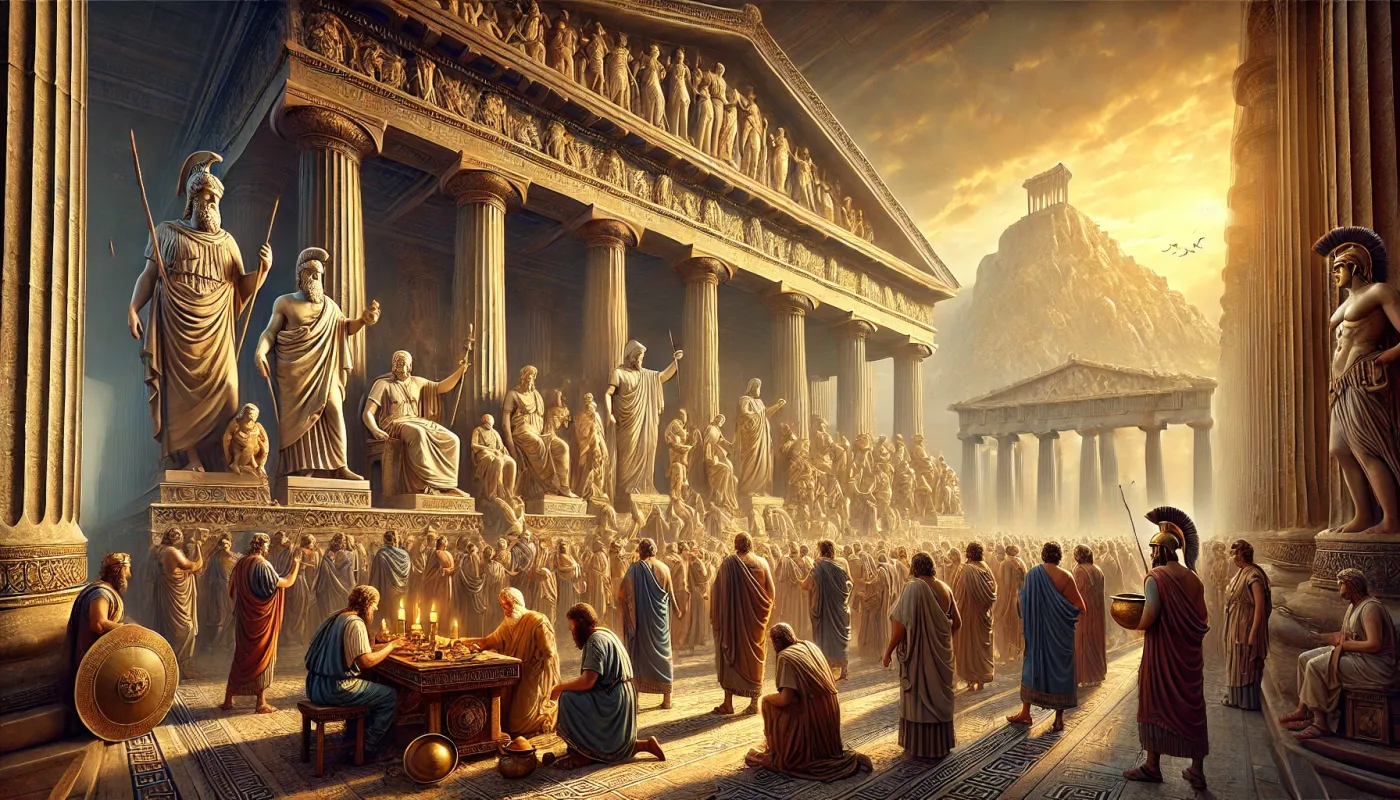
Festivals structured the year.
They provided opportunities for:
sacrifices;
processions;
competitions;
feasting;
music;
and religious ceremonies.
Conclusion
The Influence of the Seasons on Greek Religion demonstrates how closely Greek religious life was connected with nature.
Agriculture, climate, celestial cycles, fertility, death, and renewal all contributed to the religious imagination of ancient Greek communities.