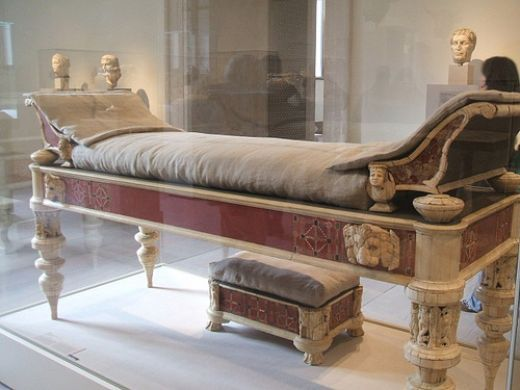
Ancient Greek beds were functional pieces of household furniture but could also display wealth and craftsmanship.
The Greek bed was known as a kline, and its design influenced later Mediterranean furniture.
The Basic Structure
A typical kline consisted of a raised frame supported by legs.
The structure could be made from wood.
Wealthier examples could include decorative elements made from:
bronze;
ivory;
bone;
or other valuable materials.
Mattress
A mattress could be placed over the frame.
Materials varied according to wealth and availability.
Possible fillings included:
wool;
cloth;
plant materials;
or other stuffing.
Blankets
Textiles were used for warmth and comfort.
Wool was particularly important in the Greek textile economy.
Pillows
Pillows or cushions could be placed at one end.
These were especially useful because the kline was not always used solely for sleeping.
Dining Furniture
The same basic furniture type could be used for reclining during meals.
This is one reason the symposium was conducted while participants reclined.
Reclining Position
Greek dining culture commonly involved reclining on one side.
The arrangement allowed guests to interact while eating and drinking.
Wealth and Decoration
Furniture revealed social status.
Elite households could afford elaborately decorated beds.
Funerary Representations
Klinai appear in Greek art and funerary contexts.
Their imagery provides valuable evidence about household furniture.
Conclusion
What Ancient Greek Beds Looked Like depends on period and wealth, but the kline was generally a raised, wooden piece of furniture with a mattress, textiles, and cushions.
Its importance extended beyond sleeping.
It was also associated with dining, socializing, luxury, and funerary representation.