The Battle of Marathon in 490 BCE has become one of the most celebrated episodes in Greek history.
It is often presented as a simple story of a small democratic Athens defeating a massive Persian army.
The real history is more complicated.
Marathon was an important Greek victory, but its circumstances, military scale, and consequences deserve careful examination.
The Persian Expedition
The conflict emerged from the Ionian Revolt.
Greek communities in Asia Minor had rebelled against Persian rule.
Athens and Eretria provided assistance.
Persian King Darius I eventually sought to punish these cities and weaken their allies.
The Persian Landing
Persian forces landed at Marathon in northeastern Attica.
The location offered favorable terrain for cavalry and access to the Athenian plain.
Athens mobilized its hoplite army.
The Athenian Army
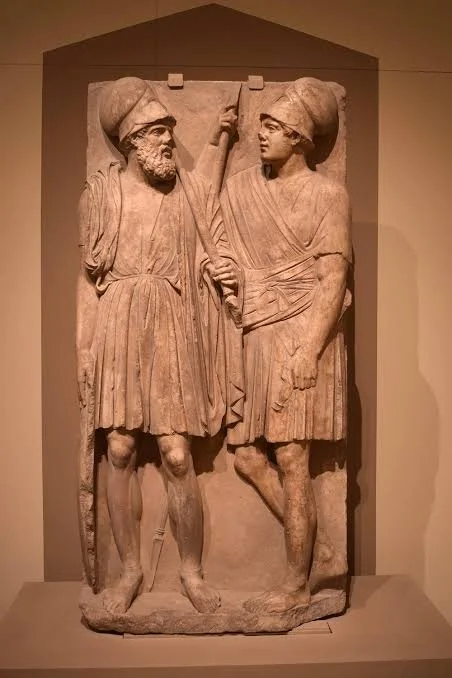
The Athenians were heavily armed infantry.
They were joined by Plataean allies.
The exact size of the armies remains uncertain.
Ancient sources provide figures that modern historians consider difficult to accept literally.
The Battlefield
Marathon was a broad coastal plain.
Mountains and marshy areas restricted movement in certain directions.
The Athenians positioned themselves strategically between the Persian force and Athens.
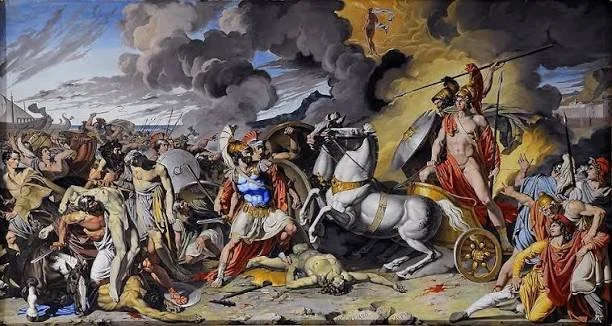
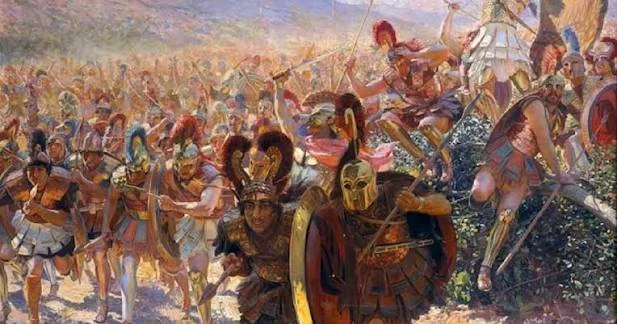
The Battle
The Athenians eventually attacked.
They used a formation that strengthened their wings while maintaining sufficient central cohesion.
The Persian center initially succeeded in pushing back the Greek center.
However, the Athenian wings defeated their opponents.
The Greek wings then turned inward.
This helped collapse the Persian formation.
The Famous Run
Later tradition claims that a messenger ran from Marathon to Athens to announce victory before dying from exhaustion.
The historical evidence for this exact story is uncertain.
The modern marathon race was inspired by the tradition rather than by a precisely documented ancient athletic event.
Why Did the Persians Lose?
Several factors may have contributed:
Greek heavy infantry
Defensive positioning
Athenian discipline
Terrain
Persian tactical decisions
Greek experience with hoplite warfare
It is misleading to describe the battle simply as "democracy defeating tyranny."
Both sides had complex political systems, and Persian rule was more complicated than the stereotype of absolute tyranny suggests.
After the Battle
The Athenians rapidly returned toward the city.
Persian ships attempted to approach Athens directly.
The Athenian army reached the city before the Persians could successfully exploit the situation.
The Persian expedition eventually withdrew.
Significance
Marathon did not end Persian ambitions.
A much larger Persian invasion occurred ten years later under Xerxes.
Nevertheless, Marathon demonstrated that Persian armies could be defeated by Greek forces.
It became a foundational element of Athenian civic identity.