Greek armor underwent centuries of development.
The familiar bronze-clad hoplite of Classical Greece was not the product of a single invention. His equipment evolved gradually through experimentation, changing combat conditions, technological developments, economic considerations, and cultural preferences.
From early bronze helmets and shields to the lighter equipment of later Greek soldiers, the history of Greek armor reveals how military technology continually adapted to the realities of warfare.
Bronze Age Origins
Greek military equipment has roots in the Bronze Age.
Mycenaean warriors used:
Bronze helmets
Large shields
Spears
Swords
Body protection
Some Mycenaean shields were enormous and could cover much of the body.
These were very different from the later round hoplite shield.
The Geometric Period
Following the collapse of the Mycenaean palace systems, Greek military equipment changed.
By the Geometric period, helmets and shields became increasingly standardized.
The famous round shield began to develop.
The Rise of the Hoplite
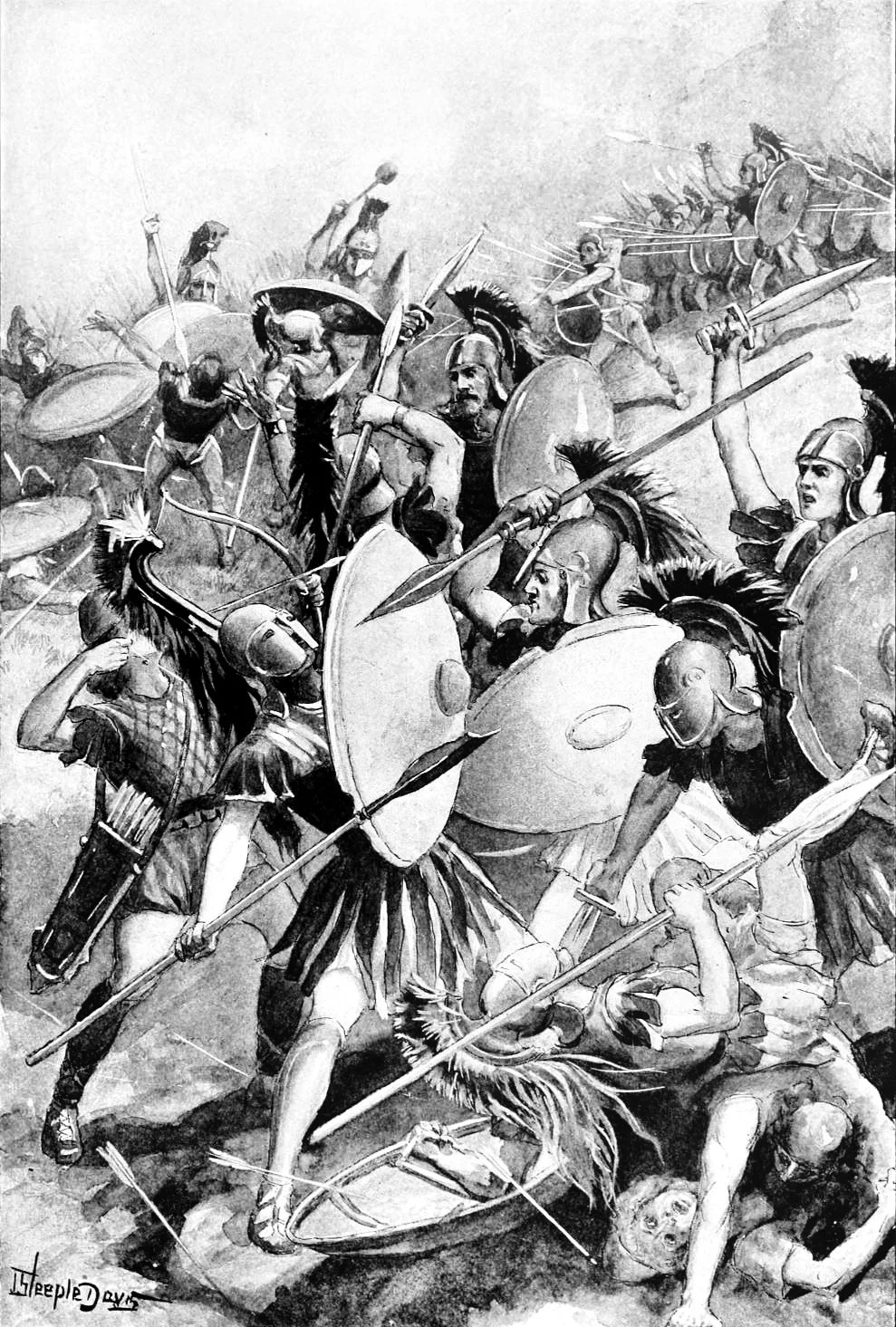
During the seventh century BCE, heavily armed infantry became increasingly important.
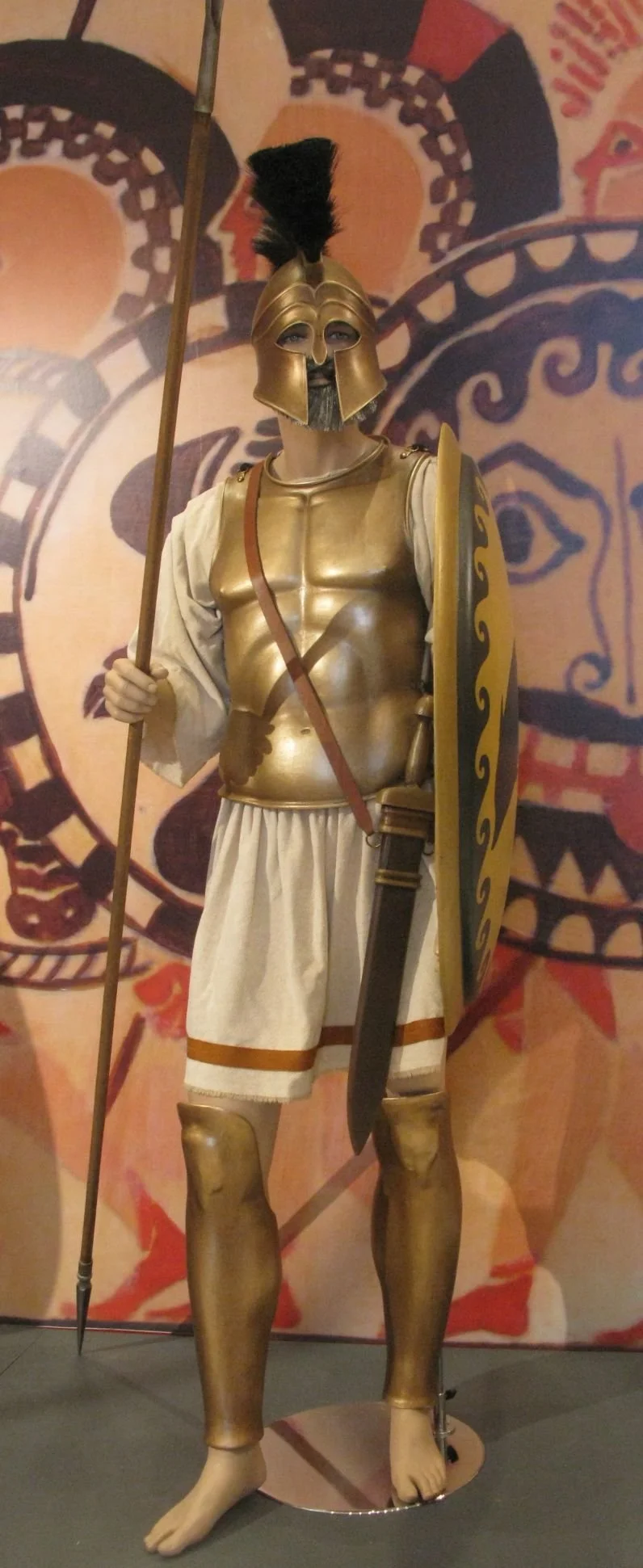
The round shield and thrusting spear became central components.
Bronze armor provided significant protection.
Corinthian Helmet
The Corinthian helmet became one of the most recognizable Greek helmets.
It protected:
Skull
Face
Cheeks
Nose
Its disadvantage was restricted vision and hearing.
Chalcidian Helmet
The Chalcidian helmet offered greater openness.
It provided cheek protection while leaving more of the face exposed.
This increased visibility and communication.
Attic Helmet
The Attic helmet was even more open.
It generally lacked the heavy facial coverage of the Corinthian type.
Its design offered greater mobility and visibility.
Cuirasses
Early Greek cuirasses were often made from bronze.
The bell cuirass protected the torso.
Some examples were carefully shaped to imitate the human body.
Muscle Armor
Later Greek artistic representations sometimes show highly anatomical armor.
This style became known as muscle cuirass.
Whether every such representation reflects actual battlefield equipment is uncertain.
Art could idealize the human body.
Linen Armor
The linothorax became another important form of protection.
Its construction remains debated.
It may have consisted of layered linen reinforced with adhesives, stitching, or other materials.
It was lighter than a full bronze cuirass.
Greaves
Bronze greaves protected the lower legs.
They were especially important in close-order combat.
Some later soldiers reduced or eliminated heavy greaves, suggesting a broader movement toward mobility.
Hellenistic Armor
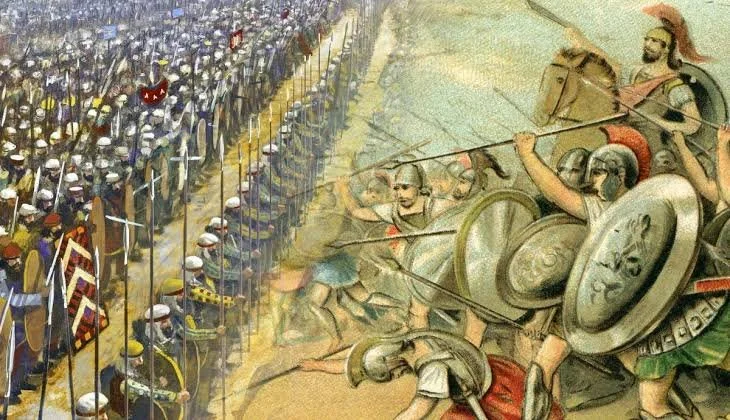
The rise of Macedonian warfare changed military requirements.
Macedonian infantry used the long sarissa.
The phalanx required mobility and coordination.
Cavalry became increasingly important.
Armor therefore had to accommodate more varied battlefield roles.
Roman Influence
Greek armor later interacted with Roman military equipment.
During the Hellenistic and Roman periods, traditional Greek styles coexisted with equipment influenced by broader Mediterranean military systems.
The Purpose of Armor
Armor was not simply designed to maximize protection.
Military equipment involved trade-offs.
More armor meant:
Greater protection
More weight
Reduced mobility
Greater cost
Lighter armor provided:
Greater mobility
Less fatigue
Greater flexibility
The ideal balance changed according to battlefield requirements.
Armor and Social Status
Armor also reflected wealth.
Bronze was expensive.
Elaborate helmets and cuirasses demonstrated social status.
Some warriors decorated their equipment.
Military appearance could therefore communicate prestige as well as provide protection.
Conclusion
Greek armor evolved because warfare evolved.
The progression from heavily protective bronze equipment toward more flexible designs reflects changing tactical requirements.
The history of Greek armor is therefore not simply a story of better technology.
It is a story of adaptation.
Each generation of soldiers inherited equipment from earlier periods and modified it according to the challenges of its own battlefield.