The story of Antigone is one of the most influential tragedies of ancient Greece. Through Sophocles' Antigone, the conflict between individual conscience and political authority becomes a profound examination of law, justice, family loyalty, religion, and the limits of state power.
Antigone is the daughter of Oedipus and Jocasta and therefore belongs to one of Greek mythology's most tragic families.
The Curse of Oedipus
Antigone grows up in the aftermath of the catastrophe involving her father.
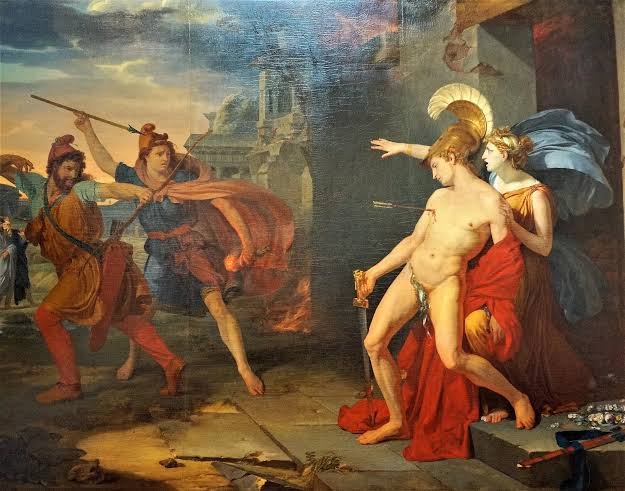
Oedipus unknowingly killed Laius, his father, and married Jocasta, his mother.
When the truth was discovered, Jocasta died and Oedipus blinded himself.
Antigone and her siblings inherited the consequences of this cursed family history.
Eteocles and Polynices
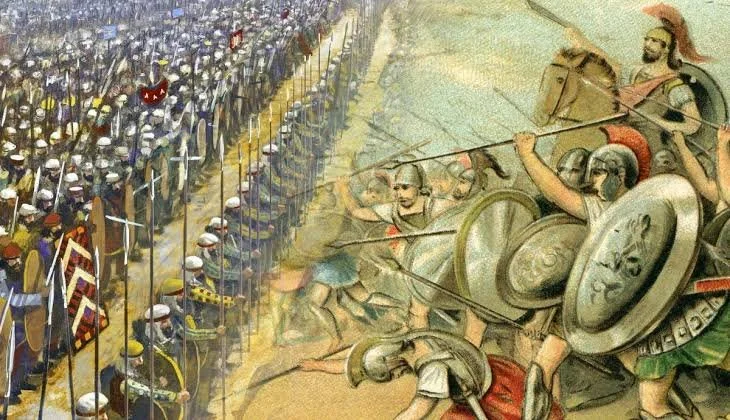
Antigone's brothers, Eteocles and Polynices, eventually fought over control of Thebes.
They agreed to alternate rule.
The arrangement failed.
Polynices left Thebes and gathered foreign allies.
He returned with an army in an attempt to seize power.
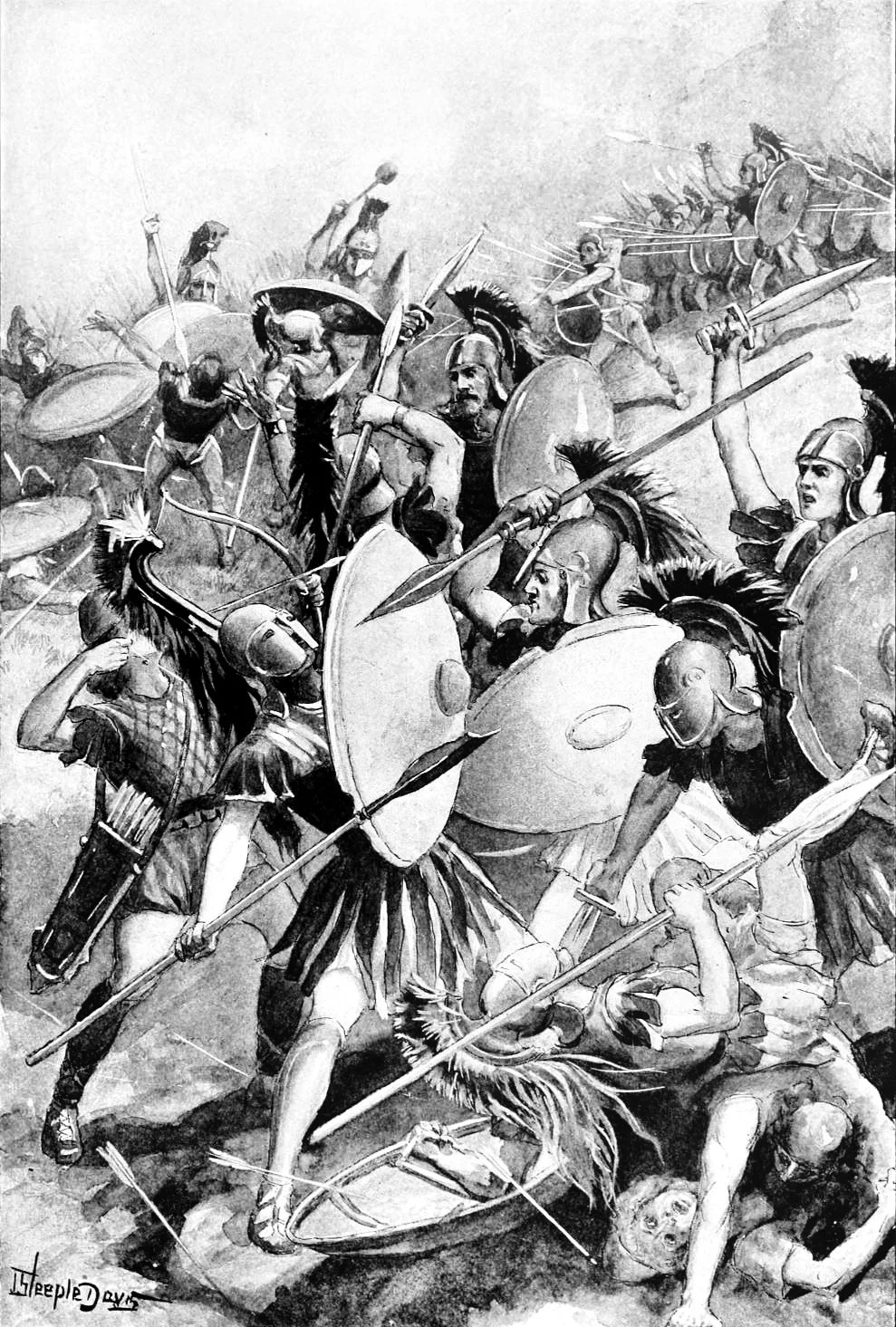
The conflict became known as the war of the Seven against Thebes.
The Brothers' Death
Eteocles and Polynices eventually killed one another.
Creon, their uncle, became ruler of Thebes.
He declared that Eteocles, who had defended the city, would receive an honorable burial.
Polynices, regarded as a traitor, would be denied burial.
The Importance of Burial
Modern readers may underestimate the significance of this command.
For ancient Greeks, burial was not simply a social custom.
Proper burial was closely connected with religious obligations concerning the dead.
An unburied body could represent a serious spiritual violation.
Antigone therefore believes that Creon's decree conflicts with divine law.
Antigone's Defiance
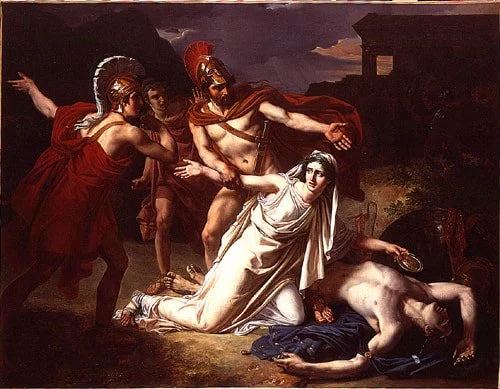
Antigone decides to bury Polynices despite the prohibition.
She does not attempt to overthrow Creon's government.
Her act is more limited.
She performs a religious duty that she believes is morally superior to the ruler's command.
Creon discovers what she has done.
He orders her punishment.
Antigone and Creon
The central confrontation is between Antigone and Creon.
Antigone argues that the king's command cannot override eternal divine principles.
Creon argues that political order requires obedience.
Neither character is presented as entirely simple.
Antigone is courageous but uncompromising.
Creon believes he is defending the state but becomes increasingly authoritarian.
The tragedy emerges from their inability to compromise.
Haemon
Haemon, Creon's son and Antigone's fiancé, attempts to persuade his father to reconsider.
He warns that public opinion supports Antigone.
Creon refuses.
His stubbornness isolates him from his family.
Tiresias' Warning
The prophet Tiresias eventually warns Creon that the gods are displeased.
Creon finally realizes that he has gone too far.
He orders Antigone's release.
But it is too late.
Antigone has already killed herself.
Haemon then kills himself.
Creon's wife, Eurydice, also dies after learning of Haemon's death.
Creon is left devastated.
Civil Disobedience
The story became particularly important to modern political philosophy because Antigone refuses to obey an unjust law.
Her actions have often been interpreted as an early literary example of civil disobedience.
However, it is important not to impose modern political concepts too rigidly onto the ancient text.
Antigone's motivation is primarily religious and familial.
She does not advocate a universal political doctrine of rebellion.
She believes she has a sacred obligation to her dead brother.
Law and Justice
The central question is therefore:
What should a person do when human law conflicts with moral or divine law?
Sophocles does not provide an easy answer.
Creon's mistake is not simply that he enforces law.
His error lies in believing that his authority is absolute.
Antigone's tragedy similarly demonstrates that moral conviction can carry devastating consequences when pursued without flexibility.
The Legacy of Antigone
Antigone has inspired philosophers, political theorists, playwrights, activists, and scholars.
She has been interpreted as:
a defender of religious freedom
a symbol of resistance
a representative of family loyalty
a critic of authoritarianism
a figure of moral conscience
a tragic example of uncompromising idealism
Her story remains relevant because societies continue to debate the relationship between law and morality.
Conclusion
Antigone's story is powerful because the conflict is not simply between good and evil.
It is between two competing ideas of responsibility.
Creon believes he must protect the state.
Antigone believes she must honor the dead and obey divine principles.
Their refusal to recognize the limits of their own positions produces catastrophe.
The tragedy ultimately suggests that legitimate authority requires humility and that justice cannot be reduced to obedience.
Antigone therefore remains one of the most enduring figures of Greek tragedy—and one of the ancient world's most powerful symbols of conscience confronting power.