Patras is one of the most important cities of western Greece and one of the country's most interesting places for understanding continuity between antiquity and the modern world.
Located in the northern Peloponnese along the Gulf of Patras, the city has served as a settlement, port, regional center, Roman city, Byzantine stronghold, and modern commercial hub.
Its archaeological remains are especially valuable because they do not exist in isolation.
They are embedded within a living modern city.
Walking through Patras can therefore mean moving between contemporary streets and ancient remains within minutes.
Ancient Patras
The area around Patras has a long history of settlement.
The ancient city developed into an important regional center.
Its location was one of its greatest advantages.
Patras faced the Gulf of Patras and stood close to routes connecting the Peloponnese with central Greece and the western Mediterranean.
The sea was therefore fundamental to its economic importance.
Roman Patras
The city's importance increased considerably during Roman rule.
Roman expansion transformed Patras into a significant urban center.
The city became connected with the broader imperial transportation and commercial network.
Roman Patras possessed monumental public buildings, roads, houses, religious structures, and entertainment facilities.
The archaeological evidence reveals an urban environment much more sophisticated than the modern city might initially suggest.
The Ancient Odeon
One of the most impressive surviving monuments is the Roman-era Odeon of Patras.
The structure served as a performance venue.
Odeons were smaller than major open-air theaters and were particularly suited to musical performances and other cultural events.
The Patras Odeon demonstrates that Roman-period cities retained and adapted Greek traditions of theater and performance.
The Archaeological Museum of Patras
The Archaeological Museum of Patras is one of the best places to understand the city's ancient history.
Its collections include artifacts from prehistoric, Classical, Hellenistic, and Roman periods.
Among the most valuable evidence are mosaics and objects from Roman houses.
These materials reveal the private side of ancient urban life.
Roman Mosaics
Mosaics are particularly important because they preserve details about domestic culture.
Ancient homeowners used mosaics to decorate floors.
Patterns could include:
geometric designs;
mythological scenes;
animals;
plants;
theatrical imagery.
A mosaic was therefore both decoration and a statement of status.
The larger and more elaborate the mosaic, the more resources its owner could dedicate to domestic display.
Patras and the Roman Road Network
Patras' importance was closely connected to transportation.
Roman roads linked communities across the empire.
The city also possessed maritime connections.
This combination made it a useful point for movement between the Greek mainland, the Peloponnese, Italy, and other Mediterranean destinations.
Early Christianity
Patras also became associated with early Christianity.
Christian tradition identifies the city with the martyrdom of the Apostle Andrew.
The tradition became deeply important to the city's religious identity.
The modern Cathedral of Saint Andrew is therefore an important landmark.
However, historians must distinguish between religious tradition and archaeological evidence for specific events.
Traditions can preserve cultural memory even when individual details cannot be independently verified.
Byzantine and Medieval Patras
After the Roman period, Patras continued to exist.
The city experienced Byzantine rule, later Frankish influence, Venetian involvement, and Ottoman control.
Its history therefore extends far beyond classical antiquity.
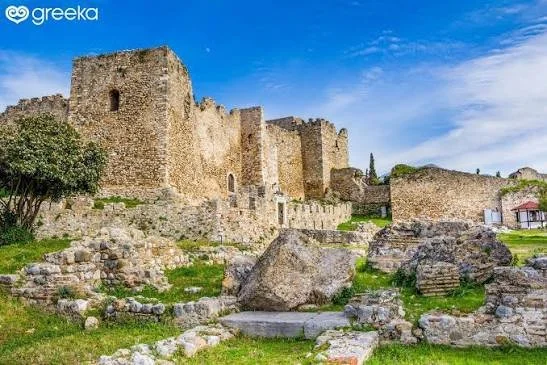
The medieval castle is one of the most visible reminders of these later periods.
Built on the site of an earlier acropolis, the fortress overlooks the modern city.
The Castle
The castle occupies a strategically important position.
From its elevated location, defenders could observe the surrounding area.
The fortress demonstrates how geography continued to shape Patras long after the Classical and Roman periods.
The same landscape that was useful to ancient communities remained strategically valuable during medieval warfare.
Patras as a Port
The modern city remains strongly connected to maritime transportation.
This continuity is historically significant.
Patras' geographical position has repeatedly shaped its development.
The city is not important because it possesses one isolated archaeological monument.
Its importance comes from its location within networks.
Ships, roads, merchants, armies, pilgrims, and travelers have passed through the region for centuries.
Archaeology Beneath a Modern City
Urban archaeology is particularly challenging.
Modern buildings stand over ancient structures.
Roads cross archaeological layers.
Construction projects can uncover unexpected remains.
This means that archaeological research in cities such as Patras often requires careful excavation and documentation whenever construction exposes ancient deposits.
The result is an archaeological record that is fragmented but extremely valuable.
The Modern City and the Ancient Past
Patras provides a useful lesson in how archaeological heritage exists within modern life.
Ancient sites do not always appear as isolated ruins surrounded by countryside.
Sometimes they exist beneath apartment buildings, roads, museums, churches, and commercial districts.
This creates both challenges and opportunities.
Preservation must coexist with modern urban development.
What to See
Visitors interested in ancient Patras should consider:
the Roman Odeon;
the Archaeological Museum;
the medieval castle;
the modern Cathedral of Saint Andrew;
archaeological remains integrated into the modern city.
The best experience comes from combining the museum with the archaeological monuments.
Conclusion
Patras demonstrates that Greek history is not a sequence of civilizations that simply replaced one another.
Ancient, Roman, Byzantine, medieval, and modern histories overlap.
The city's position on the Gulf of Patras helped make it valuable to ancient communities, Roman administrators, medieval rulers, and modern commerce.
Its archaeological remains reveal urban life.
Its mosaics reveal domestic wealth.
Its Odeon reveals entertainment.
Its castle reveals medieval military strategy.
Its port reveals the enduring importance of maritime geography.
Patras is therefore one of the best examples of how ancient and modern Greece can occupy the same landscape.