Thessaloniki is one of Greece's most historically layered cities.
Founded in 315 BCE by King Cassander of Macedon, it developed into an important Hellenistic city, a major Roman center, and one of the most influential cities of the Byzantine world.
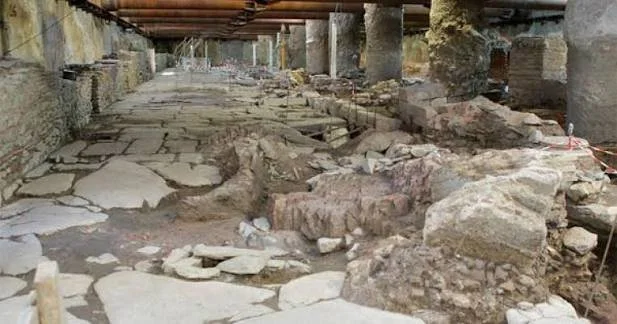
Today, millions of people live, work, shop, and travel through its streets without necessarily realizing how much ancient architecture remains beneath and around the modern city.
Roman walls, an imperial palace complex, an enormous rotunda, early Christian churches, Byzantine monasteries, and archaeological remains all survive within the urban landscape.
UNESCO recognizes fifteen Paleochristian and Byzantine monuments in Thessaloniki, including the city walls, Rotunda, churches, monasteries, and Byzantine bath.
Founded by Cassander
Thessaloniki was founded in 315 BCE by Cassander, one of the rulers who emerged from the political struggles following Alexander the Great's death.
The city was named after Thessalonike, Cassander's wife and daughter of Philip II.
Its location was strategically valuable.
It faced the Thermaic Gulf and connected important routes through Macedonia.
Roman Thessaloniki
Roman expansion transformed Thessaloniki.
The city became an important provincial center.
Its location along major land and maritime routes made it economically significant.
Roman administrators developed monumental architecture.
One of the most impressive surviving complexes is associated with the emperor Galerius.
The Palace of Galerius
The Galerian complex was constructed in the late third and early fourth centuries CE.
It included monumental structures associated with imperial authority.
The complex included:
a palace;
ceremonial spaces;
a triumphal arch;
the Rotunda;
monumental streets.
The architecture communicated imperial power.
Roman emperors did not simply govern through armies and laws.
They used architecture to demonstrate authority.
The Arch of Galerius
The Arch of Galerius commemorated military victories.
Its reliefs depicted the emperor and his campaigns.
The monument therefore served as visual political communication.
It told residents and visitors that Thessaloniki was connected to the power of the Roman emperor.
The Rotunda
The Rotunda is one of Thessaloniki's most remarkable monuments.
The enormous circular structure was built during the Roman imperial period.
Its original purpose is debated, although it was clearly connected with the Galerian complex.
It later became a Christian church.
Later still, under Ottoman rule, it became a mosque.
Today it preserves layers from multiple historical periods.
Roman to Christian Transformation
The transformation of the Rotunda illustrates how buildings can acquire new meanings.
A Roman imperial monument could become a Christian sacred space.
Later, it could become an Islamic place of worship.
Modern archaeology preserves these layers rather than reducing the building to one period.
Early Christian Thessaloniki
Thessaloniki became an important center for the spread of Christianity.
The city was visited by the Apostle Paul according to the New Testament.
The Christian community became increasingly influential.
Large churches were constructed.
The city developed an extraordinary tradition of mosaics and religious architecture.
UNESCO identifies Thessaloniki's mosaics at the Rotunda, Saint Demetrius, and Hosios David among major masterpieces of Early Christian art.
The Church of Saint Demetrius
Saint Demetrius became the city's most important patron saint.
The church dedicated to him is one of the most important surviving early Christian and Byzantine monuments.
The structure contains mosaics and architectural elements representing different phases of Thessaloniki's religious history.
The building also survived a catastrophic fire in 1917, after which major restoration was undertaken.
Hagia Sophia of Thessaloniki
The Church of Hagia Sophia represents another important stage of Byzantine architecture.
Its central domed design reflects the broader development of Byzantine church architecture.
The building is not identical to Hagia Sophia in Constantinople, but it belongs to the same broad architectural tradition.
The City Walls
The surviving city walls are among Thessaloniki's most impressive archaeological features.
The fortifications protected the city for centuries.
The walls demonstrate the importance of Thessaloniki as a strategic urban center.
Parts of the fortifications survive around the upper city.
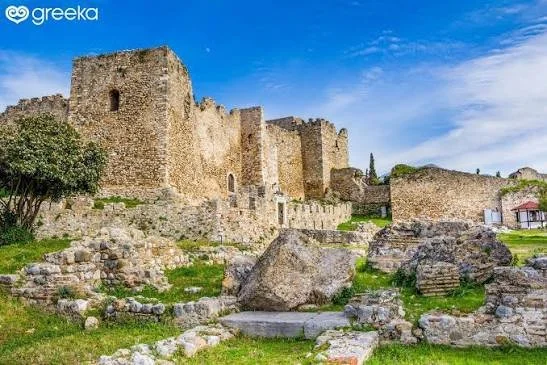
The Heptapyrgion, or "Seven Towers," became particularly associated with the city's defensive system.
Byzantine Thessaloniki
During the Byzantine period, Thessaloniki was one of the empire's most important cities after Constantinople.
UNESCO describes the city as an important cultural center whose artistic influence extended into neighboring regions and the wider Byzantine world.
Its location allowed it to connect Constantinople with the Balkans and the Aegean.
Hidden Archaeology
Some of Thessaloniki's most interesting archaeological remains are easy to miss.
A visitor might walk through a modern street and encounter:
ancient foundations;
Roman columns;
Byzantine churches;
archaeological excavations;
fragments of walls.
The city therefore functions almost like an open-air archaeological museum.
Why the Layers Matter
The significance of Thessaloniki lies partly in continuity.
The city was not abandoned after antiquity.
It remained occupied.
Buildings were reused.
Streets changed.
Monuments acquired new purposes.
Old materials were incorporated into new structures.
This creates an unusually complicated archaeological record.
Visiting Thessaloniki Historically
A good historical walking route might connect:
the Roman Forum;
the Galerian complex;
the Arch of Galerius;
the Rotunda;
the Church of Saint Demetrius;
the city walls;
the upper-city Byzantine monuments.
This route makes the chronological development of the city easier to understand.
Conclusion
Thessaloniki is one of Greece's greatest historical cities because its past is not locked away in a distant archaeological zone.
Roman and Byzantine remains survive inside the modern city.
The Galerian complex reveals Roman imperial power.
The Rotunda demonstrates changing religious identities.
The city walls reveal centuries of military importance.
Saint Demetrius and other churches preserve extraordinary Byzantine art.
UNESCO's recognition of Thessaloniki's monuments reflects the exceptional artistic and architectural importance of this continuous urban landscape.
To explore Thessaloniki historically is therefore to walk through multiple civilizations without ever leaving the city.