Philippi is one of the rare archaeological sites where several major chapters of Mediterranean history can be experienced within the same landscape.
Founded as a Greek colony and transformed by Philip II of Macedon, Philippi later became a Roman colony, the site of a decisive Roman civil war, an important Christian center, and eventually a major ecclesiastical city.
Its ruins therefore tell a story that extends far beyond ancient Greek history.
Philippi is a city of transformation.
The Foundation of Philippi
The settlement began as a colony founded by Thasians in the fourth century BCE.
The original settlement was known as Krenides.
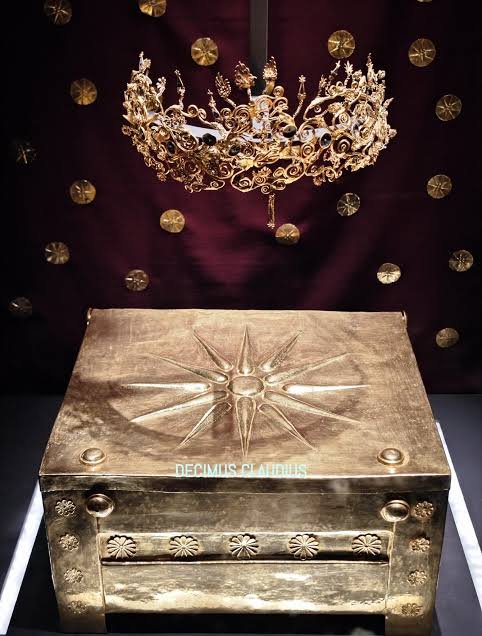
In 356 BCE, Philip II of Macedon conquered the settlement and refounded it.
He renamed it Philippi after himself.
UNESCO identifies Philippi as a city founded by Philip II in 356 BCE and emphasizes its strategic position along the ancient route connecting Europe and Asia.
Why the Location Mattered
Philippi occupied a strategically valuable position.
The city was near important roads and resources, including gold and agricultural land.
Its location allowed it to participate in regional trade.
The nearby mountains and plains also contributed to its military significance.
Philip II recognized that controlling Philippi strengthened Macedonian influence in eastern Macedonia.
The Roman Conquest
After the defeat of Macedon by Rome, Philippi entered the Roman political sphere.
The city's importance increased dramatically during the Roman period.
Its location along the Via Egnatia was particularly significant.
The Via Egnatia connected the Adriatic with the eastern Mediterranean.
Philippi consequently became part of one of the most important transportation routes in the Roman world.
The Battle of Philippi
The city's name became internationally famous because of the Battle of Philippi in 42 BCE.
The battle occurred during the Roman civil wars following the assassination of Julius Caesar.
On one side were the forces of Octavian and Mark Antony.
Opposing them were Brutus and Cassius, leading the republican cause.
The battle took place on the plains around Philippi.
Brutus and Cassius were defeated.
The consequences were enormous.
The defeat effectively removed the strongest military opposition to the Caesarian faction and helped pave the way for Octavian's eventual rise.
UNESCO identifies the Battle of Philippi as one of the major historical events associated with the city.
Philippi as a Roman Colony
After the battle, Philippi was transformed into a Roman colony.
Its urban environment became increasingly Roman.
Public buildings, forums, temples, roads, and other structures reflected Roman civic organization.
UNESCO describes the Roman city as a "small Rome" because of its urban development and monumental public architecture.
The Roman Forum
The forum became one of the central public spaces.
Roman forums were multifunctional.
They could accommodate:
political activity;
legal proceedings;
commerce;
religious ceremonies;
public gatherings.
At Philippi, the forum demonstrates the transformation of a Hellenistic city into a Roman civic center.
Paul and the Christian Community
Philippi became particularly important in Christian history.
According to the Acts of the Apostles, the Apostle Paul visited Philippi during the first century CE.
The city became associated with one of the earliest Christian communities in Europe.
Paul's Letter to the Philippians is part of the New Testament.
This transformed Philippi's historical identity.
A city founded by a Macedonian king and later shaped by Roman politics became an important center of Christianity.
Lydia and Early Christianity
Christian tradition associates Philippi with Lydia, described in Acts as a woman who encountered Paul and became one of the earliest converts in the city.
The story is important because it demonstrates that early Christianity was not simply spread through male political elites.
Women played significant roles in early Christian communities.
The Basilicas
As Christianity expanded, Philippi developed major church buildings.
The archaeological remains include several basilicas.
These structures demonstrate the transformation of the city from pagan Roman religious culture toward Christian society.
UNESCO specifically identifies the basilicas and the Octagon complex as exceptional evidence for the development of early Christianity.
The Octagon Church
The Octagon complex is one of the most important Christian monuments at Philippi.
Its unusual architectural design reflects the experimentation of early Christian architecture.
The church was connected with the city's episcopal organization.
Its construction illustrates how Christianity became integrated into the urban landscape.
A City of Multiple Religious Traditions
Philippi's history should not be reduced to a simple transition from paganism to Christianity.
For centuries, multiple religious traditions existed within the city.
Greek traditions survived.
Roman religious practices became prominent.
Jewish communities existed in the wider region.
Christianity gradually developed.
This produced a complex religious environment.
Earthquake and Decline
The city experienced significant destruction, including a major earthquake in the seventh century CE.
UNESCO notes that a major earthquake around 620 CE caused substantial destruction and contributed to later changes in the urban environment.
The city did not simply disappear immediately.
Its population and functions changed over time.
Eventually, Philippi declined as a major urban center.
Archaeology of a Multi-Period City
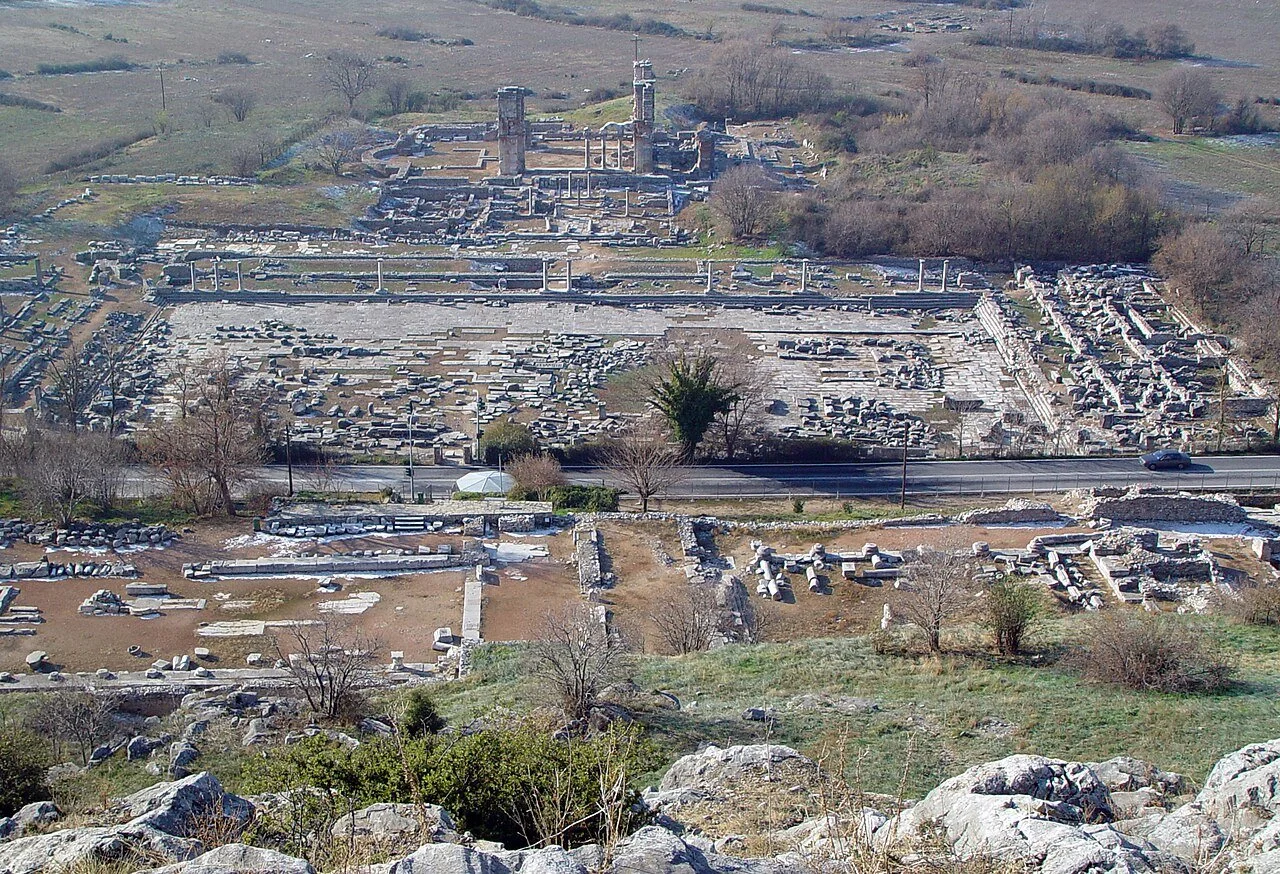
One of Philippi's greatest archaeological strengths is the preservation of different historical phases.
A visitor can encounter:
Hellenistic remains;
Roman architecture;
early Christian basilicas;
Byzantine structures;
city walls;
roads;
public buildings.
Few sites demonstrate historical transformation so clearly.
Why Philippi Is Important
Philippi connects major historical themes:
Macedonian expansion
Philip II used the city strategically.
Roman civil war
The Battle of Philippi helped determine the political future of Rome.
Christianity
Paul's visit helped establish an important Christian community.
Roman urbanism
The city was transformed into a Roman colony.
Byzantine Christianity
Large churches and ecclesiastical structures reshaped the urban landscape.
Visiting Philippi
Visitors should allow time to walk through the entire archaeological zone.
Important areas include:
the ancient theater;
Roman forum;
city walls;
basilicas;
Octagon complex;
Via Egnatia;
archaeological museum.
The museum is particularly useful because it places artifacts within their chronological context.
Conclusion
Philippi is remarkable because it refuses to belong to only one historical period.
It began as a Greek colonial settlement.
Philip II transformed it into a Macedonian city.
Rome turned it into a colony.
The Battle of Philippi made it part of the political history of the Roman Empire.
Paul's visit connected it with early Christianity.
Later basilicas transformed its architectural identity.
UNESCO recognized the site in 2016 for precisely this extraordinary combination of historical layers.
Philippi is therefore not simply the place where a famous battle occurred.
It is a city where Greek, Macedonian, Roman, and Christian histories intersected—and where the archaeological landscape still preserves evidence of each transformation.