Few archaeological discoveries have produced such an immediate visual impression as the gold treasures of Vergina.
Crowns of gold leaves, intricate jewelry, decorated vessels, weapons, armor, and funerary objects emerged from the royal tombs of ancient Aigai, modern Vergina.
The objects are beautiful, but their importance goes far beyond beauty.
They provide evidence for Macedonian royal culture during one of the most transformative periods in ancient Greek history.
The gold from Vergina helps reveal how Macedonian rulers expressed wealth, status, identity, religion, warfare, and dynastic power.
Why Was There So Much Gold?
Gold had enormous symbolic value in the ancient Mediterranean.
It was rare, durable, visually striking, and difficult to acquire.
A royal tomb containing large quantities of gold therefore communicated extraordinary status.
At Aigai, gold objects formed part of an elaborate burial system.
The deceased were not buried simply with personal possessions.
The burial assemblages appear to have been designed to represent royal identity.
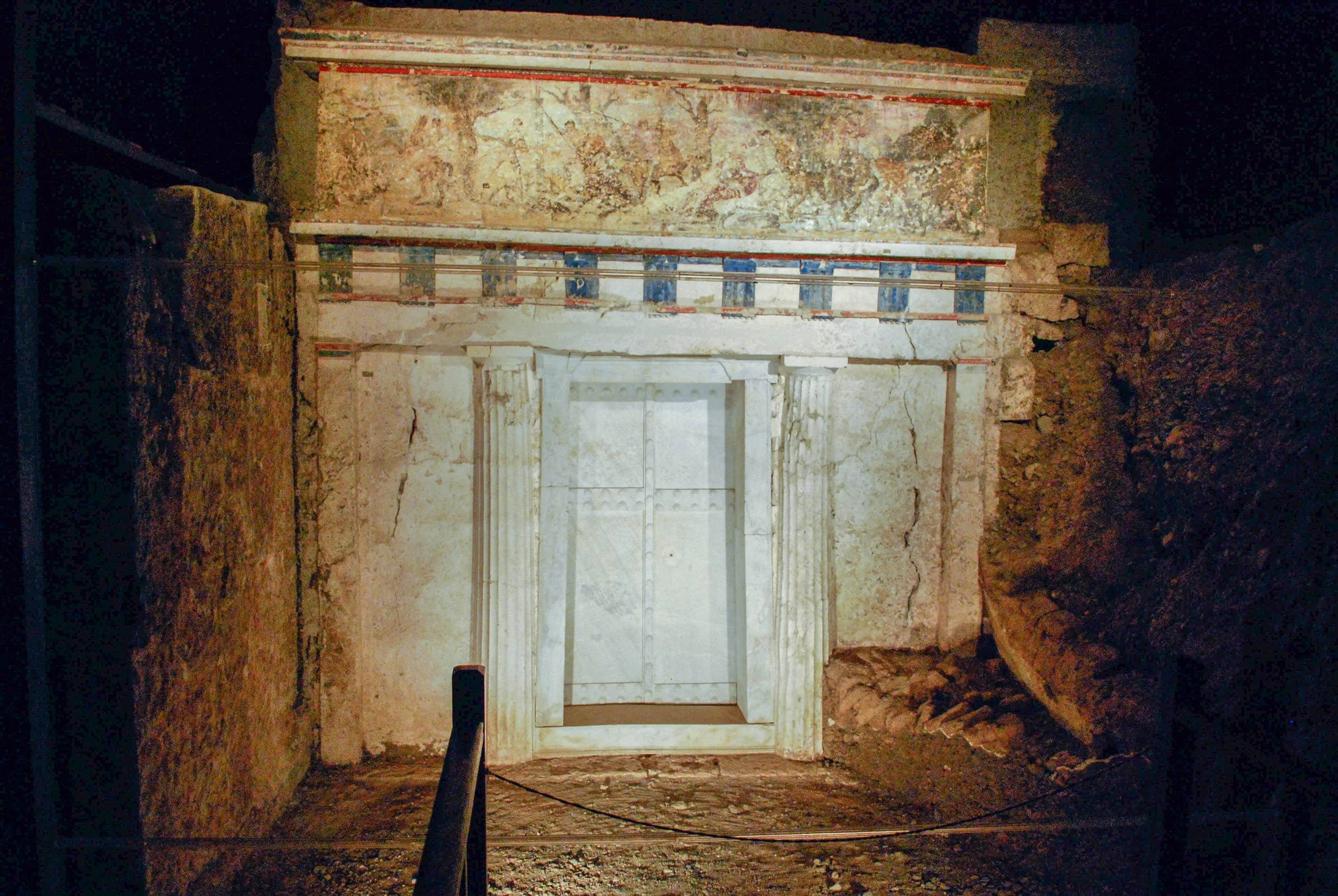
The Royal Necropolis
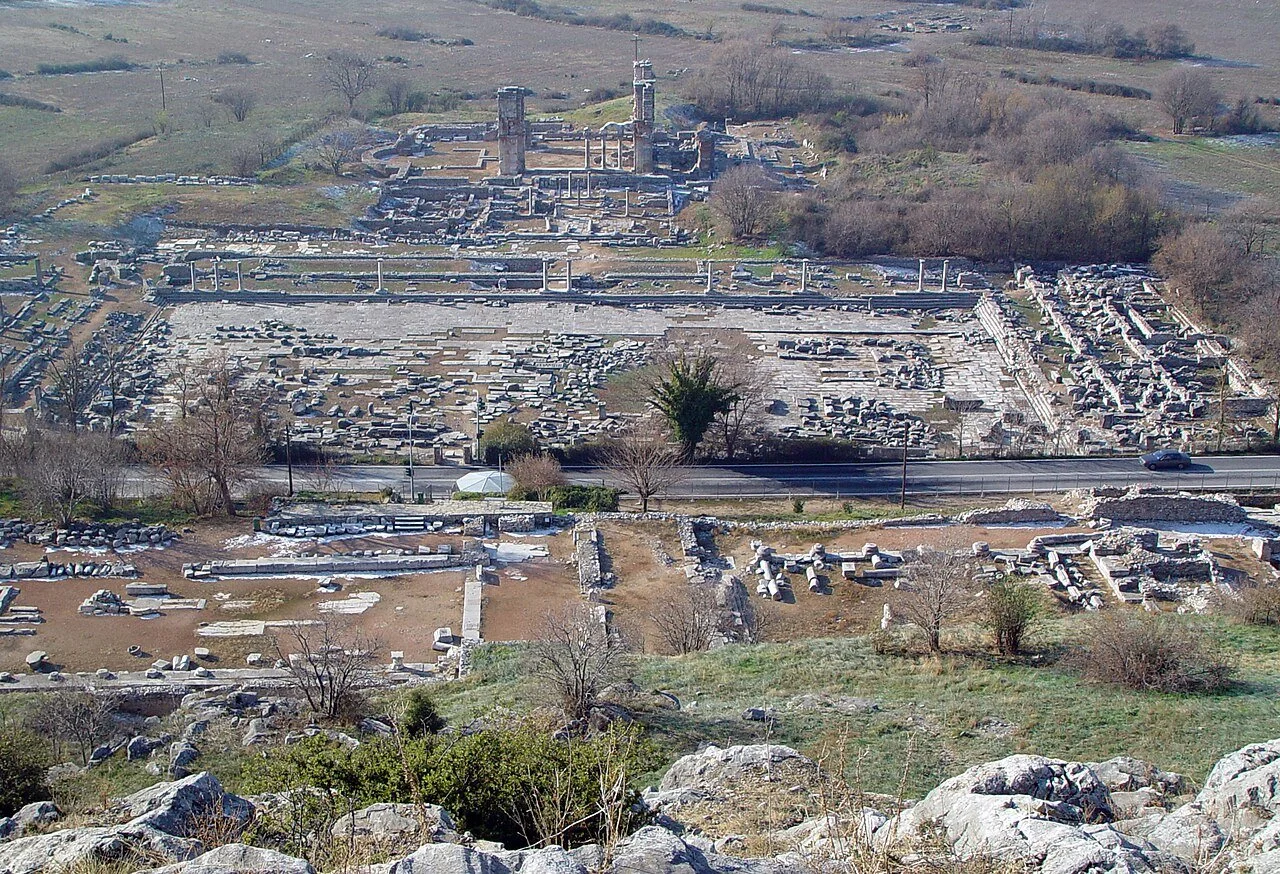
The royal cemetery at Aigai contains hundreds of burial mounds dating over a long period.
UNESCO identifies the necropolis as one of the defining elements of the ancient capital and notes that it contains more than 300 tumuli, with some dating back as far as the eleventh century BCE.
The royal tombs belong to the later phases of Macedonian history.
Their contents provide exceptional evidence for elite culture.
The Gold Oak Wreath
Perhaps the most famous object associated with Vergina is the magnificent gold oak wreath.
It consists of finely crafted gold leaves and acorns arranged to imitate a real botanical wreath.
The craftsmanship is extraordinary.
The leaves are individually shaped.
The acorns are modeled with careful attention to natural forms.
The wreath demonstrates that ancient goldsmiths could reproduce organic forms with remarkable precision.
Why an Oak Wreath?
The oak was symbolically important in Greek culture.
Oak was associated with Zeus, particularly through the sanctuary of Dodona.
A gold oak wreath could therefore carry religious and political associations.
It may have represented divine favor, royal identity, or elite status.
However, the exact symbolic intention of an individual burial wreath cannot always be determined with certainty.
Gold and Macedonian Kingship
Gold objects were particularly useful for communicating royal authority.
A ruler could wear gold.
A ruler could distribute gold.
A ruler could dedicate gold objects to the gods.
A ruler could be buried with gold.
In all these contexts, the material communicated access to resources and power.
The royal tombs of Aigai transformed gold into a permanent statement of dynastic prestige.
Jewelry
The Vergina finds include elaborate jewelry and personal ornaments.
These objects demonstrate the sophistication of Macedonian metalworking.
Goldsmiths could produce:
earrings;
necklaces;
bracelets;
diadems;
decorative elements;
burial wreaths.
The designs combine geometric patterns with naturalistic forms.
Gold and Women
Some of the richest burial assemblages include objects associated with women.
This provides important evidence for elite women's status.
Royal women could possess substantial wealth and participate in dynastic strategies.
Queens were important to succession, marriage alliances, religious traditions, and court life.
The burial objects therefore reveal that Macedonian royal culture cannot be understood only through male kings and soldiers.
Gold and Warfare
The Vergina tombs also contained weapons and armor.
Some were richly decorated.
Gold and precious materials could be incorporated into military equipment used by elite individuals.
This created a connection between wealth and military identity.
A warrior did not merely need to possess weapons.
Elite equipment could visually communicate status.
The Shield and Armor
Macedonian military equipment developed within the wider Greek tradition of warfare.
The Macedonian army became famous for its long spears and organized infantry formations.
But royal burials reveal another side of warfare.
Weapons could become ceremonial objects.
They could be transformed from practical tools into symbols of aristocratic identity.
Silver and Bronze Treasures
Gold was not the only valuable material.
The royal tombs also contained silver and bronze vessels.
These objects reveal the sophistication of ancient metalworking.
They also demonstrate the importance of feasting.
Elite banquets were important social and political events.
Vessels used for wine and food could become symbols of aristocratic culture.
Feasting and Royal Power
Ancient Greek elites used feasting to establish relationships.
A banquet could involve:
political alliances;
hospitality;
religious ritual;
entertainment;
competition;
displays of wealth.
Royal tombs containing elaborate vessels therefore provide clues about elite social practices.
The objects represent not merely material wealth but a lifestyle.
The Golden Larnax
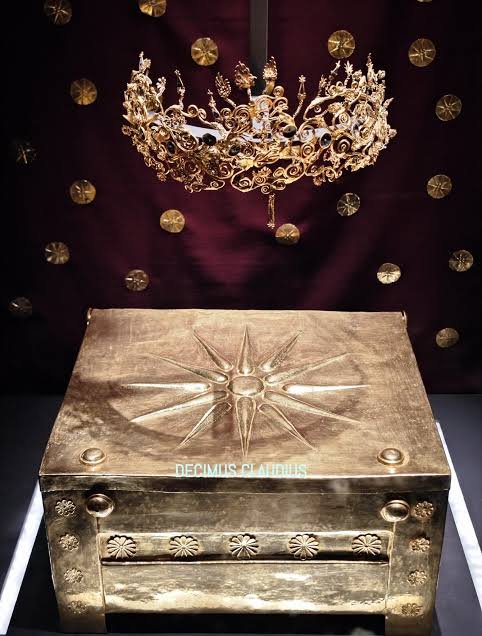
One of the most famous objects from the royal tombs is the gold burial container often called the gold larnax.
Its decoration includes the famous Vergina Sun or starburst motif.
The symbol has become strongly associated with ancient Macedonian identity in modern culture.
Its ancient meaning, however, remains debated.
The Vergina Sun
The sixteen-pointed star-like emblem is commonly called the Vergina Sun.
The motif appears on Macedonian material from antiquity.
Modern political and cultural history has given the symbol meanings far beyond its archaeological context.
For historians, it is important to separate the ancient artifact from modern national symbolism.
The ancient Macedonians did not use the symbol in precisely the same political contexts in which it is interpreted today.
The Art of Macedonian Goldsmiths
The Vergina treasures demonstrate extraordinary technical ability.
Ancient goldsmiths employed techniques including:
hammering;
casting;
soldering;
repoussé;
wirework;
granulation;
fine cutting.
These methods required specialized knowledge.
Gold objects could be extremely thin and delicate while still maintaining complex forms.
The International Context
Macedonian art did not develop in isolation.
Aigai belonged to a wider Greek and Mediterranean artistic environment.
Artists, craftspeople, and luxury objects circulated between regions.
The royal court could acquire or commission objects reflecting broader Greek artistic traditions.
The treasures therefore demonstrate cultural connectivity.
The Tombs as Time Capsules
One reason the Vergina gold is so important is preservation.
Organic materials normally decay.
Textiles disappear.
Wood deteriorates.
Leather survives only under special conditions.
Metal objects, especially gold, can survive for thousands of years.
When these materials remain together inside a sealed tomb, archaeologists gain an unusually detailed picture of elite burial.
The Scientific Study of the Treasures
Modern researchers can analyze ancient gold using scientific methods.
Metallurgical analysis can reveal:
alloy composition;
manufacturing techniques;
workshop practices;
repairs;
raw material sources.
Scientific examination therefore adds information that visual inspection alone cannot provide.
Why Vergina Gold Became Famous
The treasures became internationally famous because they combine several qualities.
They are:
visually spectacular;
historically important;
unusually well preserved;
connected with famous Macedonian rulers;
examples of sophisticated craftsmanship;
associated with a major archaeological discovery.
Few ancient collections provide such a concentrated picture of royal culture.
Conclusion
The gold of Vergina is much more than a collection of beautiful objects.
The wreaths reveal symbolic traditions.
The jewelry reveals elite identity.
The vessels reveal feasting.
The weapons reveal aristocratic warfare.
The burial containers reveal funerary customs.
The gold itself reveals the enormous resources available to Macedonian royalty.
The treasures also remind us that archaeology can preserve things that ancient writers never described.
A historian can read about Philip II.
But at Vergina, visitors can encounter the material world of the dynasty to which he belonged.
That is what makes the gold of Vergina one of the most extraordinary archaeological treasures of Greece.