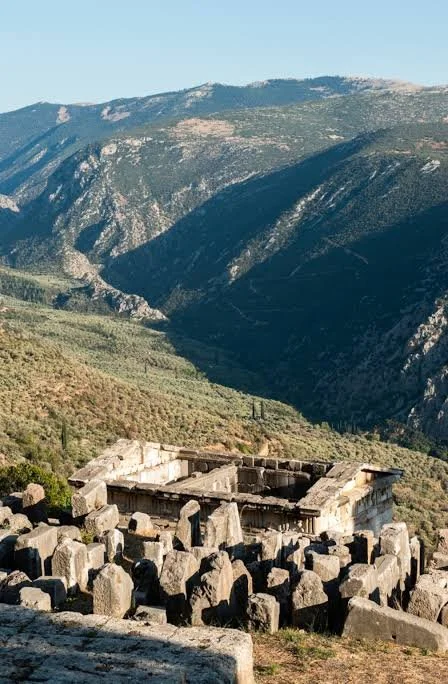
Greece is often experienced through museums, temples, archaeological sites, and ruins.
But there is another way to encounter its ancient past:
walking.
Ancient Greeks traveled along mountain paths, coastal routes, sanctuary roads, passes, and roads connecting neighboring communities.
Many modern hiking routes cross landscapes that were also traveled in antiquity.
A walk through Greece can therefore become an archaeological experience even when no major monument is immediately visible.
The landscape itself is evidence.
Why Ancient Paths Matter
Ancient communities did not exist independently of geography.
Mountains determined where people could travel.
Rivers influenced settlement.
Coastal routes connected ports.
Mountain passes created strategic corridors.
Religious sanctuaries attracted pilgrims.
Roads connected villages to cities.
Understanding ancient Greece therefore requires understanding movement.
The Sacred Way to Delphi
One of the most famous ancient routes was the Sacred Way leading into the sanctuary of Delphi.
Ancient pilgrims approached the sanctuary through a carefully structured landscape.
Along the route stood monuments, treasuries, and offerings.
The journey gradually transformed into a religious experience.
Walking the archaeological remains today provides an opportunity to understand how movement itself could become part of ritual.
The Road to Olympia
Olympia also attracted visitors from across the Greek world.
Athletes, officials, pilgrims, and spectators traveled to the sanctuary for the Olympic festival.
The modern landscape around Olympia can help visitors imagine the scale of these journeys.
Ancient travel was slower and physically demanding.
A journey to a festival could itself become a major life experience.
Mountain Routes
The Greek mainland is dominated by mountains.
This shaped settlement patterns.
Communities often developed within valleys and coastal plains because these areas provided agricultural opportunities.
But mountains were not simply obstacles.
They contained:
grazing land;
forests;
minerals;
religious sites;
defensive positions;
routes between regions.
Mountain passes could become strategically important.
The Peloponnese
The Peloponnese contains an extraordinary number of archaeological landscapes accessible through walking routes.
Paths connect areas around:
Mycenae;
Epidaurus;
Nemea;
Olympia;
Sparta;
Arcadia.
Hiking allows visitors to understand why ancient communities chose particular locations.
A temple on a hill looks different when approached from below.
A fortress makes more sense when the surrounding valleys are visible.
Ancient Roads and Roman Routes
The Romans constructed extensive roads throughout Greece.
Some routes followed earlier Greek pathways.
The Roman road network connected cities to larger imperial systems.
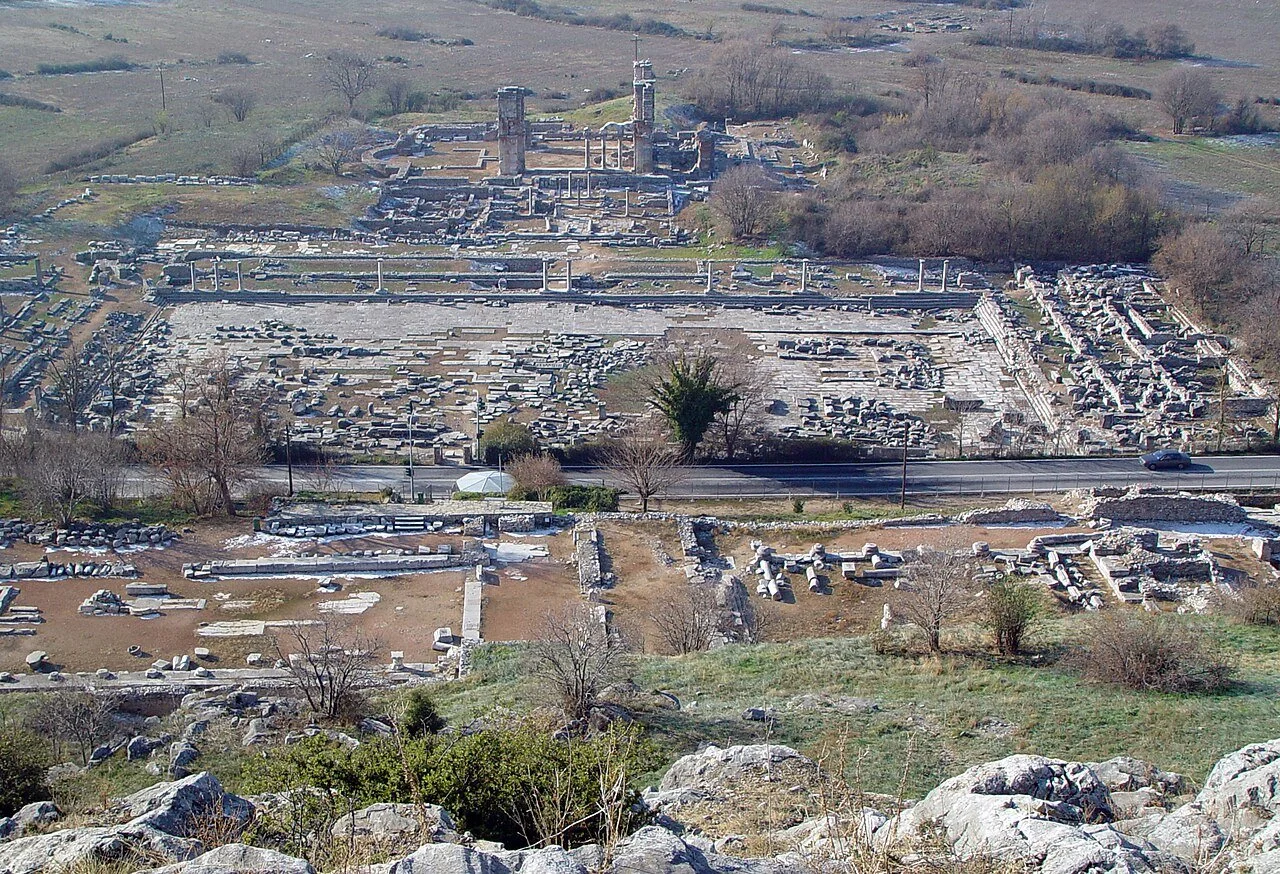
The Via Egnatia, for example, crossed northern Greece and connected the Adriatic region with Byzantium.
Philippi developed along this major route.
Walking portions of ancient roads can therefore connect archaeology with broader Mediterranean history.
Hiking Around Delphi
The landscape around Delphi is especially dramatic.
Mount Parnassus rises behind the sanctuary.
The terrain is steep.
Ancient pilgrims did not encounter the site from a flat parking lot.
They approached through a landscape that reinforced the sanctuary's religious significance.
Modern hiking routes around Delphi can provide a deeper understanding of the relationship between sanctuary and mountain.
Crete's Archaeological Landscapes
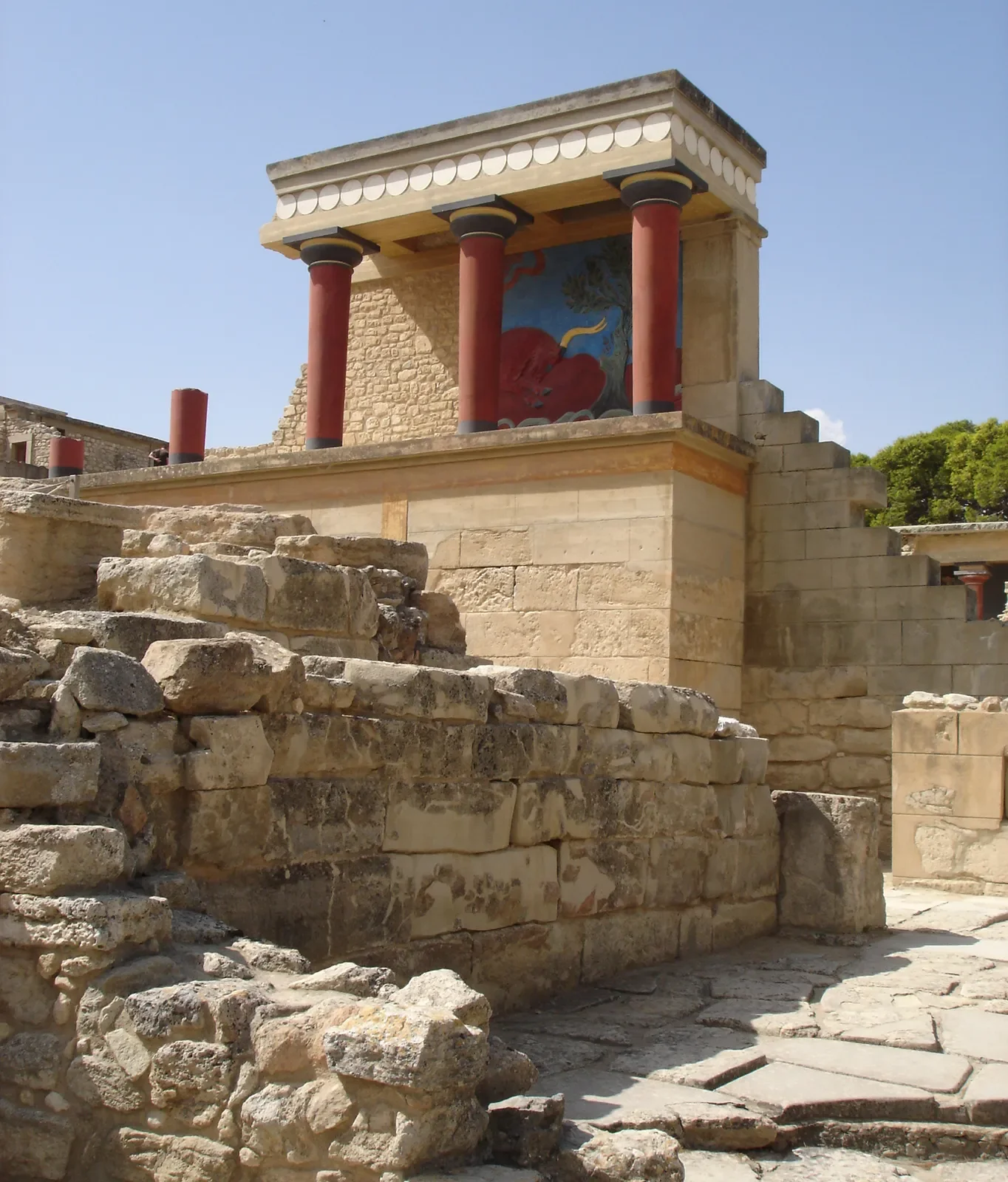
Crete provides another extraordinary environment for archaeological hiking.
The island contains:
Minoan settlements;
mountain sanctuaries;
ancient roads;
caves;
Byzantine churches;
Roman remains.
The terrain is rugged.
Walking can reveal how isolated communities were connected through mountain routes.
The Minoans were maritime traders, but they also depended on inland agricultural and mountain landscapes.
Ancient Paths and Water
Water was a critical concern.
Ancient travelers needed springs, wells, streams, and cisterns.
A route passing reliable water sources could be more important than a route that was geographically shorter.
Archaeological evidence of ancient water management therefore provides clues about movement.
Pilgrimage and Travel
Ancient Greek religion involved pilgrimage.
People traveled to major sanctuaries including:
Delphi;
Olympia;
Epidaurus;
Eleusis;
Delos;
Dodona.
Traveling to these places could involve considerable effort.
The journey connected communities.
Religious festivals therefore helped create networks across the Greek world.
Hiking Safely Through Ancient Landscapes
Modern hikers face different challenges from ancient travelers.
Good preparation matters.
Bring:
sufficient water;
suitable footwear;
sun protection;
navigation tools;
weather information.
Do not climb unstable ruins.
Do not remove archaeological objects.
Stay on designated paths where required.
Archaeological landscapes are fragile.
Even a small movement of stones can damage evidence.
Reading the Landscape Like an Archaeologist
When hiking, look beyond visible ruins.
Ask:
Why is the path here?
Where is water?
What is the nearest settlement?
Can the route be defended?
Does the path follow a valley?
Does it lead toward a sanctuary?
Are there terraces indicating agriculture?
Are there quarries or mines nearby?
These questions help transform an ordinary hike into archaeological observation.
Conclusion
Ancient Greece was not just a civilization of temples.
It was a civilization of movement.
People walked between villages.
Merchants crossed mountains.
Pilgrims traveled to sanctuaries.
Armies marched through passes.
Athletes traveled to Olympia.
Travelers followed coastal routes.
Farmers moved livestock through mountain landscapes.
Many of the paths that made these journeys possible still exist in some form.
Hiking through Greece therefore offers a unique historical experience.
Instead of simply looking at ancient monuments, you begin to experience the geography that shaped the people who built them.