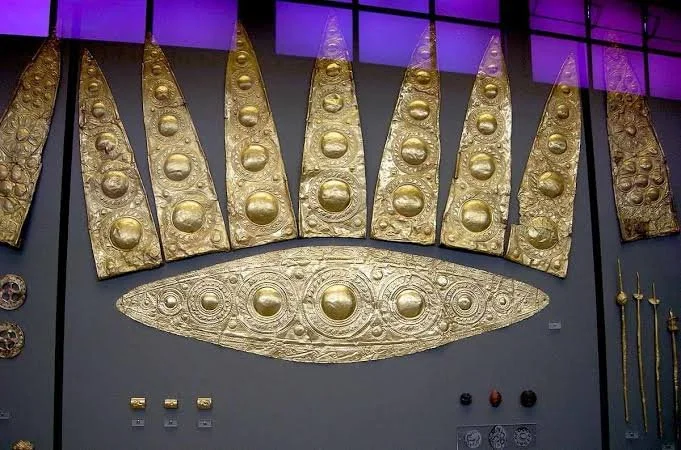
The discovery of a Mycenaean gold hoard inside a previously overlooked cave in Crete would be the kind of archaeological event capable of attracting international attention. Gold objects from the Late Bronze Age are among the most visually impressive remains of Aegean civilization, but their importance extends far beyond their material value. A concentration of gold objects could provide evidence about wealth, burial customs, exchange networks, political authority, religious practices, and the movement of people between mainland Greece and Crete.
There is, however, an important distinction to make at the outset. No authoritative archaeological publication or official Greek archaeological announcement located for this article could be verified as documenting the specific 2026 Cretan cave discovery described by this title. The archaeological context surrounding such a discovery is nevertheless exceptionally rich, because Crete was deeply connected to the Mycenaean world during the later Bronze Age.
Crete Before and During Mycenaean Influence
Crete had already developed a highly sophisticated civilization centuries before Mycenaean political influence became prominent.
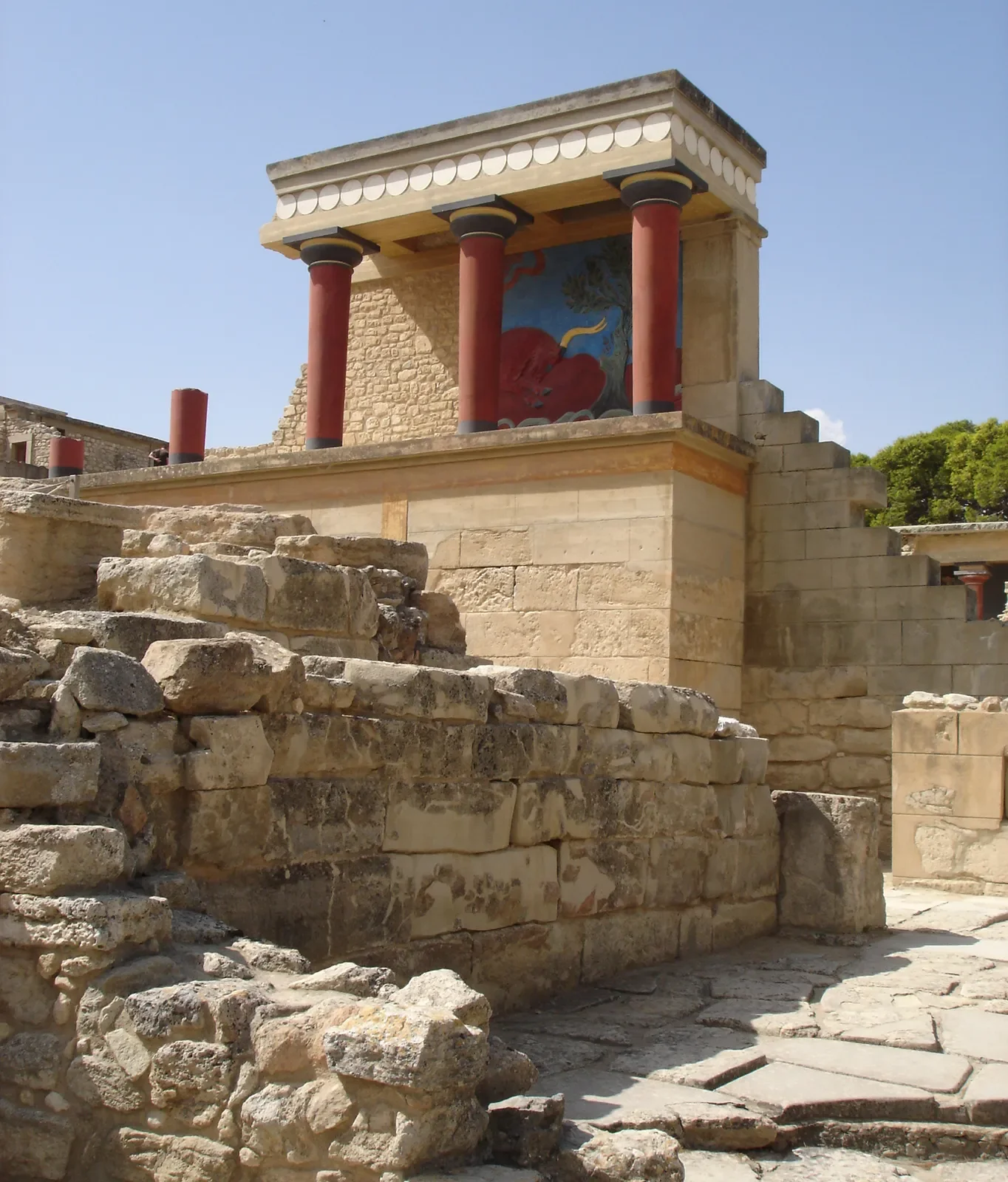
The Minoan palatial centers of Knossos, Phaistos, Malia, and Zakros demonstrate the island's enormous economic and cultural importance. Crete maintained connections with mainland Greece, the Cyclades, Cyprus, Egypt, and the Levant.
By the Late Bronze Age, however, the political landscape was changing.
Evidence from Knossos includes Linear B tablets written in an early form of Greek. These documents demonstrate that Mycenaean administrative practices were established at the site.
This does not mean that Cretan culture suddenly disappeared.
Instead, Mycenaean political structures became integrated with an older Cretan cultural environment.
A gold hoard from a cave would therefore have to be interpreted within this complicated period of interaction.
Why Gold Was So Important
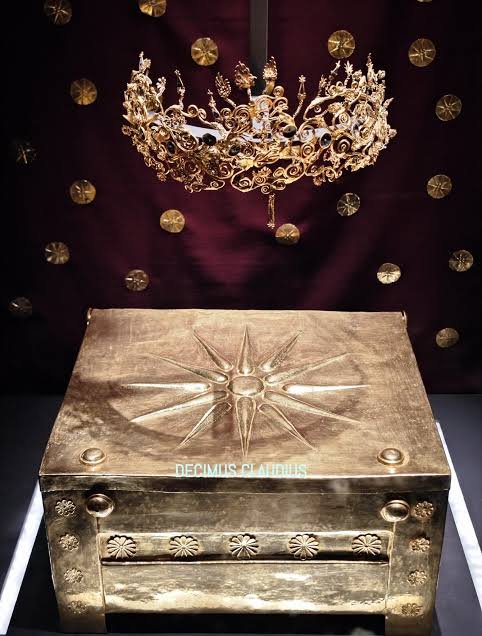
Gold was not an ordinary material in Bronze Age Aegean societies.
It was difficult to obtain locally in large quantities and therefore represented wealth, status, craftsmanship, and long-distance connections.
Mycenaean elites used gold for:
jewelry;
funerary masks;
decorative clothing elements;
vessels;
weapons decoration;
ornaments;
ritual objects.
The famous shaft graves at Mycenae provide some of the clearest evidence of the extraordinary concentration of precious materials within elite burials.
Messenia also preserves spectacular Mycenaean gold objects. The Archaeological Service of Messenia notes gold grave goods from the Griffin Warrior burial, the tholos tombs of Peristeria, and Mycenaean chamber tombs at Ellinika.
A newly discovered concentration of gold would therefore immediately raise questions about whether it represented burial wealth, a ritual deposit, concealed valuables, or another type of deposition.
Why a Cave Would Be Significant
Caves had a distinctive place in ancient Cretan landscapes.
Some caves were associated with religious activity, ritual deposits, and sacred landscapes.
Others were simply natural spaces used by people for shelter, storage, burial, or other purposes.
Archaeologists therefore cannot assume that gold inside a cave was automatically a religious offering.
The archaeological context would be crucial.
Were the objects placed inside pottery vessels?
Were they buried beneath stones?
Were human remains nearby?
Were there traces of fire?
Were the objects deliberately damaged?
Were there other artifacts?
Each of these details could change the interpretation.
A Hoard Is Not Necessarily a Treasure Chest
The modern concept of a "treasure hoard" can be misleading.
Ancient people buried valuables for many possible reasons.
A person might conceal wealth during a period of political instability.
A community might deposit objects as part of a ritual.
A burial might contain accumulated wealth belonging to a high-status individual.
Objects might also have been intentionally removed from circulation.
Archaeologists therefore examine the arrangement and association of objects rather than simply counting their monetary value.
Mycenaean Crete and Mainland Greece
A Cretan gold assemblage could also contribute to debates about the relationship between Crete and mainland Greece.
The Late Bronze Age Aegean was not divided into completely isolated cultural worlds.
Objects, technologies, artistic motifs, writing practices, and people moved between regions.
The presence of Mycenaean-style objects on Crete would not automatically prove that mainland Greeks physically transported every artifact. Local Cretan workshops could imitate or adapt foreign styles.
This distinction between importation and cultural adaptation is essential.
What Scientific Analysis Could Reveal
Modern archaeology can extract information from even very small traces.
Gold objects can be analyzed for:
elemental composition;
manufacturing techniques;
surface treatments;
alloying practices;
microscopic tool marks;
traces of wear.
Organic material associated with a hoard can be even more informative.
Sediments can reveal environmental conditions.
Plant remains can indicate surrounding vegetation.
Charcoal can sometimes provide radiocarbon dates.
Human remains, if present, can potentially provide information about diet, mobility, health, and biological relationships.
The Problem of Looting
Gold objects are particularly vulnerable to looting.
A scientifically excavated hoard can provide information about the circumstances of deposition.
A collection of objects removed from their original context loses much of that information.
For this reason, archaeological context is often more valuable scientifically than the objects themselves.
A gold ring in a museum is impressive.
A gold ring found beside a specific skeleton, within a sealed burial, associated with pottery of a known date, can answer historical questions.
What a Genuine Discovery Would Change
If a previously unknown Mycenaean gold hoard were securely documented in a Cretan cave, its greatest importance would probably not be the gold itself.
It would be the context.
The discovery could contribute to discussions about:
elite wealth;
Mycenaean administration;
Cretan religious traditions;
interregional exchange;
mobility;
burial practices;
social hierarchy;
the transition from Minoan to Mycenaean political structures.
The archaeological significance of such a discovery would therefore depend upon careful excavation, documentation, conservation, and publication.
Conclusion
A Mycenaean gold hoard in a Cretan cave would offer a remarkable opportunity to investigate the relationship between Crete and the wider Mycenaean world.
But archaeology demands an important distinction between a fascinating title and a documented discovery.
The specific 2026 find described here should not be treated as established archaeological fact without an excavation report or official archaeological documentation.
What can be established is that Crete was one of the most important centers of Bronze Age Mediterranean civilization and that Mycenaean influence became deeply embedded there during the later Bronze Age.
Any genuine gold hoard discovered in that landscape would therefore be far more than a collection of precious objects.
It would be evidence of human choices made more than three thousand years ago.