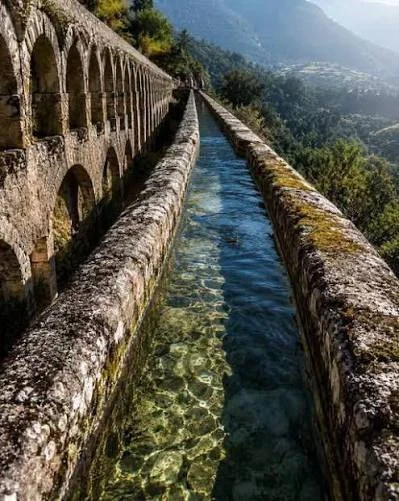
Roman aqueducts are among the most recognizable symbols of ancient engineering.
Modern images often focus on monumental rows of arches crossing valleys.
Yet this is only one form of aqueduct construction.
In reality, much of the Roman water-supply system consisted of channels, tunnels, covered conduits, bridges, and underground structures.
This makes the possibility of forgotten aqueduct fragments in the mountains of Phocis especially interesting.
The specific discovery described by this title could not be verified as a distinct 2026 archaeological announcement in the sources located for this article.
The broader archaeological context, however, is significant.
Water and Roman Cities
Urban populations require reliable water.
Roman cities used water for:
drinking;
fountains;
baths;
sanitation;
industrial activities;
agriculture;
public display.
Aqueducts transported water from springs or other sources to settlements.
Roman engineers generally relied on gravity rather than mechanical pumping.
The system therefore depended on careful surveying.
Mountainous Greece
Phocis is a mountainous region of central Greece.
Its terrain contains valleys, springs, steep slopes, and complex geological formations.
Such geography could make water transport both difficult and advantageous.
A spring at higher elevation could provide water to a lower settlement if engineers calculated the gradient correctly.
Aqueduct Engineering
Roman engineers needed to understand elevation.
The channel could not simply be built as a level road.
It required a controlled gradient.
If the slope was too steep, water could erode the channel.
If it was too shallow, flow could become inadequate.
Roman surveying techniques therefore played a critical role.
Aqueduct research has demonstrated that channels could pass through tunnels and mountainous terrain rather than relying exclusively on arches.
What Survives?
Aqueduct fragments may include:
masonry channels;
waterproof plaster;
stone conduits;
tunnel entrances;
retaining walls;
bridge foundations;
settling tanks.
Some fragments may appear insignificant.
A small section of waterproof channel can nevertheless prove that a larger water-supply network existed.
Identifying an Aqueduct
Not every ancient water channel is Roman.
Greek communities had sophisticated hydraulic systems long before Roman rule.
Researchers therefore examine:
construction technique;
mortar;
channel dimensions;
ceramic pipes;
inscriptions;
associated settlements;
dating evidence.
Roman infrastructure can also incorporate earlier Greek hydraulic traditions.
Aqueducts and Urban Development
Water infrastructure can reveal the growth of cities.
If a city received a major aqueduct, its population and public facilities may have expanded.
Bath complexes are particularly important indicators.
Roman baths required large quantities of water.
Fountains could also serve as symbols of civic prosperity.
Thus an aqueduct was not merely a utility.
It could transform the appearance and organization of a city.
The Broader Greek Context
Roman Greece contained numerous important hydraulic projects.
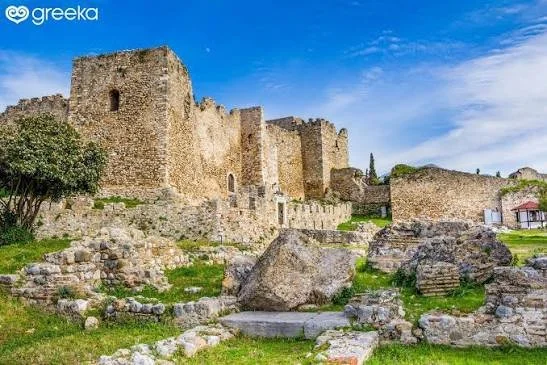
Patras, for example, possessed a Roman aqueduct dating probably to the second century CE that brought water from Mount Panachaiko toward the city.
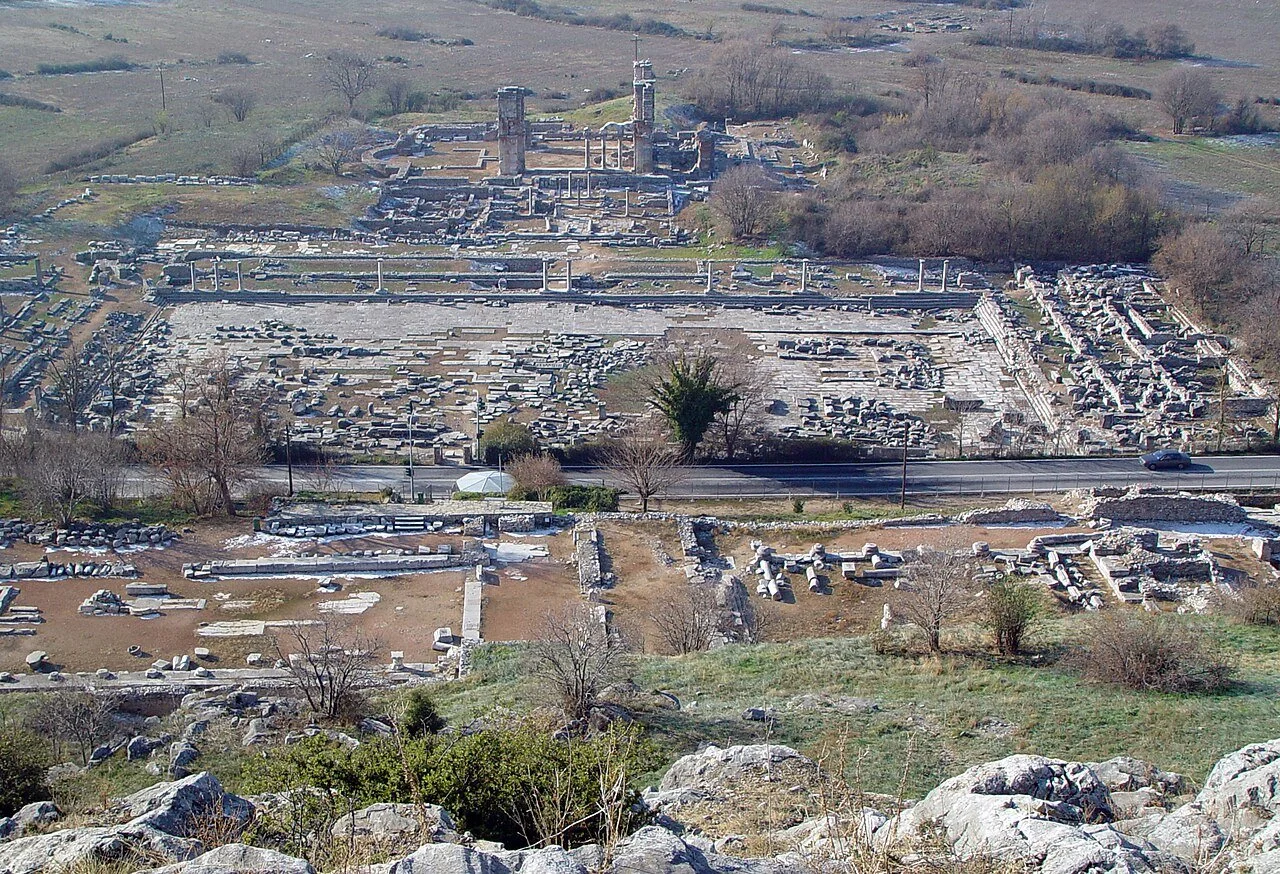
Philippi likewise had a Roman aqueduct associated with the city's water supply, dating to the imperial period.
These examples demonstrate that Roman water engineering was integrated into the infrastructure of Greek cities.
Why Mountain Fragments Matter
Mountain fragments are often difficult to recognize.
Vegetation can cover masonry.
Modern roads can obscure channels.
Agricultural terraces may incorporate ancient stones.
Local communities may know the remains without realizing their full archaeological significance.
Systematic survey can therefore reveal connections between isolated fragments.
Conclusion
The title's specific discovery remains unverified as a 2026 archaeological announcement.
Nevertheless, forgotten aqueduct fragments in Phocis would fit into a larger and well-documented tradition of hydraulic engineering in Roman Greece.
The most important lesson is that Roman aqueducts were not simply spectacular bridges.
They were carefully engineered systems involving springs, tunnels, channels, gradients, reservoirs, and urban distribution.
Even a fragment hidden in a mountain landscape could represent one surviving piece of a much larger infrastructure system.