The Hellenistic period transformed the eastern Mediterranean.
Following the conquests of Alexander the Great, Greek language and culture spread across a vast political world while remaining deeply connected with older regional traditions.
Lesbos, positioned in the northeastern Aegean near the coast of Anatolia, occupied an important location within this changing landscape.
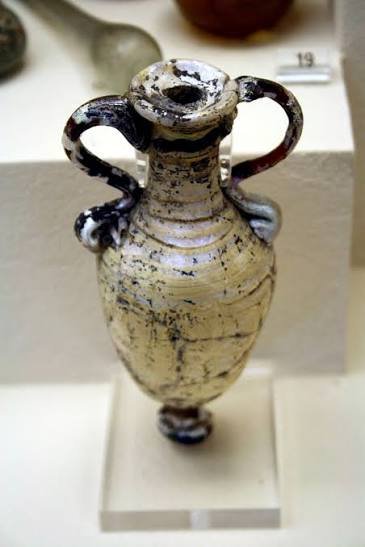
The discovery of Hellenistic glass vessels inside a villa would therefore provide an opportunity to examine luxury consumption, domestic life, trade, and technological development.
The specific villa discovery described by this title could not be verified as a documented 2026 archaeological find in the sources located for this article.
Glass in the Ancient Mediterranean
Glass was known long before the Hellenistic period.
But its production and use developed considerably over time.
Glass could be used for:
containers;
cups;
perfume bottles;
cosmetic vessels;
decorative objects;
jewelry.
Because glass production could involve considerable technical skill, certain forms became associated with luxury.
Hellenistic Luxury
Elite households in the Hellenistic world consumed objects from distant regions.
A wealthy residence could contain:
imported pottery;
glass;
metal vessels;
jewelry;
sculptures;
textiles;
furniture.
Such objects reflected both wealth and participation in international culture.
Why Lesbos Matters
Lesbos had a long history of interaction with the Aegean and Anatolian worlds.
Its location enabled maritime exchange.
Ships could connect the island with mainland Greece, the Anatolian coast, the central Aegean, and other Mediterranean regions.
A glass vessel discovered on Lesbos therefore raises questions about where it was manufactured and how it traveled.
The Villa as a Context
A domestic building provides a different archaeological environment from a sanctuary or tomb.
Objects found inside rooms can reveal everyday life.
Archaeologists might determine whether a vessel was used for:
drinking;
perfume;
cosmetics;
storage;
dining;
ritual.
The exact location matters.
A vessel near a dining area has a different interpretation from one found inside a burial chamber.
Glass Manufacturing
Ancient glassworkers used raw materials including silica-rich sand and mineral fluxes.
Color could be altered by adding trace elements.
Different production centers developed distinctive techniques.
Some vessels were cast.
Others were shaped using more advanced methods.
Dating Glass
Glass can sometimes be dated by form and manufacturing technique.
However, typology must be combined with archaeological context.
A vessel type may remain in use for decades.
A securely dated coin or ceramic assemblage found alongside glass can therefore be extremely valuable.
Trade Networks
Glass provides evidence for connectivity.
If a vessel manufactured elsewhere is found on Lesbos, it demonstrates movement across maritime networks.
But the object may also have been copied locally.
Chemical analysis can sometimes distinguish different production traditions.
Elite Consumption
A villa containing imported glass could indicate elite participation in Mediterranean luxury culture.
The occupants may have had access to long-distance trade networks.
But archaeologists should avoid assuming that every villa belonged to a wealthy aristocrat.
Architecture, size, artifact assemblage, and environmental evidence all need to be considered.
Conclusion
The specific Hellenistic glass assemblage described by this title has not been verified as a 2026 discovery in the sources located for this article.
Nevertheless, Hellenistic glass is an important archaeological category because it connects technology, luxury, domestic life, and long-distance trade.
A securely excavated villa assemblage on Lesbos could reveal not only what objects people owned but how they participated in the wider economic and cultural networks of the Hellenistic Aegean.