The Argolid is one of the most important archaeological landscapes in Greece.
The region contains Mycenae, Tiryns, Midea, Asine, and numerous smaller settlements.
Its importance during the Bronze Age was not limited to palaces and fortifications.
The countryside contained workshops, agricultural settlements, craft production areas, and networks supporting the larger centers.
Among the most important of these industries was pottery production.
The specific discovery of previously unknown Bronze Age kilns described by this title could not be verified as a distinct 2026 archaeological announcement in the sources located for this article.
Nevertheless, the Argolid is already exceptionally well documented as a major center of Bronze Age ceramic production.
Pottery and Mycenaean Civilization
Pottery was essential to Bronze Age life.
Ceramic vessels were used for:
storage;
cooking;
serving;
transportation;
ritual;
burial.
Large-scale societies required enormous quantities of pottery.
The production of ceramics therefore became an important economic activity.
The Argolid's Industrial Landscape
Archaeological research demonstrates that the Argolid contained specialized pottery-production areas.
Research on Bronze Age economies identifies sites around Tiryns and Berbati as important centers of pottery manufacture. Tens of thousands of vessels may have been produced annually to meet the needs of palatial economies and external markets.
This evidence is particularly important because it shows that Mycenaean civilization was supported by a complex rural economy.
What Is a Kiln?
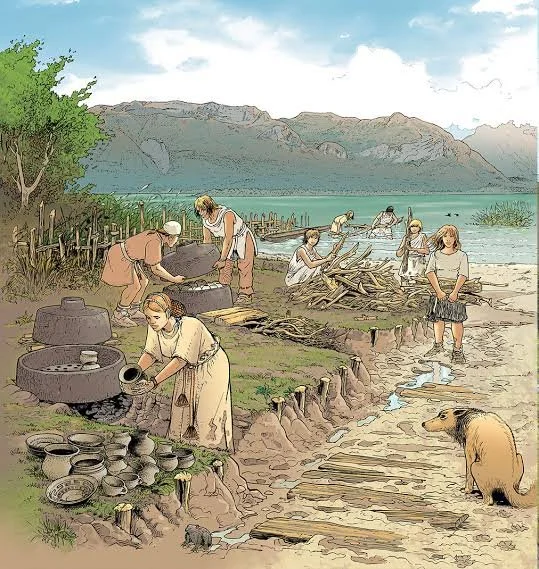
A pottery kiln is an installation designed to fire clay at controlled temperatures.
A typical ancient kiln included:
a firing chamber;
a firebox;
a floor separating fire and pottery;
ventilation structures;
an opening for loading.
The exact design varied.
Some kilns were relatively small.
Others were capable of industrial-scale production.
How Kilns Are Identified
Archaeologists look for characteristic evidence.
This may include:
heavily fired clay;
collapsed kiln walls;
ash;
charcoal;
wasters;
vitrified surfaces;
warped vessels.
Wasters are particularly important.
These are pottery vessels damaged during firing.
A large concentration of wasters can indicate local manufacturing.
Why the Countryside Matters
Large palatial centers depended on rural production.
Farmers produced food.
Craftworkers manufactured tools and pottery.
Transport networks moved goods.
The palace administration redistributed resources.
This means that understanding Mycenaean civilization requires looking beyond monumental architecture.
A kiln in the countryside could reveal the economic infrastructure supporting the palace.
The Role of Fuel
Kiln production required fuel.
Wood was especially important.
This creates an environmental dimension.
Large-scale ceramic production could place pressure on nearby forests.
Archaeobotanical evidence can therefore contribute to understanding craft industries.
Pottery and Trade
Argolid pottery circulated widely.
Imported Mycenaean ceramics have been found across the Aegean and Mediterranean.
This demonstrates that local production could become international commerce.
A kiln was therefore potentially connected to markets hundreds of kilometers away.
Scientific Analysis
Ceramic analysis can determine where vessels were produced.
Petrography examines mineral inclusions.
Chemical techniques can compare clay compositions.
Residue analysis can sometimes identify what vessels contained.
Together, these methods can reconstruct the production and distribution system.
Conclusion
The possibility of undiscovered Bronze Age kilns in the Argolid countryside is entirely consistent with the region's established archaeological importance.
The specific 2026 discovery described by the title remains unverified.
But archaeological research has already demonstrated that the Argolid was a major center of large-scale pottery production during the Late Bronze Age.
Finding new kilns would therefore not simply add another ancient structure to the map.
It could reveal previously unknown workshops, production technologies, labor organization, environmental pressures, and trade routes.
The countryside was not merely the background to Mycenaean palaces.
It was part of the economic machinery that made those palaces possible.