Few discoveries would be more valuable to Bronze Age archaeology than the recovery of Linear B tablets from a remote settlement in the mountains of Pelion.
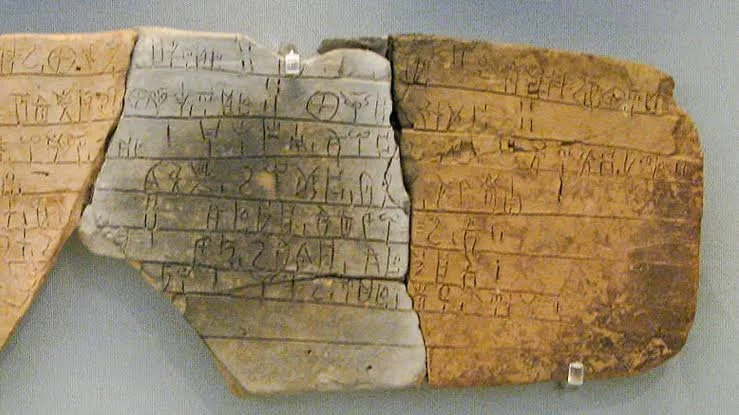
Linear B is not simply an ancient writing system. It is the earliest securely deciphered form of Greek writing and provides an extraordinary window into the administrative world of the Mycenaean period.
The idea of finding a group of tablets inside a secluded hermitage-like settlement in Pelion is therefore fascinating.
However, the specific discovery described by this title could not be independently verified as a documented archaeological find in the authoritative sources located for this article. No excavation report or official archaeological announcement confirming a 2026 Pelion Linear B tablet discovery was identified.
That distinction matters because Linear B tablets are extremely unusual archaeological objects. Their survival depends heavily on particular conditions, especially accidental firing.
Nevertheless, the archaeological background provides a fascinating way to understand what such a discovery would mean.
What Is Linear B?
Linear B is a writing system used during the Late Bronze Age.
It was deciphered in the twentieth century, most famously through the work of Michael Ventris, with important contributions from scholars including John Chadwick.
The decipherment demonstrated that the language recorded by Linear B was an early form of Greek.
This was one of the most important discoveries in the history of Greek archaeology.
Before the decipherment, scholars knew that the Mycenaean world possessed writing.
They did not yet know exactly what language the signs represented.
Once Linear B was understood, the archaeological record became considerably more informative.
Linear B Was Primarily Administrative
One of the most important things to understand about Linear B is that it was not primarily used for literature.
The surviving tablets are overwhelmingly administrative.
They record things such as:
quantities of agricultural products;
livestock;
personnel;
offerings;
landholding;
craftsmen;
military equipment;
commodities;
obligations.
The tablets therefore provide something rare in prehistoric archaeology:
bureaucratic documentation.
A Linear B tablet is not simply an inscription.
It is often a surviving administrative record from a palace economy.
Why Most Tablets Survived
The survival of Linear B tablets is unusual.
Many were written on unfired clay.
Under normal circumstances, unfired clay is fragile.
Rain, soil moisture, erosion, and later human activity can destroy it.
But when a building containing tablets burned, the clay could become accidentally fired.
This process transformed temporary administrative records into durable archaeological objects.
Ironically, destruction by fire helped preserve information.
The Mycenaean Palace System
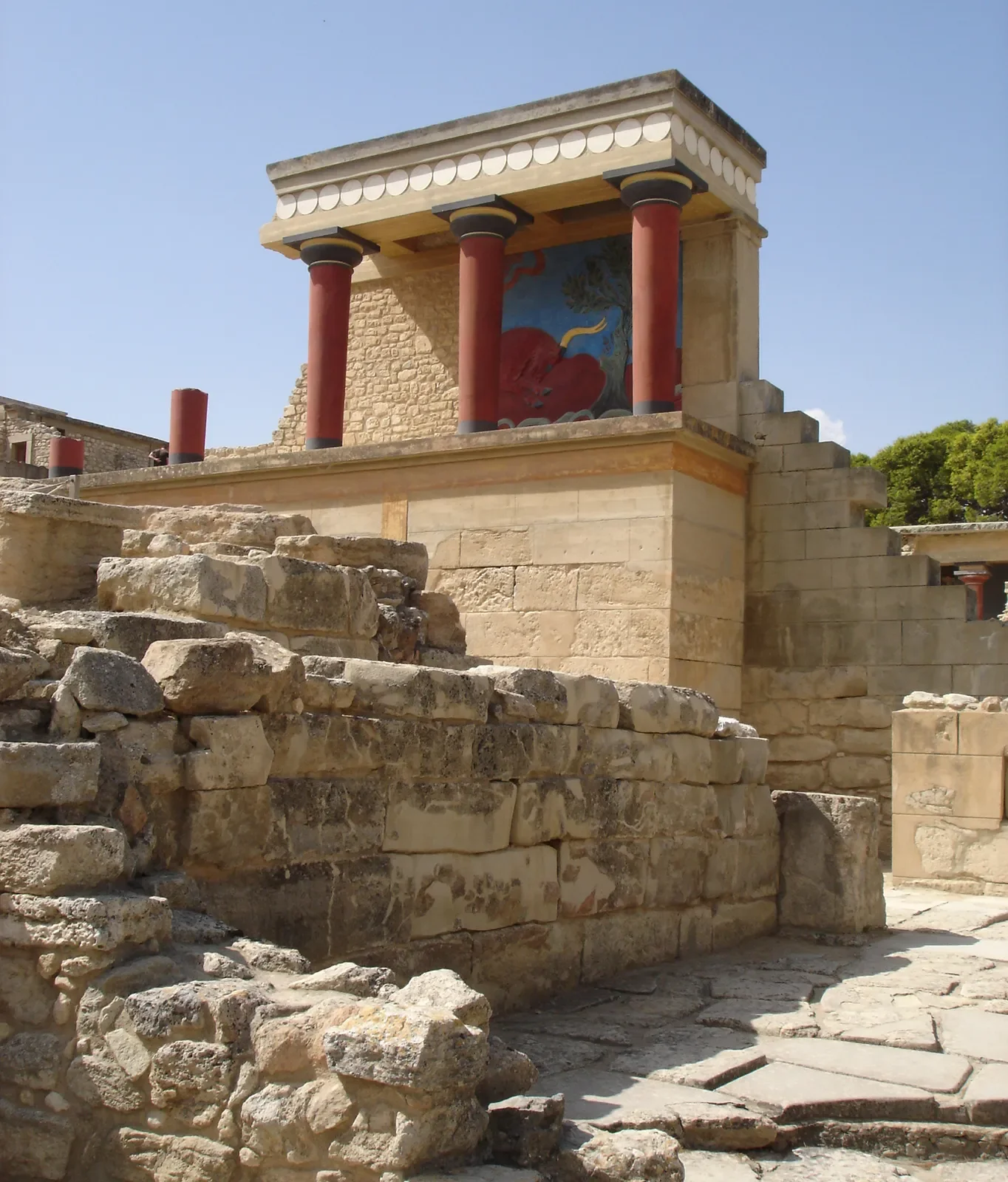
Linear B is strongly associated with the Mycenaean palatial centers.
Major centers included:
Mycenae;
Pylos;
Thebes;
Tiryns;
Knossos.
These centers maintained complex administrative systems.
The palace was not simply a residence.
It could function as an administrative headquarters controlling agricultural production, craft activities, storage, taxation or obligations, and redistribution.
Linear B was one of the tools that made this bureaucracy possible.
Pelion and Thessaly
Pelion occupies an important geographical position in northeastern Greece.
The mountain extends toward the Aegean and overlooks the Pagasetic Gulf.
Its geography connects inland Thessaly with maritime routes.
This makes the region particularly interesting for Bronze Age archaeology.
Communities in the Pelion area could potentially participate in networks involving:
Thessaly;
southern Greece;
the northern Aegean;
the Cyclades;
coastal Anatolia.
A Linear B assemblage from the region would therefore raise important questions about the geographical reach of Mycenaean administration.
A "Hermitage" Would Be Unusual
The word hermitage creates a potentially misleading modern image.
A hermitage normally refers to a secluded religious retreat, particularly in Christian contexts.
A Mycenaean Bronze Age settlement would not have been a Christian hermitage.
If the term were being used to describe a remote mountain dwelling, archaeologists would need to establish what the building actually was.
Possibilities might include:
a rural settlement;
an agricultural outpost;
a sanctuary;
a storage facility;
an elite residence;
a seasonal occupation;
a workshop.
The interpretation would depend on architecture and artifacts.
What Would Linear B Tablets in Pelion Mean?
If securely excavated tablets were discovered in Pelion, several major questions would immediately arise.
Were they produced locally?
Did an administrative official travel there?
Was the settlement under the authority of a larger palatial center?
Was the site involved in agricultural collection?
Did it supply timber, animals, metals, or agricultural goods?
Did it participate in a regional political network?
These questions could substantially improve understanding of Mycenaean territorial organization.
What the Tablets Might Record
A hypothetical Pelion tablet assemblage might contain references to:
livestock;
grain;
land;
workers;
offerings;
agricultural products;
textiles;
weapons.
Even seemingly boring records could be historically important.
A list of sheep, for example, could reveal the scale of pastoral production.
A record of workers could illuminate labor organization.
A list of offerings could provide evidence about religious institutions.
Linear B and Religion
Although Linear B tablets are administrative, they sometimes preserve religious information.
Names of deities appear in the tablets.
Some recognizable divine names include forms associated with later Greek gods.
This is particularly important because it demonstrates that certain elements of Greek religious terminology existed centuries before Classical Greek literature.
However, Mycenaean religion should not simply be equated with Classical Greek religion.
Religious institutions and practices changed over time.
The Problem of the Missing Literature
One of the great frustrations of Mycenaean archaeology is that Linear B did not preserve the kind of literature represented by later Greek poetry.
There are no surviving Mycenaean equivalents of Homer's Iliad or Odyssey.
We do not possess Mycenaean philosophical texts.
We do not have surviving Mycenaean historical narratives.
Instead, we mostly have administrative documents.
This means that Linear B gives us a highly practical picture of society.
We see what administrators counted.
We see what they stored.
We see what they distributed.
But we have much less direct evidence for what ordinary people thought about their world.
What Could Scientific Analysis Add?
Modern archaeological science could provide additional information.
Clay tablets could be studied for:
clay composition;
manufacturing techniques;
writing practices;
surface treatment;
microscopic traces.
Associated sediments could reveal environmental information.
Nearby botanical remains could demonstrate what crops were cultivated.
Animal bones could indicate livestock management.
Together, these sources could place the tablets within a larger economic system.
Pelion and the Mycenaean Landscape
A major discovery in Pelion would also challenge simplistic assumptions about Bronze Age political geography.
The Mycenaean world was not simply a collection of isolated palaces.
There were settlements of different sizes.
There were farms.
There were workshops.
There were coastal communities.
There were mountain settlements.
There were roads and maritime routes.
The palatial centers depended upon this wider landscape.
Why a Small Site Could Matter
Archaeology frequently demonstrates that small sites can answer major historical questions.
A monumental palace shows where power was concentrated.
A rural settlement can reveal how that power functioned beyond the palace.
If a remote Pelion community maintained administrative records, this could demonstrate the penetration of bureaucratic practices into regions far from the largest monumental centers.
Conclusion
The specific discovery of Mycenaean Linear B tablets from a Pelion hermitage has not been independently verified in the authoritative sources located for this article.
But the hypothetical discovery illustrates why Linear B remains one of the most important sources for Mycenaean history.
These tablets reveal a society concerned with agricultural production, labor, livestock, land, commodities, religious offerings, and administration.
A securely documented Pelion assemblage would be especially significant because it could provide evidence for how Mycenaean political and economic organization extended into the mountainous landscapes of northern and central Greece.
The greatest value of such a discovery would not necessarily lie in the number of tablets.
It would lie in what those fragile pieces of fired clay could reveal about the people, institutions, and landscapes that produced them.