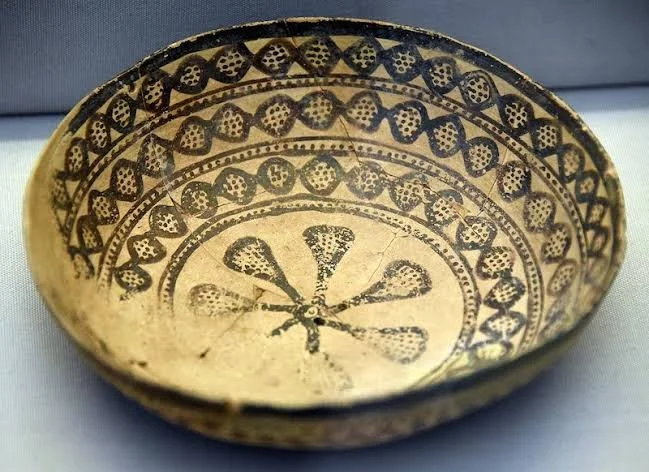
Geometric pottery is among the most valuable archaeological evidence for understanding Greece during the centuries following the collapse of the Mycenaean palace systems.
The period is often called the Geometric period, broadly covering the ninth and eighth centuries BCE, although its chronology varies by region.
Pottery from this period is famous for its carefully organized designs: meanders, triangles, concentric circles, zigzags, checkerboards, and eventually increasingly complex human and animal scenes.
A newly discovered pottery cache in the hills of Epirus could potentially provide important information about regional production and exchange.
The specific discovery described in this title, however, could not be verified as a documented 2026 archaeological announcement in the authoritative sources located for this article.
Greece After the Bronze Age
The collapse of the Mycenaean palatial systems around the end of the second millennium BCE transformed the political landscape of Greece.
Large palace administrations disappeared.
Writing traditions changed.
Long-distance networks contracted in some regions.
But Greek communities continued to exist.
Over the following centuries, new social structures developed.
By the Geometric period, communities were becoming increasingly connected to wider Mediterranean networks.
Why Pottery Matters
Pottery is one of archaeology's most useful forms of evidence.
Unlike precious objects, ceramic vessels were used widely.
Broken pottery survives in enormous quantities.
Because styles changed over time, pottery can be used for dating archaeological layers.
Researchers examine:
clay composition;
manufacturing technique;
vessel shape;
decoration;
firing;
surface treatment.
These details allow archaeologists to identify regional traditions.
The Geometry of Decoration
The name "Geometric" comes from the dominance of geometric decoration.
Artists covered vessels with organized visual systems.
Common motifs included:
meanders;
triangles;
circles;
cross-hatching;
zigzags;
concentric designs;
horizontal bands.
Eventually, artists introduced human and animal figures.
These could depict:
processions;
chariots;
warriors;
ships;
funerary scenes;
animals.
The decoration therefore evolved from abstract geometry toward increasingly narrative imagery.
Epirus and Its Position
Epirus occupies a distinctive position in northwestern Greece.
The region includes mountains, valleys, river systems, and access routes toward the Ionian coast.
Its geography shaped patterns of settlement and exchange.
Communities in mountainous areas could be connected to coastal networks without necessarily sharing identical cultural traditions.
This makes archaeological assemblages from Epirus particularly valuable.
What Would a Pottery Cache Reveal?
A sealed pottery deposit can be extraordinarily informative.
If archaeologists recover a group of vessels from a single archaeological context, they can study the assemblage as a whole.
Researchers could determine:
whether vessels were locally produced;
whether imports were present;
how different shapes were used;
how decoration varied;
whether the deposit was domestic, funerary, or ritual.
The word "cache" therefore has to be interpreted carefully.
A hidden group of objects could have been intentionally stored, ritually deposited, concealed during conflict, or accumulated through ordinary activity.
Scientific Analysis
Modern ceramic analysis can go far beyond visual comparison.
Petrographic examination can identify mineral inclusions within clay.
Chemical analysis can help compare pottery to potential production areas.
These methods can distinguish locally made vessels from imports.
This is particularly important in regions like Epirus, where mountain and coastal communities interacted.
Geometric Art and Social Change
Geometric pottery also reflects broader changes in Greek society.
The appearance of warriors, ships, horses, and processions indicates changing social concerns.
Burial customs became increasingly elaborate in some regions.
Elite display became important.
Communities developed new forms of collective identity.
Pottery was therefore not merely decorative.
It was part of the social world.
The Problem of "Never Seen Before"
Archaeological discoveries are often described as unique or unprecedented.
Such claims require caution.
A motif may appear unique within one region while having parallels elsewhere.
Likewise, a design may be new to modern scholarship but have been familiar to ancient craftspeople.
The proper archaeological approach is comparison.
Researchers would compare the alleged new patterns with collections from:
Epirus;
Macedonia;
Thessaly;
Corinth;
Euboea;
the Ionian Islands;
southern Italy.
Only then could their significance be assessed.
Conclusion
A securely documented Geometric pottery cache from the hills of Epirus could provide valuable evidence for regional craftsmanship, exchange, burial, ritual, and social organization.
The specific 2026 discovery described by this title has not been independently verified in the sources located for this article.
Nevertheless, the archaeological question is important.
Geometric pottery represents a period of profound transformation in Greek society.
Its designs are not merely attractive patterns.
They are archaeological evidence for technological skill, social identity, artistic development, and communication across communities.