The possibility of discovering Minoan ivory objects on Zakynthos would immediately raise important questions about the maritime networks of the Bronze Age Mediterranean.
Ivory was a prestigious material.
It was difficult to acquire, required specialized craftsmanship, and was frequently associated with elite objects.
Yet the specific 2026 discovery described by this title could not be independently verified through authoritative archaeological sources located for this article. It is therefore important not to present the purported discovery as established fact.
The archaeological question itself, however, is fascinating.
Could Minoan objects have reached the Ionian Islands?
Absolutely—and the wider evidence demonstrates that Bronze Age Aegean societies participated in extensive networks of exchange.
What Makes Ivory Special?
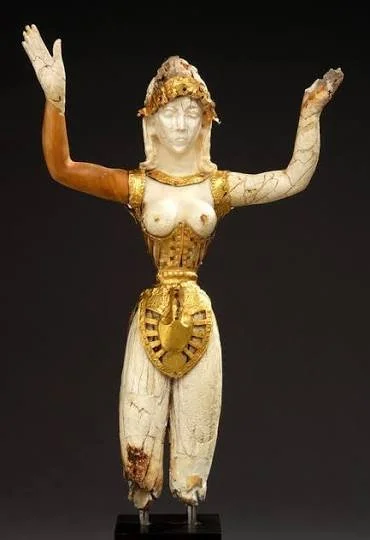
Ivory was among the most valued organic materials in ancient Mediterranean craftsmanship.
Unlike stone, ivory could be carved into intricate shapes.
It was suitable for:
figurines;
handles;
boxes;
decorative plaques;
inlays;
furniture fittings;
luxury objects.
The material could be polished to a smooth surface.
It also allowed craftsmen to create fine details.
Minoan Luxury Production
Minoan Crete was deeply involved in the production and circulation of luxury goods.
Archaeological evidence from palatial centers demonstrates specialized craft production.
Ivory objects appear within broader patterns of elite consumption.
Their presence does not necessarily mean that every ivory object was manufactured on Crete.
Objects could have been imported.
Craftworkers could have traveled.
Local workshops could have copied foreign styles.
The movement of objects therefore needs to be distinguished from the movement of ideas and technologies.
Zakynthos and the Ionian World
Zakynthos occupies a strategically important position in the Ionian Sea.
Its location connects western Greece with routes leading toward the Adriatic, southern Italy, and the central Mediterranean.
This makes the island an interesting place to investigate prehistoric maritime interaction.
The Ionian Islands were not geographically isolated from the Aegean.
They were part of wider seaborne networks.
How Would Archaeologists Identify a Minoan Object?
Stylistic comparison alone would not be enough.
Researchers would examine:
carving techniques;
iconography;
manufacturing traces;
material composition;
archaeological context;
chronology.
Scientific identification of the ivory itself can also be important.
Modern techniques can sometimes distinguish different animal sources.
This matters because "ivory" is not a single biological material.
Elephant ivory, hippopotamus ivory, and other materials can sometimes be distinguished through microscopic or chemical methods.
The Importance of Context
An ivory figurine discovered in a controlled excavation would be much more informative than one recovered without documentation.
Archaeologists would want to know:
Where was it found?
What layer contained it?
What pottery was nearby?
Was there architecture?
Was the object broken?
Was it deliberately deposited?
Was it associated with a burial?
These questions could determine whether the object represented trade, ritual activity, elite possession, or another practice.
Maritime Networks
The most important implication of a securely documented Minoan luxury object on Zakynthos would be evidence of connectivity.
Bronze Age Mediterranean exchange involved more than simple commercial transactions.
Maritime movement carried:
metals;
ceramics;
food products;
textiles;
luxury goods;
artistic styles;
religious concepts;
technological knowledge.
An object could therefore travel farther than its original manufacturer ever expected.
Why Underwater Archaeology Matters
If the supposed objects were genuinely recovered from underwater contexts, underwater archaeology would become particularly important.
Submerged environments can preserve materials that disappear on land.
Waterlogged wood, cargo, pottery, and sediments can survive for thousands of years under favorable conditions.
But underwater excavation is technically demanding.
Archaeologists must document three-dimensional positions carefully because currents, waves, biological activity, and previous disturbance can alter sites.
Conclusion
The idea of Minoan ivory statuettes emerging from the depths around Zakynthos is archaeologically compelling because it fits into a larger story of Bronze Age maritime connectivity.
However, the specific 2026 discovery described in the title should remain treated as unverified unless supported by an official excavation announcement, peer-reviewed publication, or archaeological report.
The broader historical context is firmly established.
Minoan Crete participated in extensive Mediterranean networks, luxury materials moved between communities, and the Ionian Islands occupied strategically important maritime positions.
If future underwater excavations around Zakynthos were to identify securely dated Minoan ivory objects, the discovery could become significant evidence for the geographical reach of Bronze Age exchange.