Gold has always attracted attention in archaeology.
Its brilliance, durability, rarity, and ability to be worked into extremely thin sheets made it one of the most prestigious materials in the ancient Mediterranean.
In Archaic Greece, gold objects could communicate wealth, identity, religious devotion, and social status.
The idea of rare gold diadems discovered inside Boeotian tumuli therefore raises important questions about elite burial customs and regional connections.
The specific discovery suggested by this title could not be independently verified as a documented recent archaeological find in the authoritative sources located for this article.
The broader archaeological subject, however, is extremely significant.
What Is a Diadem?
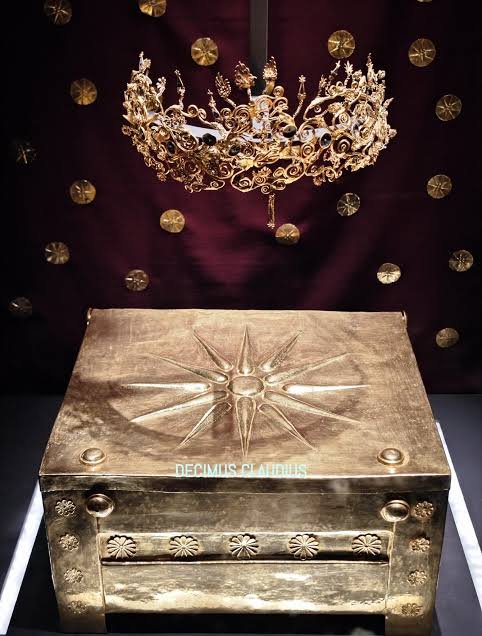
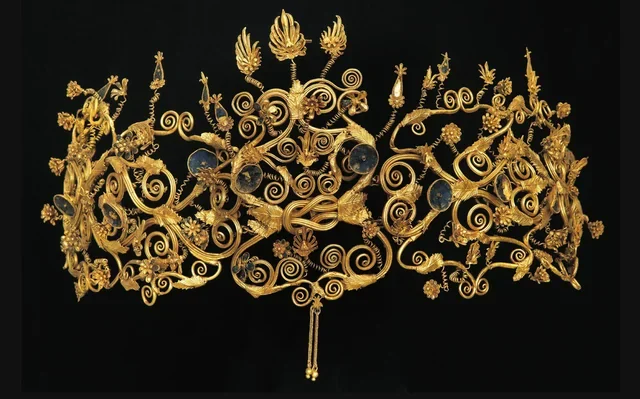
A diadem is a form of head ornament.
In ancient contexts, it could consist of:
a narrow gold band;
decorated sheet metal;
embossed gold;
floral motifs;
geometric patterns;
symbolic imagery.
A diadem could be worn by a living person or placed with the dead.
Its interpretation therefore depends heavily upon context.
Gold in Archaic Greece
The Archaic period, broadly spanning the seventh and sixth centuries BCE, was a time of profound change in Greek society.
Communities developed new political institutions.
Long-distance trade expanded.
Greek colonies were established across the Mediterranean and Black Sea.
Artistic styles changed.
Writing became increasingly widespread.
Elite families continued to express status through burial.
Gold objects were particularly effective symbols of prestige.
Boeotia
Boeotia occupies a central position in mainland Greece.
Its fertile plains and mountain ranges supported substantial communities.
Important ancient centers included:
Thebes;
Tanagra;
Thespiae;
Orchomenos;
Plataea.
The region was connected to Attica, Euboea, Phocis, and central Greece.
It was therefore not an isolated cultural zone.
What Is a Tumulus?
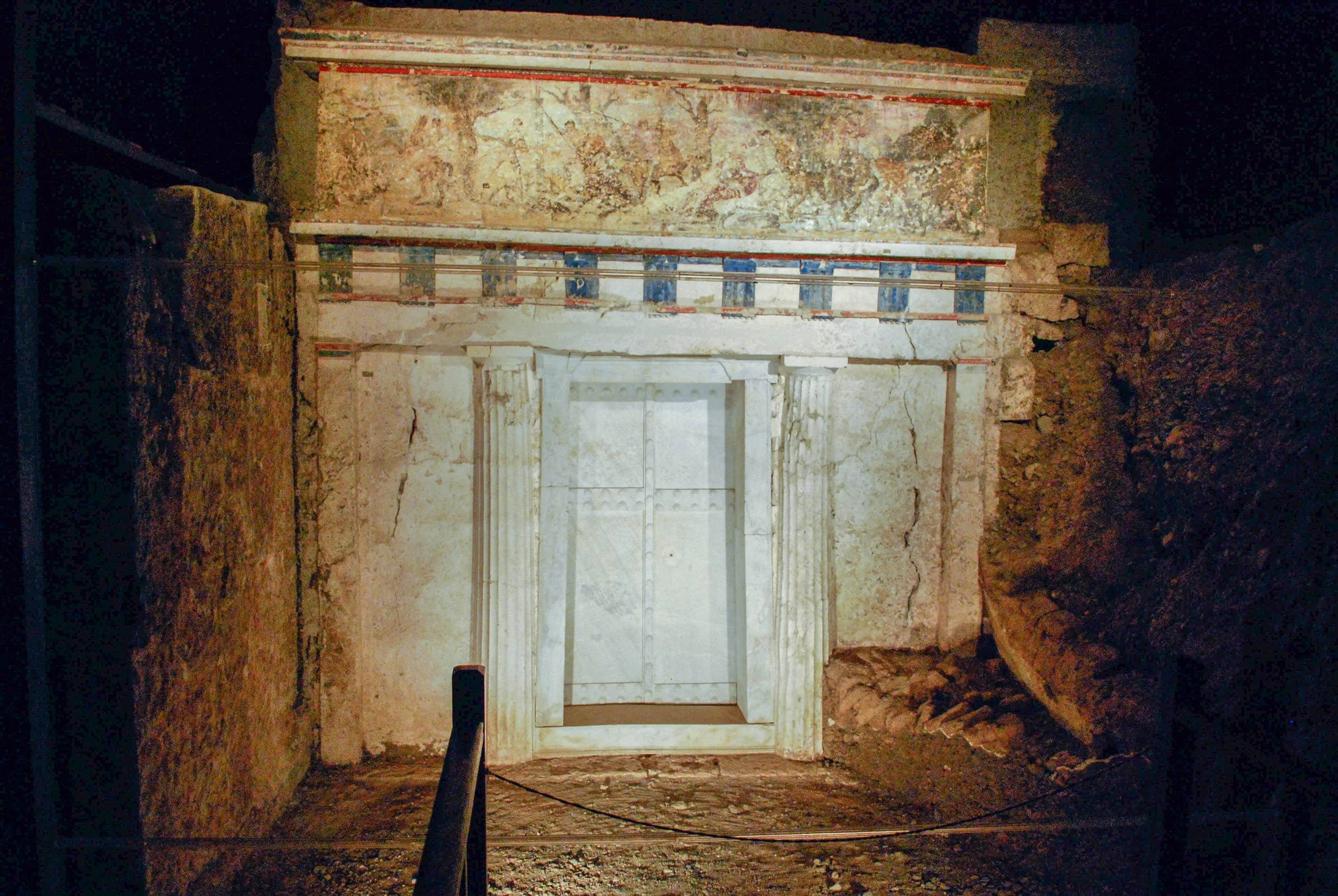
A tumulus is a mound constructed over a burial or group of burials.
Tumulus burial has a long history in Europe and the eastern Mediterranean.
The mound could serve several purposes.
It could mark the location of a grave.
It could commemorate an individual.
It could establish a visible ancestral landmark.
It could reinforce claims of social status.
Why Gold in a Tumulus Matters
Gold diadems found in a sealed burial would provide several kinds of information.
Their presence could indicate:
wealth;
ceremonial clothing;
funerary display;
gender or identity;
religious symbolism;
connections with foreign artistic traditions.
However, gold does not automatically identify a "king" or "queen."
Elite objects can belong to individuals with different forms of social authority.
The Archaeology of Elite Burial
Burial is a form of communication.
The living decide what to place with the dead.
They decide how much labor to invest in a monument.
They decide whether a burial should be visible.
They decide which objects accompany the body.
These decisions can reveal social values.
A gold diadem may therefore say as much about the community performing the burial as about the individual being buried.
Goldworking Techniques
Ancient Greek goldsmiths possessed sophisticated skills.
Gold could be:
hammered into thin sheets;
embossed;
cut;
twisted;
soldered;
attached to other materials.
Decorative patterns could be produced using punches and dies.
Thin gold sheets required relatively little raw material while creating an impressive visual effect.
This made sheet gold particularly useful for funerary ornaments.
Why Archaic Gold Is Difficult to Interpret
Archaic Greek gold objects do not all belong to one stylistic tradition.
Influences could come from:
Egypt;
the Levant;
Anatolia;
Cyprus;
the Aegean;
mainland Greece.
The movement of objects and styles complicates attempts to identify a single place of origin.
A diadem discovered in Boeotia might have been locally produced, imported, or created by a local craftsman working with foreign models.
The Importance of Comparative Archaeology
Researchers would compare a newly discovered diadem with known examples.
They would examine:
decoration;
thickness;
manufacturing technique;
iconography;
gold composition;
construction.
The burial context would then be compared with other Boeotian graves.
This can reveal whether the object represents an isolated luxury item or part of a broader regional tradition.
Scientific Examination
Modern technology can provide information invisible to the naked eye.
Microscopy can reveal manufacturing marks.
X-ray imaging can reveal construction.
Chemical analysis can investigate alloy composition and trace elements.
Three-dimensional imaging can document delicate decorations without repeatedly handling the object.
Such techniques are especially valuable for fragile gold sheet.
Tumuli and Memory
A burial mound can become part of a landscape for generations.
People may recognize it as the location of an ancestor.
Later communities may reinterpret it.
In some cases, ancient burial mounds were reused.
Others became landmarks.
This means funerary archaeology is also landscape archaeology.
The location of a grave can influence how communities perceive their territory.
The Problem of Looting
Gold funerary objects are especially vulnerable to looting.
An illegally excavated diadem may still look spectacular in a museum.
But its archaeological value is dramatically reduced if its exact position and associated objects are unknown.
Was it on the head?
Beside the body?
Inside a container?
Near other jewelry?
Near weapons?
Without this information, interpretation becomes speculative.
Conclusion
The specific discovery of rare Archaic gold diadems in Boeotian tumuli remains unverified in the authoritative sources located for this article.
Nevertheless, such objects would be exceptionally valuable if recovered through controlled excavation.
They could illuminate elite identity, funerary rituals, craftsmanship, long-distance cultural interaction, and the changing social structures of Archaic Greece.
The most important point is that the gold itself is only part of the story.
The burial mound, the body, the accompanying objects, the architecture, and the surrounding landscape together form the archaeological record.
A gold diadem removed from its context is a beautiful artifact.
A gold diadem carefully documented within its original burial is historical evidence.