Corfu occupies one of the most strategically important maritime positions in the eastern Mediterranean.
Located at the entrance to the Adriatic Sea, the island has long connected the Greek world with Italy and the wider Adriatic.
Its location made it particularly important during the medieval and early modern periods, including the centuries of Venetian political influence.
The possibility of a cache of Venetian coins recovered from a shipwreck therefore fits naturally into the island's maritime history.
The specific shipwreck cache described by this title could not be independently verified as a 2026 archaeological discovery in the sources located for this article.
Venice and Corfu
Venice developed extensive political and commercial interests in the eastern Mediterranean.
Corfu's strategic position made it particularly valuable.
Ships passing between the Adriatic and eastern Mediterranean could use the island's harbors and surrounding waters.
This made Corfu a major node within maritime networks.
Coins as Archaeological Evidence
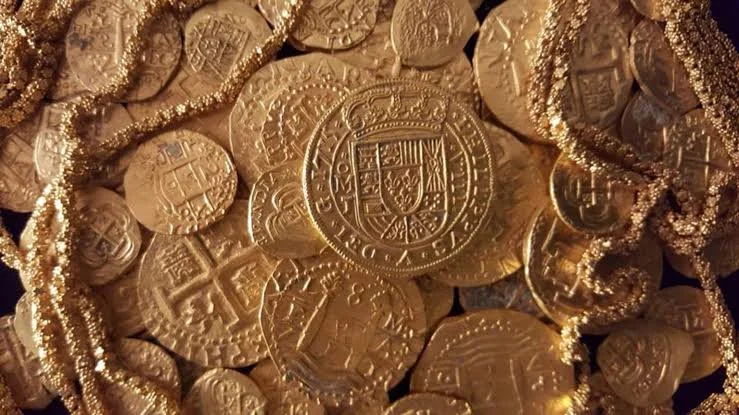
Coins are among the most useful objects for dating archaeological contexts.
A coin may contain:
ruler's name;
portrait;
denomination;
mint information;
symbols;
inscriptions.
These details can help establish chronology.
However, coins can circulate for long periods.
A coin minted in one century may be lost decades later.
Therefore the date of manufacture is not necessarily the date of deposition.
What Is a Shipwreck Cache?
A group of coins discovered together in a wreck could represent:
merchant capital;
crew wages;
personal savings;
cargo;
tax payments;
emergency funds.
The surrounding artifacts help determine the most likely explanation.
If the coins were inside a locked container, for example, that would provide a different context from coins scattered across a deck.
Corfu's Underwater Archaeology
Corfu's waters preserve evidence from many periods.
Archaeologists have documented ancient and later maritime remains.
Even terrestrial excavations demonstrate the island's complex chronological history.
For example, archaeological work at Kanalia has recovered a Venetian bronze coin dated to the seventeenth century in a Late Roman archaeological context.
This does not constitute evidence for a shipwreck cache, but it demonstrates that Venetian coinage forms part of Corfu's archaeological record.
Identifying Venetian Coins
Venetian coinage changed substantially over time.
Researchers can examine:
denomination;
iconography;
inscriptions;
mint marks;
metal composition;
weight.
Coins may feature imagery associated with Saint Mark and Venice.
The evolution of coin types can help establish chronological ranges.
Shipwrecks as Historical Time Capsules
A shipwreck can preserve objects from many parts of the world.
Cargo might include:
ceramics;
food;
textiles;
metal;
glass;
coins.
A shipwreck therefore records not just the ship but the network in which it operated.
A coin from Venice found alongside ceramics from another region could demonstrate the interconnected nature of Mediterranean trade.
Conservation Problems
Coins recovered underwater can be badly corroded.
Saltwater can cause chemical reactions.
Bronze and copper alloys may develop mineralized surfaces.
Silver can tarnish.
Gold generally survives better but can still accumulate marine deposits.
Conservators must stabilize the objects before long-term display.
Economic History
A large coin assemblage can help historians understand money circulation.
Researchers can ask:
Where were the coins minted?
How old were they when lost?
What denominations were present?
Was the monetary assemblage typical of the region?
Did foreign currencies circulate alongside local money?
These questions can illuminate commercial systems.
Conclusion
A Venetian coin cache from a Corfu shipwreck would be valuable because it could combine numismatic evidence with maritime archaeology.
The specific 2026 discovery described in the title remains unverified in the sources located for this article.
Yet Corfu's geographical position makes the archaeological question entirely plausible.
The island stood at the meeting point of the Adriatic and eastern Mediterranean, and Venetian coinage is already documented within its archaeological record.
A securely excavated shipwreck containing such coins could provide a remarkably detailed picture of trade, monetary circulation, maritime travel, and everyday economic life.