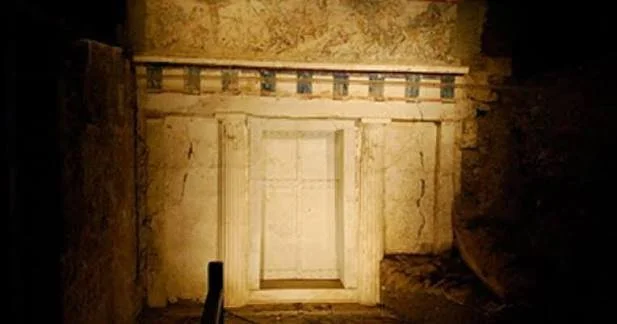
The relationship between Macedonia and Anatolia is an important but complicated subject in ancient archaeology.
Macedonia was located at the crossroads of the Balkans, the Aegean, and routes leading toward Anatolia.
As a result, its archaeological record contains evidence of interaction among communities with different cultural traditions.
The title's reference to "Phrygian influences" should not be understood as proof that Macedonian communities were simply Phrygian or that every unusual burial custom originated in Anatolia.
Instead, the subject raises a broader archaeological question: how can scholars identify cultural interaction from burial practices?
Who Were the Phrygians?
The Phrygians were an ancient Anatolian population associated particularly with central Anatolia.
Their political and cultural center was around Gordion.
Phrygian civilization developed during the early first millennium BCE and became involved in the complex political world of Iron Age Anatolia.
Its cultural traditions included distinctive pottery, metalwork, architectural practices, and funerary monuments.
Macedonia as a Cultural Crossroads
Ancient Macedonia was not culturally isolated.
The region maintained relationships with:
southern Greece;
Thrace;
the Balkans;
the Aegean islands;
Anatolia.
Objects could move through trade.
People could migrate.
Elite families could establish diplomatic marriages.
Mercenaries could travel.
Craftworkers could move between courts and communities.
Cultural influence therefore rarely followed a single direction.
How Archaeologists Identify Influence
A foreign-looking object does not automatically prove foreign settlement.
Suppose a burial contains an object resembling a Phrygian artifact.
Several explanations are possible.
It might be:
an imported object;
a locally manufactured imitation;
an object acquired through trade;
a diplomatic gift;
an heirloom;
evidence of an individual's mobility.
The interpretation depends upon the entire assemblage.
Burial as Cultural Identity
Burial customs can communicate identity.
People choose how the dead are presented.
Objects placed in graves can represent:
gender;
age;
occupation;
status;
religious affiliation;
family identity;
military identity.
But burial customs can also change through fashion.
A community may adopt a foreign practice without adopting the entire foreign culture.
Metalwork and Prestige
Metal objects are particularly useful in studying long-distance interaction.
Weapons, jewelry, horse equipment, vessels, and ornaments can travel considerable distances.
Their manufacturing techniques can sometimes be compared through metallurgical analysis.
Researchers can examine:
alloy composition;
casting methods;
hammering;
decoration;
tool marks.
The Macedonian Elite
During the later Iron Age and Archaic periods, elite competition became increasingly important in many Greek and neighboring societies.
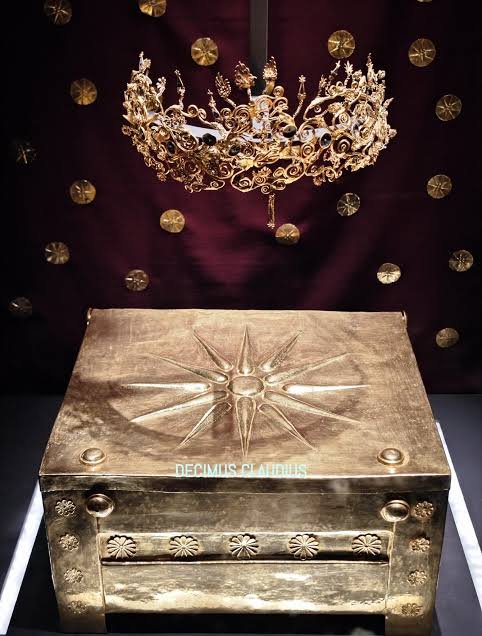
Burials could serve as statements of prestige.
Expensive imported objects could therefore be deliberately selected to communicate international connections.
An Anatolian object in a Macedonian tomb might indicate that its owner participated in long-distance exchange networks.
It would not necessarily indicate foreign ancestry.
The Importance of Gordion
Gordion provides an important comparative archaeological record for Phrygian culture.
Its monuments, pottery, textiles, metal objects, and architecture allow scholars to identify distinctive Phrygian traditions.
Comparison with Macedonian artifacts can reveal similarities and differences.
But similarities must be demonstrated rather than assumed.
Conclusion
Phrygian influences in Macedonian burials are best approached as a question of cultural interaction rather than simple cultural replacement.
Objects moved.
Ideas moved.
People moved.
Styles were copied and transformed.
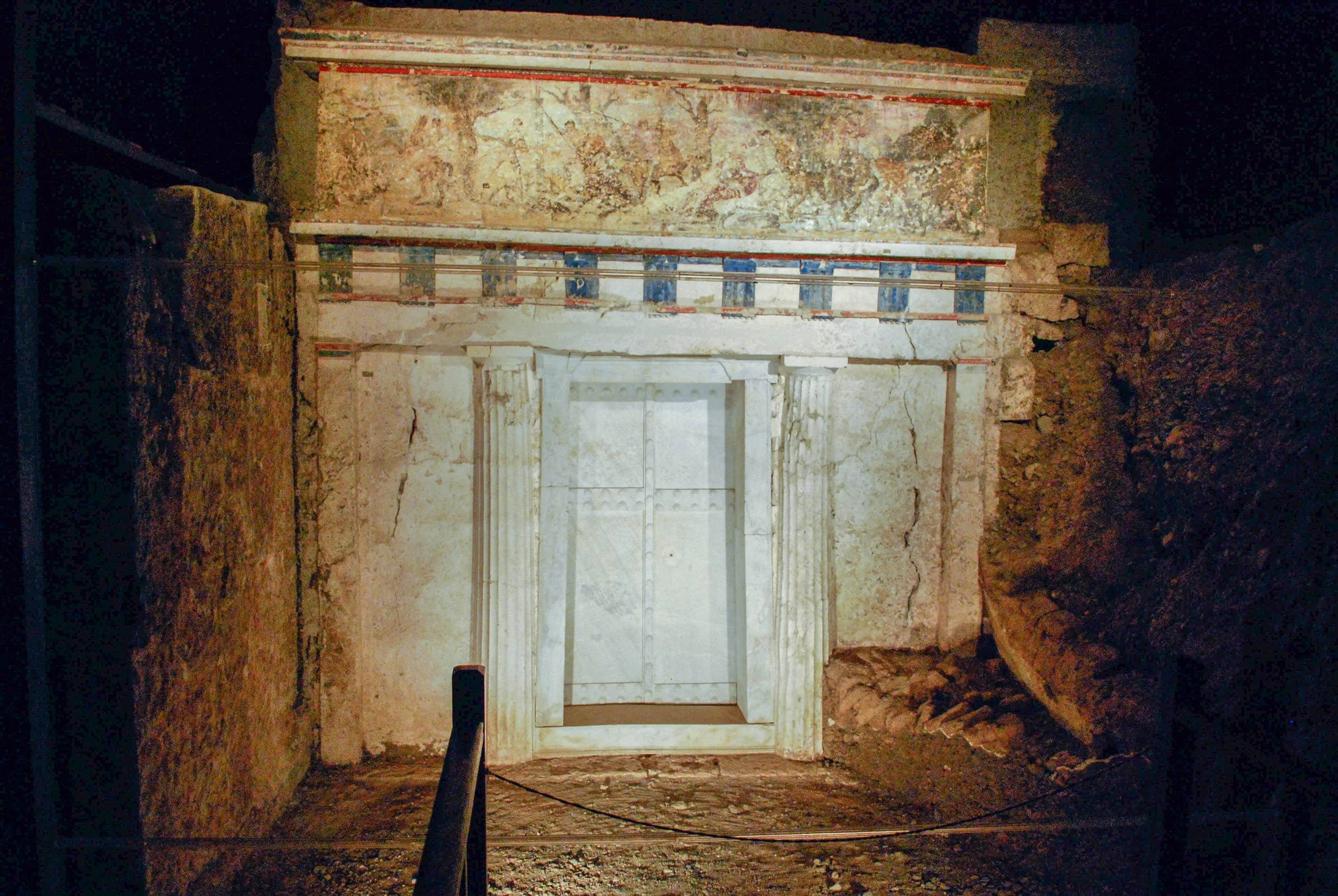
A burial combining Macedonian, Greek, Thracian, and Anatolian elements could therefore reflect the complex identity of an individual or community participating in a connected Iron Age world.
The archaeological challenge is to distinguish direct influence from parallel development and from ordinary trade.
That challenge is precisely what makes Macedonian burial archaeology so valuable.