The idea of prehistoric mining beneath a modern city is one of the most fascinating possibilities in archaeology.
Modern urban landscapes can conceal ancient settlements, roads, cemeteries, workshops, and industrial areas beneath layers of later development.
The title of this article suggests Neolithic flint mines beneath the suburbs of Thessaloniki. The specific discovery could not be verified as a documented 2026 archaeological find in the authoritative sources located for this article.
The broader archaeological question, however, is important: how did Neolithic communities obtain the stone needed to manufacture tools?
Why Flint Mattered
For Neolithic societies, stone was a fundamental technological resource.
Before widespread use of metal, communities relied on stone tools for:
cutting;
hunting;
woodworking;
hide processing;
agriculture;
food preparation.
Flint and other knappable stones could produce extremely sharp edges.
A high-quality flint blade could be sharper than many naturally occurring materials.
Mining Is Older Than Many People Realize
Prehistoric mining required planning and technical knowledge.
The UNESCO World Heritage site at Spiennes in Belgium demonstrates the enormous scale that Neolithic flint mining could reach. Its underground system includes thousands of shafts, some extending many meters below the surface.
The existence of such sites demonstrates that early agricultural communities were capable of organized extraction industries.
What Would a Neolithic Mine Look Like?
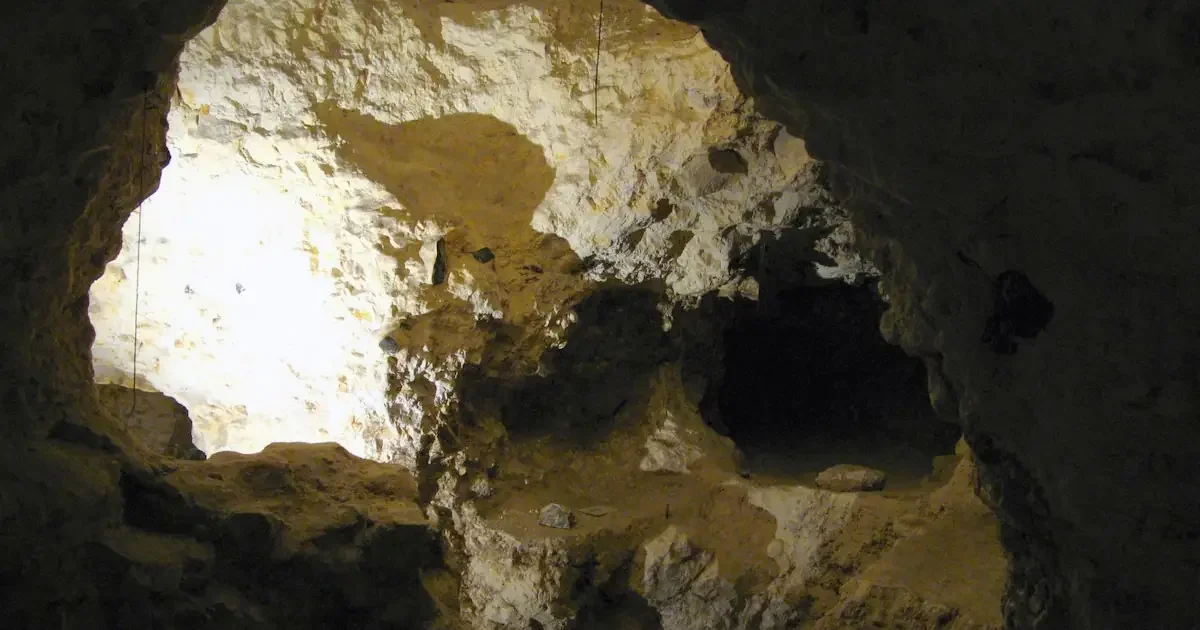
A prehistoric flint mine might contain:
extraction pits;
shafts;
underground galleries;
stone tools;
hammerstones;
discarded flint;
production debris.
The miners would have followed geological layers containing usable material.
Extraction could involve digging downward until the desired stone was reached.
Thessaloniki and Its Wider Landscape
The Thessaloniki region occupies a strategic location in northern Greece.
Its position between the Aegean coast, Macedonia, and inland routes made it an important region for prehistoric settlement.
Neolithic communities in northern Greece participated in agricultural economies and maintained networks of exchange.
Stone resources could have circulated over considerable distances.
How Archaeologists Find Hidden Mines
A buried prehistoric mine might be invisible from the modern surface.
Archaeologists can use:
geophysical survey;
geological mapping;
test trenches;
remote sensing;
sediment analysis.
Ground-penetrating radar and electrical resistivity can sometimes reveal underground anomalies.
But an anomaly is not automatically a mine.
Archaeological excavation is necessary to establish function.
Mining and Social Organization
Mining requires labor.
Workers must identify useful deposits.
They must extract material.
Stone has to be transported.
It may then be shaped into finished tools.
This creates a chain of production.
Therefore mining archaeology can reveal economic organization.
It can also demonstrate specialization.
The Manufacture of Stone Tools
The extracted material was often not transported entirely as raw blocks.
Knappers could begin production at the quarry.
They removed flakes from cores.
Long blades could be produced using carefully controlled techniques.
Finished tools could then be transported to settlements.
Archaeological waste can therefore identify production areas.
Trade and Exchange
High-quality stone could become an exchange commodity.
Communities without suitable local sources might obtain stone from neighboring regions.
This created networks connecting prehistoric settlements.
The circulation of stone therefore provides evidence for social relationships long before written records.
Why an Urban Discovery Would Matter
If prehistoric mines genuinely existed beneath the modern Thessaloniki metropolitan area, they could significantly change understanding of prehistoric land use.
They would demonstrate that areas now covered by dense urban development once formed part of an industrial landscape.
However, such a claim requires strong archaeological evidence.
Conclusion
The specific Neolithic flint mines described by this title remain unverified as a 2026 discovery.
Nevertheless, prehistoric mining is a well-established archaeological phenomenon.
Sites such as Spiennes demonstrate that Neolithic communities possessed impressive knowledge of geology, extraction, stoneworking, and organized labor.
Finding comparable evidence near Thessaloniki would therefore be important not because Neolithic mining itself is unknown, but because it could reveal how prehistoric communities in northern Greece obtained, processed, and distributed essential raw materials.