The white marble figurines of the Cyclades are among the most recognizable objects produced in prehistoric Europe.
Their simplified human forms have influenced modern artists, collectors, museums, and popular culture for more than a century.
Yet these objects were not created as modern sculptures.
They belonged to the Early Bronze Age societies of the Cycladic islands, and their original meanings remain uncertain.
The possibility of previously unknown Cycladic marble idols from Kythnos therefore raises important questions about artistic production, burial practices, island exchange, and the meaning of prehistoric figurative art.
The specific 2026 discovery suggested by this title could not be verified through authoritative archaeological sources located for this article. It should therefore not be presented as a confirmed excavation result.
The Cycladic Marble Tradition
The Cyclades contain abundant high-quality marble.
Early Bronze Age communities developed sophisticated techniques for working this material.
Marble could be:
cut;
polished;
shaped;
drilled;
incised.
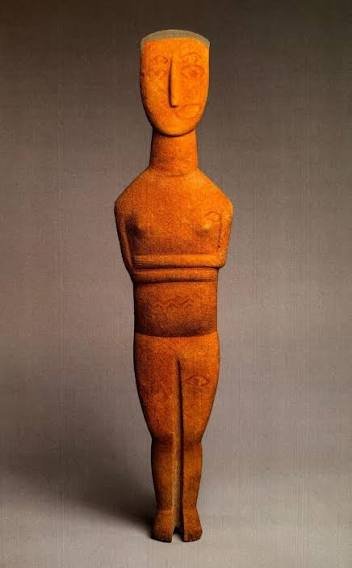
The resulting figurines range from tiny schematic figures to unusually large examples.
The most famous type is the folded-arm female figure.
These figures are frequently called Cycladic idols, although "idol" can imply a religious function that archaeology has not definitively established for every example.
What Did the Figurines Represent?
This is one of the most difficult questions.
Several possibilities have been proposed.
They may have represented:
human beings;
ancestors;
supernatural beings;
deities;
ritual objects;
symbolic figures.
Some were found in graves.
Others have been found in settlements or other contexts.
Their original purpose therefore cannot be reduced to one universal explanation.
Kythnos in the Cycladic Network
Kythnos occupies a position within the central Cyclades.
Its location placed it within maritime routes linking neighboring islands.
The Cycladic world was highly interconnected.
Marble objects could move between communities.
Raw marble could also be transported.
Craftworkers may have traveled.
This makes Kythnos an important location for studying how artistic styles spread.
High-Resolution Archaeology
The phrase "high-res revelations" is particularly relevant to modern archaeological imaging.
Researchers can now document objects at microscopic and three-dimensional scales.
Techniques include:
photogrammetry;
3D scanning;
microscopic surface analysis;
digital reconstruction;
pigment analysis.
These methods can reveal details invisible under ordinary museum lighting.
Traces of Paint
One of the most important discoveries of modern Cycladic research is evidence that some marble figurines were originally painted.
The brilliant white appearance familiar today is partly a consequence of pigment loss.
Red, blue, and other colors may once have been present.
This changes how we understand prehistoric sculpture.
A figurine that looks minimalist today may originally have been visually complex.
Tool Marks
Microscopic examination can also reveal how a figurine was manufactured.
Researchers can identify:
cutting marks;
polishing;
drilling;
scraping;
finishing techniques.
These traces can help reconstruct prehistoric craftsmanship.
They can also reveal whether different workshops developed distinctive manufacturing traditions.
Why Provenance Matters
The history of Cycladic figurines has been complicated by looting and illicit excavation.
Many objects entered private collections without secure archaeological provenance.
When this happens, researchers lose information about:
burial context;
associated objects;
stratigraphy;
chronology;
regional distribution.
A scientifically excavated figurine is therefore far more valuable for research than an isolated object of uncertain origin.
What Kythnos Could Add
A properly documented assemblage from Kythnos could help answer questions about local production.
Was the figurine made locally?
Was the marble imported?
Does its style resemble Paros, Naxos, Amorgos, or another island?
Was it buried?
Was it displayed?
Was it intentionally broken?
These questions could reveal relationships between communities.
Conclusion
Cycladic marble figurines are among the most mysterious objects of prehistoric Greece.
Their simplified appearance has encouraged generations of speculation, but archaeology requires caution.
The specific 2026 Kythnos discovery suggested by the title remains unverified in the sources located for this article.
Nevertheless, the archaeological context is firmly significant.
Modern imaging, pigment analysis, microscopic study, and 3D reconstruction are transforming our understanding of Cycladic sculpture.
The future of Cycladic archaeology may therefore depend not only on discovering new figurines but also on extracting new information from objects already known.