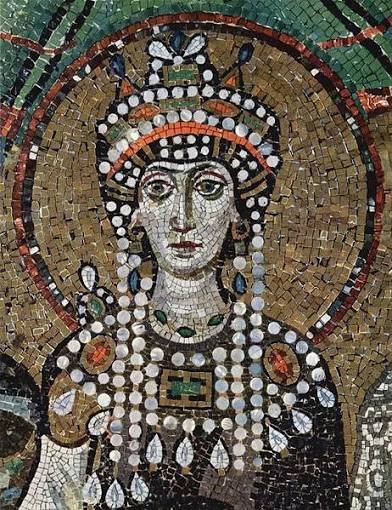
The Byzantine Empire was ruled by emperors, but imperial women were also central to dynastic politics.
Empresses could influence succession, diplomacy, religious patronage, and court politics.
When political struggles threatened an imperial woman, exile could become a means of removing her from the center of power.
The Aegean islands provided numerous possible places of refuge—or confinement.
But the historical evidence does not support a simple system of permanent "exile havens" reserved specifically for Byzantine empresses.
Instead, individual women were sent to monasteries, provincial locations, islands, or other controlled residences under different circumstances.
Why Imperial Women Were Politically Important
Marriage created dynastic alliances.
An empress could be the mother of an heir.
She could act as regent.
She could influence appointments.
She could control property.
She could become a patron of monasteries.
This made imperial women politically important.
It also meant that conflicts involving the throne could involve women as well as men.
Exile as Political Control
Byzantine political culture sometimes used exile as an alternative to execution.
A defeated political figure could be removed from Constantinople.
This reduced the immediate threat.
Exile could be temporary or permanent.
The person might be placed in:
a monastery;
a provincial residence;
an island;
another controlled location.
For an imperial woman, a monastery could provide both protection and confinement.
The Aegean as a Political Landscape
The Aegean islands were geographically fragmented.
This made them useful for controlling people.
An island could be close enough for communication but far enough from Constantinople to prevent easy political intervention.
Some islands contained important monasteries.
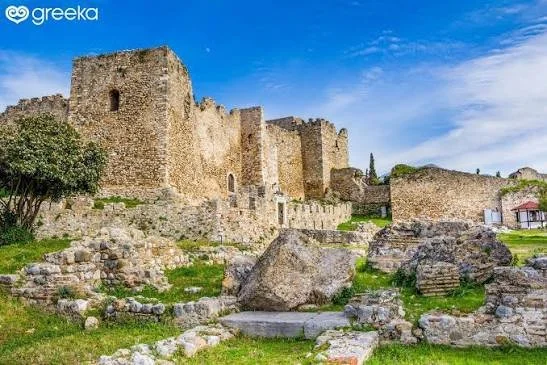
Others possessed fortifications or administrative centers.
The Monastic Dimension
Imperial women frequently became associated with monasteries.
Sometimes religious retirement was voluntary.
In other cases, entering a monastery followed political defeat.
This creates interpretive difficulties.
A woman described as a nun may have entered religious life because she genuinely desired it—or because political circumstances left few alternatives.
Empresses and Dynastic Conflict
Byzantine history contains numerous succession crises.
Rival claimants could mobilize:
armies;
provincial governors;
aristocratic families;
religious institutions.
The imperial family could become divided.
When one faction lost, its members could be imprisoned or exiled.
Women and children were often politically significant because they represented dynastic legitimacy.
The Aegean Islands and Communications
The islands were connected by maritime routes.
A person exiled to an island was not necessarily cut off from the world.
Ships could carry:
letters;
food;
officials;
money;
religious visitors.
Therefore island exile was a form of controlled mobility rather than complete isolation.
Why the Evidence Is Difficult
Chronicles often focus on emperors and major political events.
The everyday conditions of exile are rarely described in detail.
We may know where an empress was sent without knowing:
what her residence looked like;
who accompanied her;
how much freedom she possessed;
how long she remained;
how she communicated.
Archaeology can sometimes help but rarely identifies individual exiles.
Imperial Patronage
Exiled or retired imperial women could remain religious patrons.
A monastery connected with an empress might preserve:
inscriptions;
manuscripts;
icons;
land documents;
architectural remains.
These objects can provide evidence of continued influence.
The Difference Between Refuge and Confinement
"Exile haven" is therefore a romantic expression.
An island could be a place of safety.
It could also be a prison.
The same geographical isolation that protected someone from political enemies could also prevent them from returning to the capital.
Historical interpretation depends on the individual case.
Conclusion
The Aegean islands formed an important part of Byzantine political geography.
Their monasteries, ports, fortifications, and distance from Constantinople made them suitable locations for controlled residence.
But the evidence is better understood as a series of individual cases than as a formal network of "empress exile islands."
The history of Byzantine women in exile demonstrates how geography could become an instrument of political power.
An island could protect an imperial woman, remove her from political life, or do both at once.
The most revealing stories are therefore not necessarily about mysterious hidden palaces.
They are about the human consequences of dynastic politics in an empire where family, religion, geography, and power were deeply intertwined.