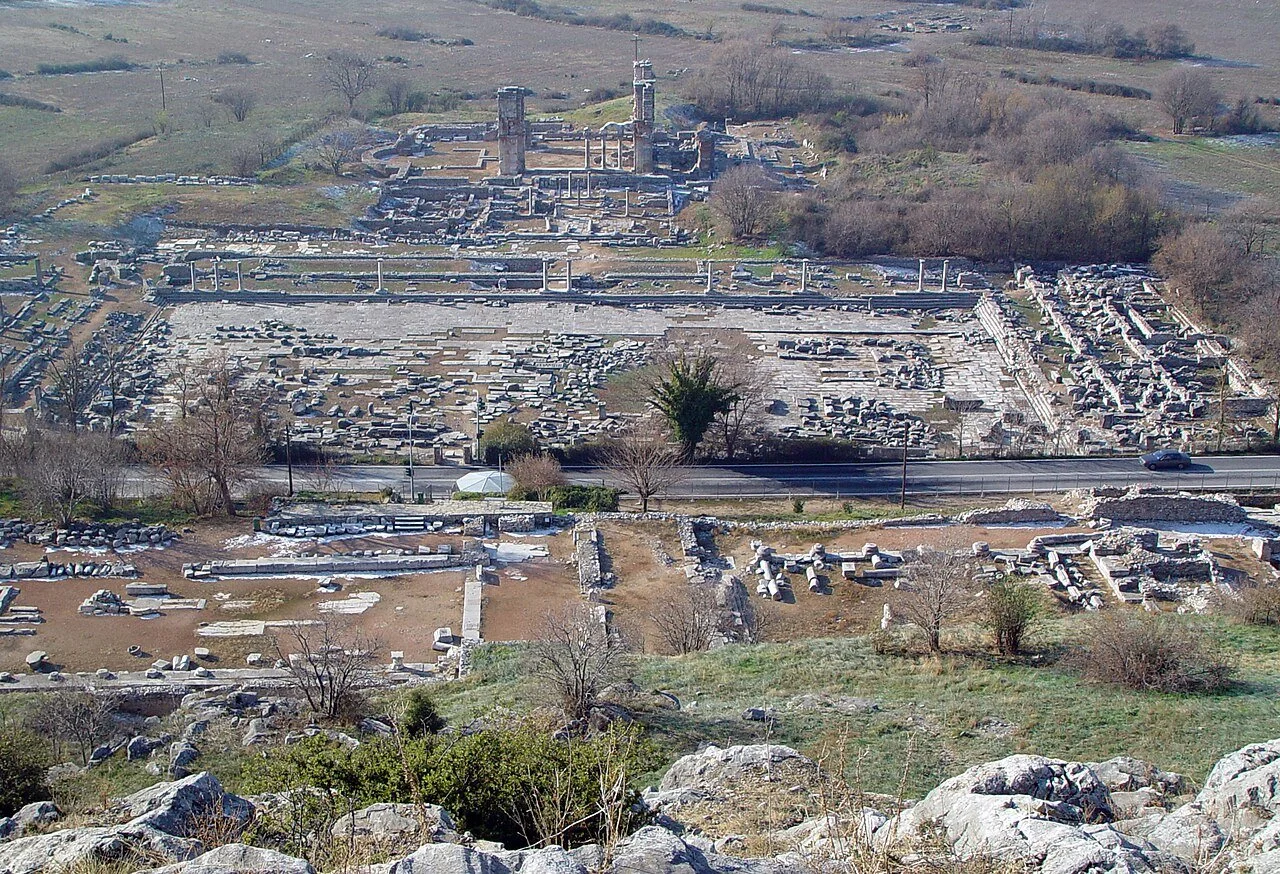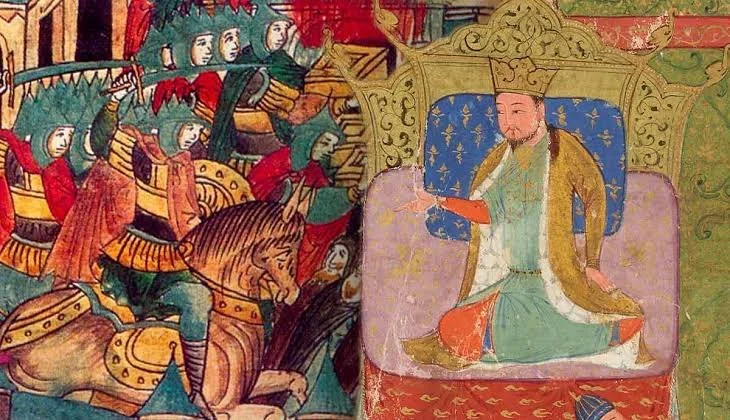
The medieval history of Epirus is filled with political maneuvering.
The Despotate of Epirus emerged from the fragmentation of the Byzantine political world after the Fourth Crusade and developed into one of several successor states claiming Byzantine legitimacy.
Its rulers had to survive between powerful neighbors.
They faced the Byzantine successor state centered at Nicaea, the Latin states of the Balkans, the Bulgarian Empire, Serbian rulers, and later the expanding Ottoman world.
The title's suggestion of "secret alliances with Mongol khans" is much harder to establish.
There is strong evidence for Mongol-Byzantine and broader eastern Mediterranean diplomatic contacts during the thirteenth century, but the existence of a specific secret alliance between the Epirote despots and Mongol khans should not be presented as established fact without identifying the relevant documentary evidence.
Epirus in a Fragmented Byzantine World
After Constantinople was captured by the Fourth Crusade in 1204, Byzantine political authority fragmented.
Several states claimed the Byzantine inheritance.
Epirus became one of the most important.
Its rulers controlled territories in western Greece and Albania and occasionally extended their influence farther east.
The Epirote rulers competed with Nicaea and other political powers for legitimacy.
Diplomacy as Survival
Medieval rulers rarely depended entirely on military force.
Diplomacy was essential.
Rulers arranged:
marriages;
treaties;
religious agreements;
hostage exchanges;
military alliances;
commercial arrangements.
Diplomacy could also involve sending envoys over enormous distances.
This is where the Mongol connection becomes interesting.
The Mongol World
During the thirteenth century, Mongol expansion transformed Eurasian politics.
The Mongol Empire reached from East Asia across Central Asia into the Middle East and eastern Europe.
Different Mongol khanates subsequently emerged.
The Mongols became an important factor in the political calculations of Byzantine and Balkan rulers.
Byzantine-Mongol Contacts
The Byzantine Empire maintained diplomatic relationships with Mongol powers.
One particularly important relationship developed with the Mongol rulers of the Golden Horde.
The Byzantine emperor Michael VIII Palaiologos married his daughter Maria to the Mongol ruler Abaqa Khan in 1265.
This marriage demonstrates that Mongol diplomacy was not geographically distant from Byzantine politics.
It also shows why Balkan rulers could not ignore the Mongol world.
Could Epirus Have Used Mongol Diplomacy?
In theory, a threatened Epirote ruler might have viewed distant powers as potential diplomatic partners.
But historical possibility is not the same as documented alliance.
To demonstrate an actual Epirote-Mongol alliance, historians would need evidence such as:
diplomatic correspondence;
chronicler accounts;
treaty references;
marriage negotiations;
recorded embassies.
Without such evidence, the claim should remain hypothetical.
Why the Idea Is Attractive
The concept of a secret alliance is appealing because medieval politics often involved overlapping loyalties.
A ruler might publicly recognize one power while privately negotiating with another.
However, historians must be careful.
The absence of evidence does not automatically prove secrecy.
Sometimes there simply was no alliance.
Epirus and the Wider Balkans
Epirus had connections with many neighboring political systems.
Its rulers interacted with:
Byzantines;
Bulgarians;
Serbs;
Latins;
Italian maritime powers;
Albanian elites.
These relationships changed rapidly.
A political alliance could become an enemy relationship within a generation.
The Role of Marriage
Dynastic marriage was one of the most important forms of medieval diplomacy.
Marriages could create temporary alliances.
But they also produced complicated claims to territory.
A marriage connecting an Epirote dynasty to another royal house could influence succession politics.
The Mongols used marriage diplomacy extensively.
Yet no securely documented marriage between an Epirote ruling house and a Mongol khan establishes the specific secret alliance suggested by the title.
Mongol Influence on the Balkans
Even when direct alliances did not exist, Mongol military pressure affected the Balkans.
Mongol campaigns disrupted regional political calculations.
Balkan rulers had to consider the possibility of raids and changing power relationships.
This is an important distinction.
Influence does not necessarily mean alliance.
A distant empire can transform regional politics without ever signing a treaty with every local ruler.
The Limits of Medieval Sources
Medieval sources are uneven.
Chronicles were often written by politically interested authors.
Some diplomatic documents survive.
Others have disappeared.
Later historians sometimes constructed narratives from fragmentary evidence.
This makes claims about "secret" agreements especially difficult.
A secret treaty, by definition, may leave little evidence.
But historians cannot fill the gap with speculation.
What New Research Could Look For
Future scholarship could examine:
Byzantine diplomatic records;
papal correspondence;
Armenian sources;
Georgian chronicles;
Persian sources;
Mongol diplomatic documents;
Serbian and Bulgarian chronicles.
A reference to an Epirote embassy could potentially change the picture.
Conclusion
The Epirote rulers lived in a world where Mongol power mattered.
Byzantine rulers demonstrably established diplomatic relationships with Mongol khans, showing that such connections were possible and politically significant.
But the specific claim of secret Epirote alliances with Mongol khans remains unproven without stronger documentary evidence.
The more historically useful interpretation is therefore to study Epirus within the broader diplomatic environment created by the Mongol expansion.
That world connected Greece to political forces stretching deep into Asia.
The story is fascinating enough without inventing a secret treaty.