Thessaly is often associated with Classical Greek history, Macedonian expansion, Byzantine politics, and Ottoman rule.
Yet the medieval landscape of Thessaly also experienced centuries of Frankish and Latin political influence.
After the Fourth Crusade, western European nobles established states throughout Greece.
The most famous was the Principality of Achaea, but Latin political structures appeared in other parts of the Greek world as well.
The history of Frankish knights in Thessaly is therefore part of a much larger transformation of medieval Greece.
The Fourth Crusade
In 1204, crusading armies captured Constantinople.
The Byzantine Empire fragmented.
Western European nobles received territories throughout the former Byzantine world.
This created what historians often call Frankokratia, although the term covers a wide variety of Latin political regimes.
The Frankish presence was especially strong in mainland Greece and the Peloponnese.
Thessaly's Strategic Importance
Thessaly is geographically important because it lies between central and northern Greece.
Its fertile plains supported agriculture.
Mountain passes connected it with neighboring regions.
Control of Thessaly could therefore influence movement between southern Greece and Macedonia.
For medieval rulers, its valleys were economically and strategically valuable.
Latin Rule and Local Politics
Frankish nobles did not replace the entire local population.
Greek communities remained.
Byzantine institutions survived in various forms.
Local elites negotiated with incoming rulers.
The political landscape was therefore layered.
A Latin lord might control a fortress while Greek farmers continued cultivating the surrounding land.
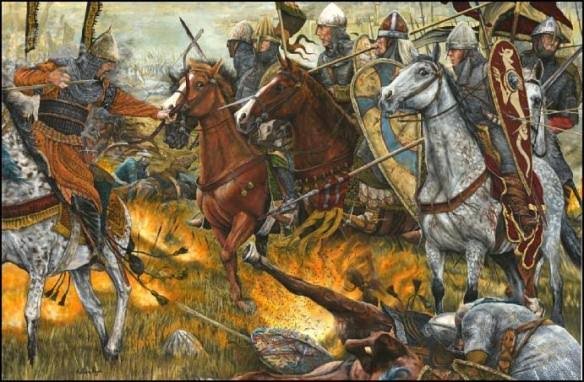
Knights and Castles
The word "knight" can create a romantic image.
Medieval military elites were more complicated.
Knights were part of systems of landholding and military obligation.
A noble received land or rights in exchange for service.
Castles became centers of authority.
A fortified residence could function simultaneously as:
military base;
administrative center;
aristocratic residence;
symbol of political power.
The Castle of Platamon
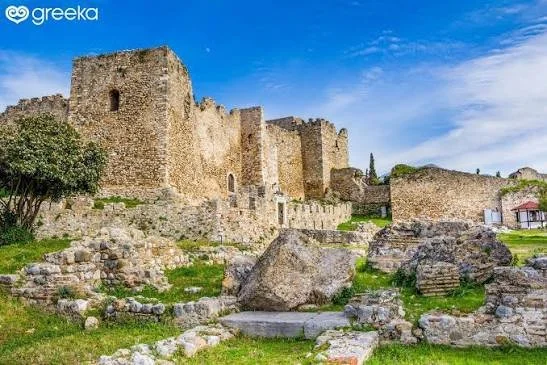
One of the most famous fortifications near Thessaly is Platamon Castle.
Located near the route connecting Thessaly and Macedonia, the fortress occupies a strategically important position.
Its origins predate the Frankish period, but the fortress was incorporated into the political struggles of medieval Greece.
This demonstrates an important principle.
Medieval rulers frequently inherited earlier fortifications.
The presence of Frankish troops at a castle does not necessarily mean the Franks constructed the original walls.
Frankish and Byzantine Competition
Latin rulers faced competition from Byzantine successor states.
The Empire of Nicaea gradually expanded westward.
Epirus also contested territory.
Bulgaria and later Serbia became important regional powers.
Thessaly therefore became part of a constantly shifting political landscape.
Local Communities
The majority of people in the countryside were not knights.
They were farmers, shepherds, craftspeople, merchants, and religious communities.
Their lives can be harder to reconstruct because written records disproportionately preserve elite activity.
Archaeological evidence becomes particularly valuable here.
Villages, churches, agricultural installations, ceramics, and burial grounds can reveal the lives of ordinary inhabitants.
The "Unwritten" Saga
The title is particularly appropriate in one sense.
Much medieval history is not recorded in detailed narratives.
A noble may appear in a charter.
A monastery may preserve a land transaction.
A fortress may be mentioned during a military campaign.
But we rarely know the everyday experiences of the soldiers and peasants involved.
Archaeology can partially recover these missing stories.
Trade and Movement
Thessaly's agricultural productivity made it economically important.
Grain, livestock, wine, and other products could move through regional markets.
Military occupation required supplies.
Castles therefore depended upon surrounding agricultural communities.
A fortress was not an isolated structure.
It was part of an economic landscape.
Religious Change
The Latin conquest also produced religious tensions.
Western Catholic institutions existed alongside Orthodox Christian communities.
But religious relations were not always simply hostile.
Political arrangements could produce pragmatic coexistence.
Churches and monasteries continued to operate.
Religious architecture therefore provides evidence for cultural continuity alongside political change.
Conclusion
The Frankish presence in Thessaly was part of the profound political transformation that followed the Fourth Crusade.
Knights, nobles, Byzantine officials, local communities, and religious institutions all interacted within a complicated landscape.
The surviving castles are only the most visible evidence.
The more difficult historical task is reconstructing the lives of the people who lived around them.
That is why the "unwritten saga" of medieval Thessaly remains important.
The story is not simply about knights and castles.
It is about how political conquest transformed landscapes without completely replacing the societies that already lived there.