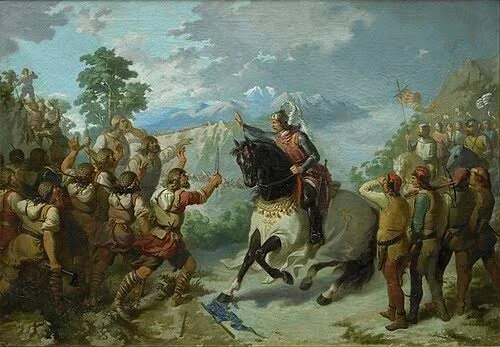
The fourteenth century was one of the most turbulent periods in the medieval history of Greece.
The Byzantine Empire was losing territory and political cohesion. Western European powers maintained states and colonies in Greece. Venice and Genoa competed for commercial influence. Local Greek rulers negotiated with Latin lords, Serbian rulers, Albanians, Turks, and other military groups.
Among the most unusual forces to enter this political landscape were the Catalan Company, a large body of mercenaries originally assembled in connection with the Crown of Aragon.
Their arrival in Greece transformed the political geography of central Greece.
The idea of a forgotten Catalan "hidden base" in Attica is therefore plausible as a subject of investigation, although the precise location of a secret or previously unknown base should not be treated as established without archaeological evidence.
The Catalan Company
The Catalan Company emerged from the military world of the Crown of Aragon.
Its members included Catalans and Aragonese, but the company was ethnically and politically diverse.
Mercenary companies in the medieval Mediterranean were mobile organizations.
They could change employers according to political circumstances.
The Catalan Company became famous for its participation in Byzantine warfare in Anatolia.
After conflicts with Byzantine authorities, however, the company moved into southeastern Europe.
Its arrival in Greece would have consequences far beyond its original military purpose.
The Battle of the Kephissos
The decisive moment came in 1311, when the Catalans defeated the forces of Walter V of Brienne, Duke of Athens, at the Battle of the Kephissos.
The victory gave the Catalan Company control over the Duchy of Athens.
This was remarkable.
A mercenary army had effectively taken control of a major Latin principality.
The Catalans established themselves as the dominant military power in Athens and central Greece.
Catalan Rule in Athens
The Catalans did not simply establish a temporary military camp.
They became rulers.
Their authority extended over territories of the Duchy of Athens.
Catalan institutions and representatives became integrated into the political structure of the region.
The Catalan presence lasted for much of the fourteenth century.
The duchy remained connected to the Crown of Aragon and later to the Sicilian branch of the Aragonese monarchy.
What Could a "Hidden Base" Mean?
The phrase "hidden base" should be used carefully.
Medieval armies required infrastructure.
A military force needed:
food;
horses;
weapons;
storage;
water;
roads;
communication;
fortified positions.
Not every military facility would have been a monumental castle.
A temporary camp could leave little archaeological evidence.
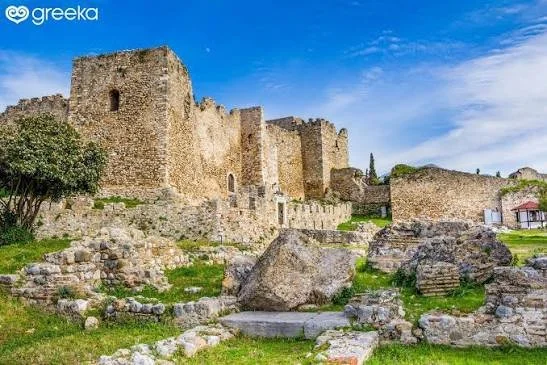
A more permanent garrison could occupy an existing fortress.
This means that traces of Catalan military activity may survive within structures built originally for earlier rulers.
The Acropolis and Catalan Athens
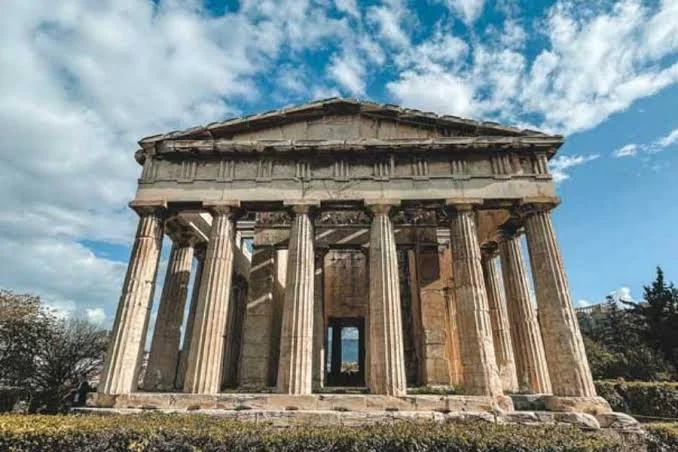
One of the most famous examples of Catalan occupation was the Acropolis of Athens.
The medieval history of the Acropolis is considerably more complicated than its modern image as a Classical Greek monument.
During the Middle Ages, the Acropolis served as a fortified settlement.
The Parthenon itself had been transformed into a Christian church before the Catalan period.
The Catalans inherited and adapted this fortified urban environment.
Why Attica Was Strategically Important
Attica connected Athens with central Greece.
The region included important roads and agricultural resources.
Athens also possessed access to the sea.
Control of Attica therefore meant control over a strategically valuable territory.
A military organization seeking to maintain itself could not rely on the Acropolis alone.
It needed control over surrounding resources.
Fortifications and Smaller Strongholds
The Catalan period coincided with widespread fortification across medieval Greece.
Castles controlled:
mountain passes;
agricultural valleys;
roads;
ports;
river crossings.
Some were inherited from Byzantine or Frankish rulers.
Others were modified.
This creates a major archaeological problem.
A fortification associated with Catalan rule may contain architectural layers from several centuries.
The Catalans did not necessarily construct every fortress they occupied.
The Military Society Behind the Company
The Catalan Company was not merely a group of soldiers.
It developed into a political community.
Military service became connected with land and political authority.
This is one reason the Catalan conquest was so consequential.
The mercenaries transitioned from hired soldiers to territorial rulers.
Language and Cultural Legacy
Catalan rule left a linguistic and documentary legacy.
The Chronic of Ramon Muntaner, written by a participant in the wider Catalan world, became one of the most important narratives for the history of the company.
The Catalan presence also connected Athens to the political world of the western Mediterranean.
This was a striking example of how Mediterranean warfare could transport institutions and populations across enormous distances.
What Archaeology Could Reveal
A genuine archaeological investigation of a Catalan military base would look for:
fourteenth-century ceramics;
weapons;
horse equipment;
coins;
defensive modifications;
imported objects;
storage installations;
building phases.
Archaeologists would also compare the site with documentary references.
A fortress should not be identified as Catalan merely because it dates to the same period.
The Meaning of "Forgotten"
The Catalans themselves are not forgotten in historical scholarship.
Their rule in Athens is well documented.
What can remain forgotten are smaller physical traces of their presence.
A rural fortification, storage building, or road station may attract far less attention than the Acropolis.
Yet such places can reveal how the Catalan regime actually functioned.
Conclusion
The fourteenth-century Catalan presence in Attica represents one of the most remarkable episodes in medieval Greek history.
A mercenary company entered the eastern Mediterranean, defeated a Latin ruler, and became the ruling military power of Athens.
The idea of a specific "hidden base" should remain a research hypothesis unless supported by archaeological evidence.
But the broader historical reality is certain.
The Catalans transformed Athens from 1311 onward and connected the region to a political world extending from Greece to the Crown of Aragon.
Their story demonstrates that medieval Greece was not politically isolated.
It was deeply embedded in the military, commercial, and dynastic networks of the wider Mediterranean.