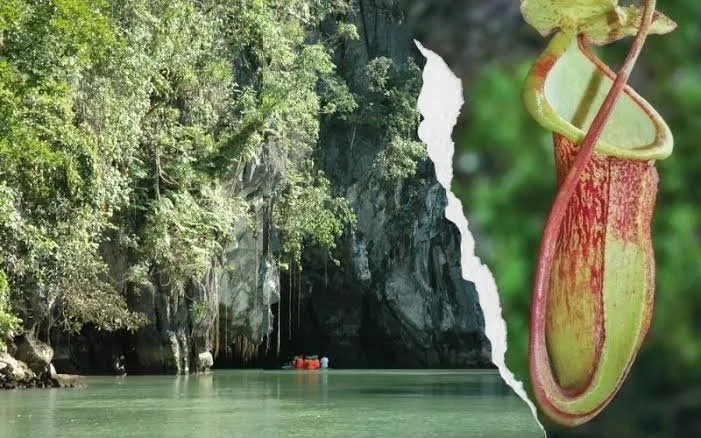
Introduction
The Prespa Lakes region lies in a mountainous area shared by Greece, Albania, and North Macedonia. Its lakes, marshes, reed beds, wet meadows, and surrounding forests support a rich variety of plant and animal life.
Wetlands are especially important because they contain several environmental conditions within a relatively small area. Differences in water depth, acidity, nutrient availability, sunlight, and seasonal flooding create habitats for many specialized species.
Carnivorous plants are among the most interesting plants to investigate in wetland ecology. They have evolved mechanisms for capturing and digesting small organisms, usually to supplement nutrients that are limited in the soil. However, the presence of carnivorous plants at a particular Prespa site must be confirmed through botanical surveys rather than inferred simply because the region contains wetlands.
What Are Carnivorous Plants?
Carnivorous plants obtain some nutrients by trapping and digesting prey, commonly insects and other small invertebrates.
They still depend on photosynthesis for much of their energy. Prey provides additional nutrients, especially nitrogen and phosphorus, which can be scarce in the wet, acidic, or nutrient-poor environments where many carnivorous species grow.
Different species use different trapping mechanisms. Some have sticky leaves that capture insects, while others use specialized leaves that function as bladders or pitfall traps.
These adaptations developed independently in several plant groups.
Types of Carnivorous Plant Traps
One well-known group is the sundews, belonging to the genus Drosera. Many sundews possess leaves covered with glandular tentacles that produce sticky droplets. Small insects become trapped, and the leaf may respond by moving or changing shape.
Bladderworts, in the genus Utricularia, use tiny suction traps. When a suitable organism approaches a trap, changes in pressure can draw it inside.
Butterworts, in the genus Pinguicula, capture small insects on sticky leaf surfaces. Their digestive secretions help release nutrients from the prey.
These examples demonstrate the diversity of carnivorous plant adaptations, but they should not be taken as a list of species confirmed in Prespa without regional botanical records.
Why Wetlands Support Specialized Plants
Wetlands can contain soils that remain waterlogged for long periods. In some habitats, oxygen availability is low, while nutrient movement is restricted by soil chemistry and hydrology.
These conditions can favor highly specialized plants.
However, not every wetland is suitable for carnivorous species. Some wetlands are nutrient-rich and dominated by vigorous vegetation, while others contain acidic or nutrient-poor habitats that may support different plant communities.
The distribution of carnivorous plants depends on local conditions rather than the mere presence of water.
The Prespa Lakes Ecosystem
The Prespa Lakes region is internationally important for biodiversity. It contains aquatic habitats, reed beds, wetlands, agricultural landscapes, and mountain environments.
The region supports diverse bird communities, including species associated with shallow lakes and wetland vegetation. Fish, amphibians, invertebrates, and plants also contribute to its ecological complexity.
Water-level changes, land use, pollution, invasive species, and climate change can influence the health of these habitats.
A botanical survey of the wetlands would need to examine the precise conditions at each site, including seasonal water levels and soil chemistry.
How Botanists Identify Carnivorous Species
Plant identification may involve leaf shape, flower structure, trapping mechanisms, and microscopic features. Researchers also record the location, elevation, habitat, and season in which a plant was observed.
Photographs can support identification, but they may not always provide enough information to distinguish closely related species.
Herbarium specimens can be useful for verification, although collection should follow conservation rules and avoid harming small or threatened populations.
Regional botanical databases and published floristic surveys provide an important starting point for confirming whether a species has been documented in Prespa.
The Ecological Role of Carnivorous Plants
Carnivorous plants are part of larger food webs. They interact with insects, pollinators, soil organisms, and surrounding vegetation.
Their traps can capture organisms that visit the plants for different reasons. Some insects may be attracted by color, scent, or moisture, while others enter traps accidentally.
The prey captured by carnivorous plants is generally small, and these plants should not be imagined as major predators controlling entire insect populations.
Their ecological importance lies in their specialized adaptation to particular environmental conditions.
Threats to Wetland Habitats
Wetlands can be damaged by drainage, development, water diversion, pollution, and changes in agricultural practices.
Even small changes in hydrology may alter the conditions required by specialized plants. If a habitat becomes too dry, too nutrient-rich, or too shaded, sensitive species may decline.
Climate change can also affect rainfall, evaporation, and the seasonal availability of water.
Conservation therefore requires more than protecting individual plants. It requires maintaining the ecological processes that sustain their habitats.
Responsible Nature Observation
Visitors interested in unusual wetland plants should remain on designated paths and avoid trampling vegetation.
Carnivorous plants can be small and difficult to see, especially when growing among mosses or other wetland vegetation. Collecting specimens without permission can damage fragile populations.
Photographic documentation and guided surveys are preferable ways to learn about these species while minimizing disturbance.
Conclusion
Carnivorous plants illustrate the remarkable adaptations that allow vegetation to survive in specialized environments. The Prespa Lakes region contains diverse wetland habitats that deserve careful botanical investigation, but individual carnivorous species should only be attributed to specific locations when supported by reliable records. Botanical surveys, hydrological monitoring, and habitat conservation can establish which specialized plants occur in the region and help protect the ecological conditions on which they depend.