Introduction
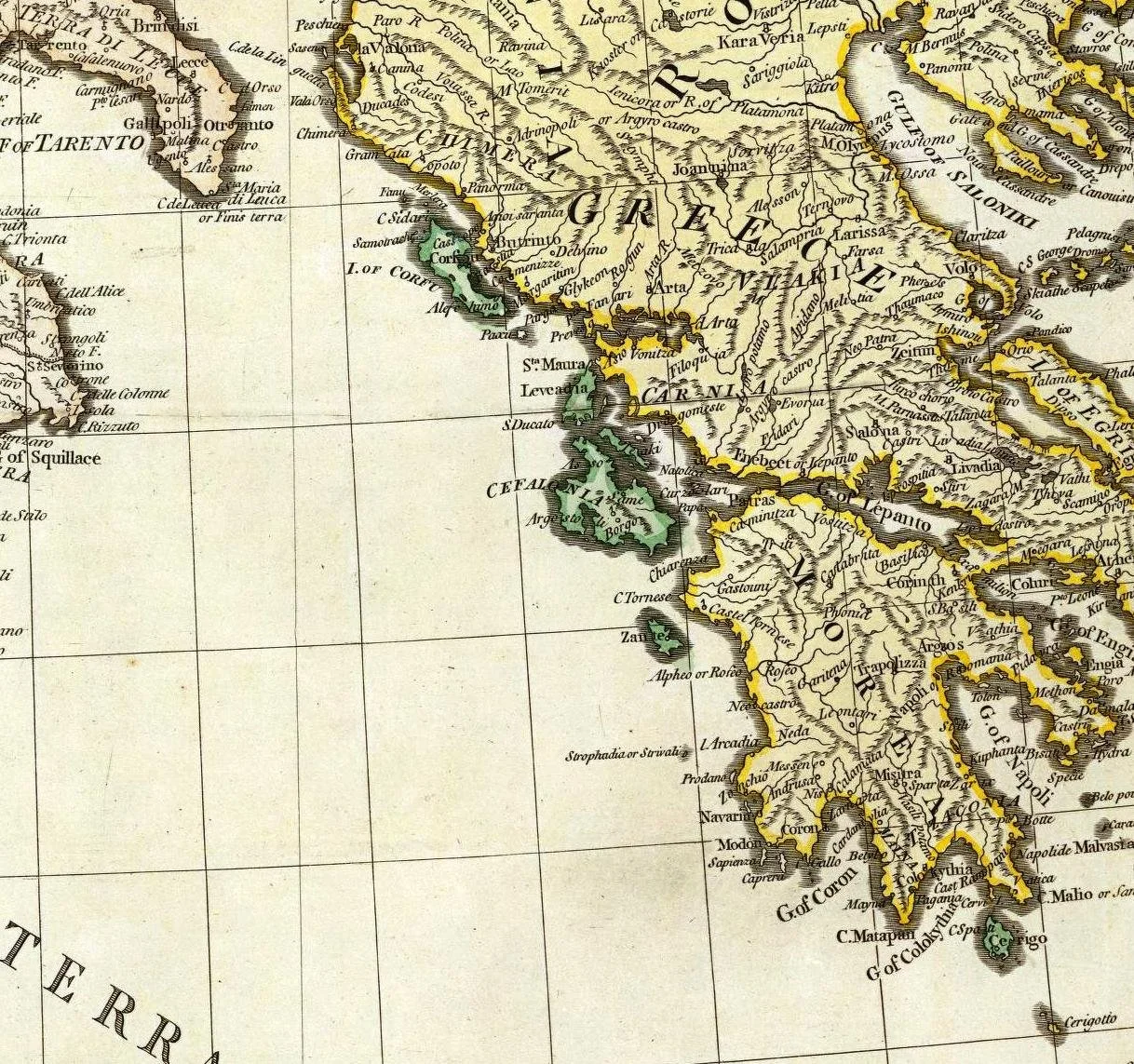
The Mani Peninsula in southern Greece contains a rugged landscape of mountains, caves, rocky slopes, and coastal settlements. Across ancient Greek religion, caves could hold distinctive significance because they formed enclosed spaces that appeared to connect the visible world with hidden or inaccessible environments.
Some Greek deities were described as chthonic, a term referring to associations with the earth, the underworld, the dead, fertility, or forces operating beneath the surface of the world.
The possibility of chthonic cults in Mani's caves offers an opportunity to explore sacred landscapes, burial traditions, and ancient ideas about death and renewal. However, the presence of a cave alone does not establish that it was used for worship or associated with an underworld deity.
Understanding Chthonic Religion
Ancient Greek religion included deities whose functions were connected with the earth and the underworld.
Hades and Persephone were associated with the realm of the dead. Demeter was connected with agriculture and fertility, while certain aspects of her worship also involved death and renewal.
Hecate became associated with boundaries, crossroads, night, and some ritual practices involving the dead.
The category "chthonic" is useful, but it should not be treated as a single organized religion. Different deities had distinct identities, and their worship varied across time and place.
Caves in Ancient Greek Religion
Caves could provide natural spaces for worship because of their unusual shapes, darkness, water sources, and separation from everyday settlement.
Some caves contained votive offerings, pottery, figurines, lamps, or other objects associated with repeated human activity.
Other caves served as shelters, burial locations, storage areas, or places used for practical purposes.
Archaeologists must therefore determine how a cave was used before interpreting its religious significance.
The Mani Landscape
The Mani Peninsula has a long history of human settlement, with archaeological evidence from prehistoric and later periods.
Its caves and rocky environments formed part of a landscape used for shelter, movement, resource gathering, and burial.
Caves may also have entered local oral traditions because of their isolation, unusual geological formations, and association with stories about ancestors or supernatural beings.
These traditions deserve study in their own right, even when they cannot be connected directly to ancient religious practices.
Death, Burial, and the Underworld
Ancient Greek beliefs about death were diverse. Burial practices, grave offerings, funerary monuments, and literary accounts reveal changing ideas about the dead and their relationship with the living.
Some caves were used for burial in particular historical contexts. Others were associated with cult activity unrelated to funerary practice.
Finding human remains in a cave does not automatically prove that the site was dedicated to Hades or Persephone. The remains might represent ordinary burial, accidental death, later reuse, or another activity.
Archaeological Evidence
Researchers investigating a possible chthonic sanctuary would examine the distribution and dating of finds, evidence of deliberate offerings, inscriptions, constructed features, and the relationship between the cave and nearby settlements.
Scientific dating can help establish when the site was used.
Environmental analysis may reveal whether water, vegetation, or other natural features influenced human activity.
Comparisons with better-documented sanctuaries can help generate hypotheses, but similarity alone is not proof of shared ritual function.
Folklore and the Supernatural
Modern stories about caves often involve spirits, hidden passages, lost treasures, or entrances to another world.
Such narratives may preserve local memories or reflect the human tendency to attach symbolic meaning to unusual landscapes.
They should not be dismissed as meaningless, but neither should they be presented as literal records of ancient cults.
Folklore research asks how stories developed, who transmitted them, and what role they play in community identity.
Conservation of Cave Sites
Caves are fragile archaeological environments. Visitors may disturb deposits, remove objects, damage wall surfaces, or introduce contaminants.
Because cave sediments can preserve evidence over long periods, even apparently minor disturbances can destroy important contextual information.
Responsible heritage management should protect caves from unauthorized excavation and uncontrolled tourism.
Conclusion
Mani's caves provide a compelling setting for investigating chthonic religion, burial archaeology, and the cultural meaning of underground spaces. Ancient Greek communities associated some caves with deities, ritual offerings, and beliefs about death, but individual sites require archaeological confirmation. By combining excavation, environmental analysis, religious history, and folklore research, scholars can explore how caves became meaningful places without confusing local legend with established archaeological fact.